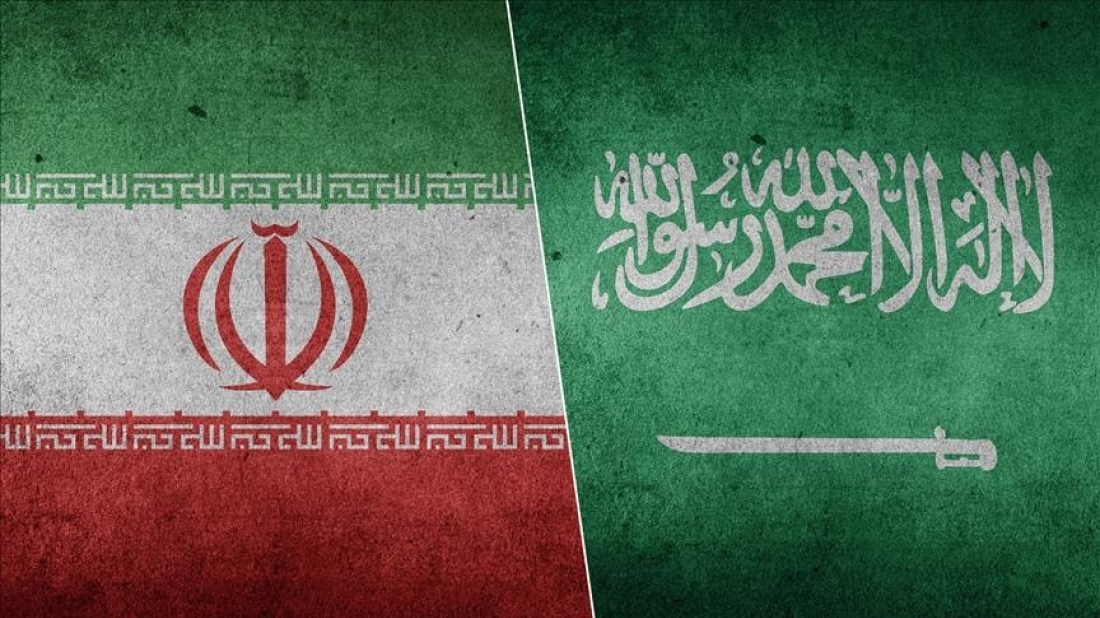
Iran and Saudi Arabia – the two power houses in the Middle East -- have decided to advance their bilateral economic and defense ties and to increase cooperation in relation to the regional developments according to Iran’ security chief Ali Larijani.
Following a visit to the Saudi capital Riyadh this week and meeting with Crown Prince Mohammed bin Salman and his host Defense Minister Khalid bin Salman, Iran’s influential Secretary of the Supreme National Security Council (SNSC) Larijani said that expansion of economic, defense and regional cooperation was reviewed during his one-day trip.
“We discussed expansion of ties with Saudi Arabia in economic and defense areas and regional cooperation,” he told the state IRIB TV, adding it was decided that working groups will be established to follow up the discussions and agreements reached in Riyadh.
Larijani referred to the unsatisfactory level of bilateral relations between the Islamic republic and the Saudi kingdom and said the talks focused on “defense cooperation, expansion of economic ties, and solutions for regional stability”.
His visit to the Persian Gulf neighboring Saudi Arabia was upon the invitation of Defense Minister Khalid bin Salman who had visited Tehran on April 17 and submitted the written message of the Saudi King Salman bin Abdulaziz.
"In my meeting with Ali Larijani, Secretary of the Iranian National Security Council, I reviewed Saudi-Iranian relations, and in addition to addressing a number of issues and topics of common concern, we discussed developments in the regional situation and the efforts made in response to it in order to achieve security and stability," the Saudi minister wrote in a post.
Tehran and Riyadh are two powerhouses in the Middle East and have been mending and advancing their bilateral diplomatic ties since 2022 through high-level visits and contacts following an agreement mediated by China.
Iran’s President Masoud Pezeshkian and Saudi Crown Prince Mohammed bin Salman met on Monday in Doha, Qatar on the sidelines of the Islamic-Arab summit held in the wake of Israel’s airstrikes on Palestinian leaders who had gathered in Qatar to discuss US President Donald Trump’s ceasefire proposal between Hamas and Israel.
Iran has grabbed Israel’s violation of Qatar’s sovereignty which is a close US ally in the region hosting the al-Udeid airbase on its soil as a golden opportunity to improve its relations with its Arab neighbors specially the Saudi Arabia and other Middle East countries.
Riyadh was Larijani’s third foreign destination. The influential SNSC secretary travelled to Iraq and Lebanon last month and also met Russian president in Kremlin before his re-assignment at the top security position on August 7.
The pragmatist conservative politician is an advisor to Iran’s Supreme Leader Ayatollah Seyed Ali Khamanei. He first served as the SNSC secretary from August 2005 to October 2007 when he was also Iran’s chief nuclear negotiator with France, Germany and the UK.
The SNSC plays a central role in shaping Iran’s foreign and security policy. Larijani’s reappointment at the pivotal position in the country’s political architecture was seen as a major development in Iran’s regional and international security policies including its ties with neighboring Saudi Arabia and Tehran’s civilian nuclear program.












What is your opinion on this topic?
Leave the first comment