Australia warns Big Tech over news payments or multimillion-dollar levy
Australia's government said on Tuesday that Meta, Alphabet’s Google and TikTok could be penalised unless they negotiate payments with loc...
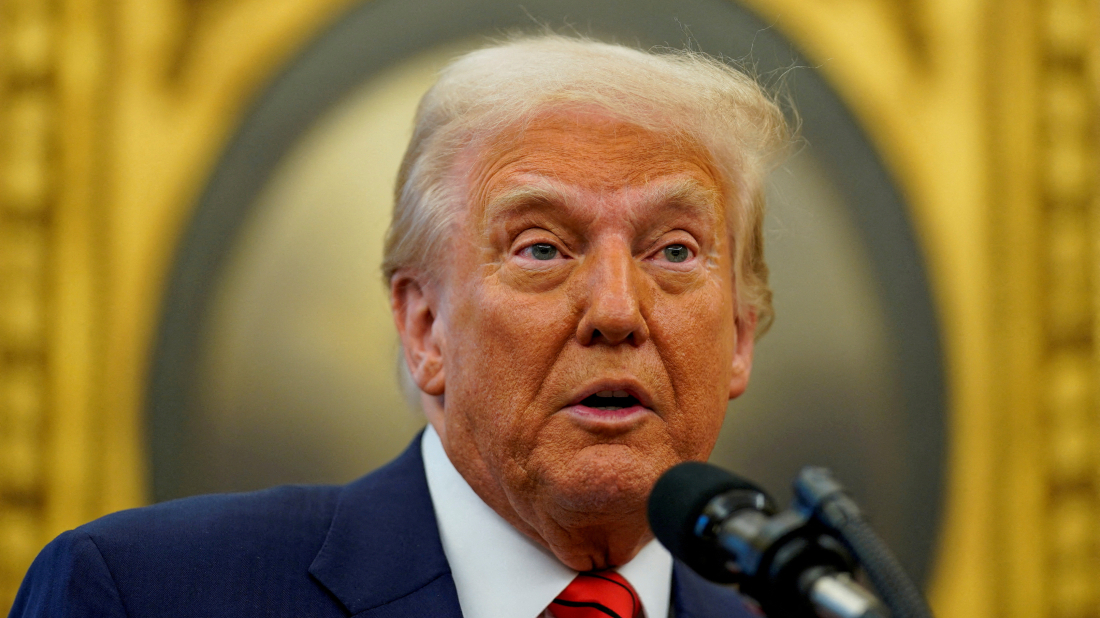
U.S. President Donald Trump has warned of future strikes on Iran's nuclear facilities, following reports that three sites were badly damaged in June bombings.
President Donald Trump warned on Monday that the United States could strike Iran’s nuclear sites again “if necessary,” following remarks by Iranian Foreign Minister Abbas Araghchi that confirmed serious damage to three key facilities hit in U.S. strikes last month.
Speaking to Fox News, Araghchi said the Fordow, Natanz and Isfahan nuclear enrichment sites were severely damaged in the 22 June strikes, but emphasised that Iran would not abandon its enrichment programme, calling it “a question of national pride.”
In a post on his Truth Social platform, Trump responded: “Of course they are, just like I said, and we will do it again, if necessary!”
The strikes came during a 12-day conflict between Iran and Israel and were followed by a U.S.-brokered ceasefire. At the time, Trump claimed the attacks had “completely and fully obliterated” Iran’s nuclear programme. However, a U.S. intelligence assessment later suggested the programme had only been set back by a few months. The White House rejected that finding, calling it “flat-out wrong.”
The renewed tensions come ahead of nuclear talks in Istanbul scheduled for Friday. Iranian officials will meet representatives from the UK, France and Germany — the E3 — as well as the EU’s foreign policy chief. Iran says the discussions will focus on sanctions relief and its peaceful nuclear activities.
Under the 2015 Joint Comprehensive Plan of Action (JCPOA), Iran accepted limits on its nuclear activities in exchange for sanctions relief. The U.S. withdrew from the agreement in 2018 and reimposed sanctions, prompting Tehran to gradually ramp up its uranium enrichment.
According to the International Atomic Energy Agency, Iran is enriching uranium up to 60% purity — near weapons-grade levels. Tehran insists its programme is purely civilian in nature.

Disney+ has debuted Disney Animation’s Songs in Sign Language, a new collection of animated musical sequences reimagined in American Sign Language (ASL), released on 27 April to mark National Deaf History Month.
President Donald Trump said on Sunday Iran could telephone if it wants to negotiate an end to their two-month war. Tehran said the U.S. should remove obstacles to a deal, including its blockade of Iran's ports. Meanwhile Iranian Foreign Minister Abbas Araghchi arrives in St Petersburg for talks.
Market reaction to DeepSeek’s preview of its next-generation artificial intelligence model has been relatively subdued, in sharp contrast to the global shock triggered by its breakthrough releases last year.
Adidas shares rose after Kenya’s Sebastian Sawe delivered a historic performance at the London Marathon on Sunday (26 April), becoming the first athlete to run an official marathon in under two hours.
China’s reaction to the latest tensions around Iran has been firm in tone but restrained in action. It has condemned strikes, called for dialogue and stepped up diplomacy but shown no sign of military involvement or appetite for escalation.
The months-long disarmament process involving the outlawed Kurdistan Workers’ Party (PKK) has made little tangible progress, Turkish intelligence chief İbrahim Kalın has said.
Azerbaijan is expanding its diplomatic and economic footprint amid European energy insecurity and global geopolitical tensions. The Czech Prime Minister’s 27 April visit to Gabala highlighted growing Azerbaijan–Central Europe cooperation, particularly in energy, industry and defence.
Afghanistan’s disaster authority says it is working with the International Organization for Migration (IOM) to boost emergency response, shelter support and volunteer networks following talks in Kabul on Sunday.
Kazakhstan, Kyrgyzstan and Uzbekistan are advancing one of Central Asia’s largest joint energy projects: the construction of the Kambarata HPP-1 hydropower plant on the Naryn River in Kyrgyzstan, with a planned capacity of nearly 2,000 megawatts.
150 senior leaders from the oil and trade industry met in Baku last week for the second annual Caspian and Central Asia Oil Trading and Logistics Forum, as the world grapples with oil and energy shortages linked to the Middle East conflict.
You can download the AnewZ application from Play Store and the App Store.
What is your opinion on this topic?
Leave the first comment