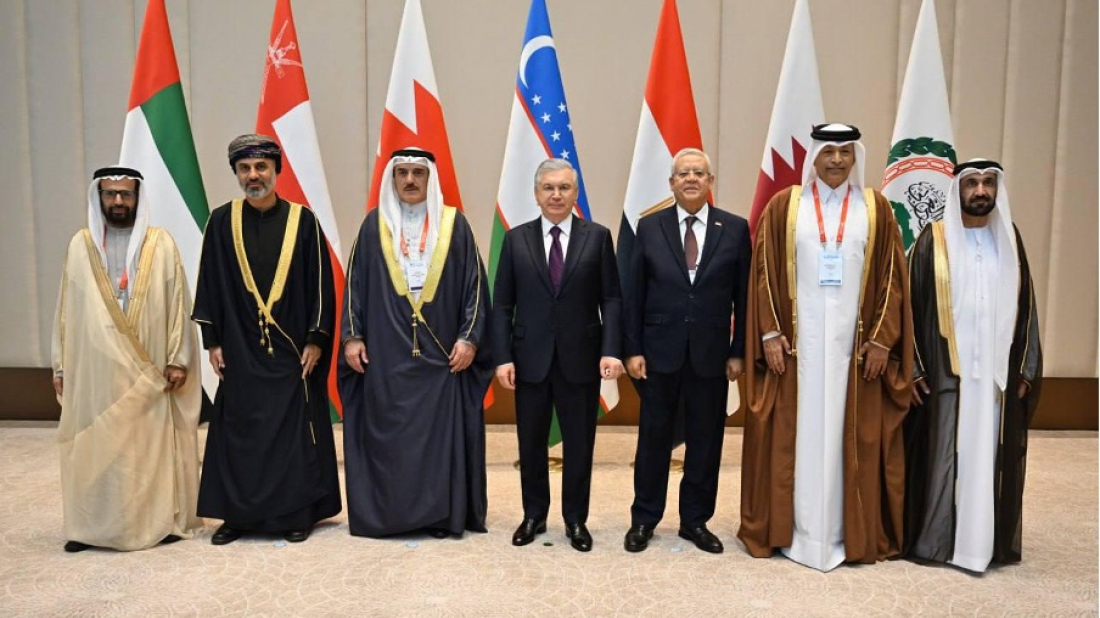
During the 150th Assembly of the Inter-Parliamentary Union (IPU), Uzbekistan's President Shavkat Mirziyoyev held productive discussions with the heads of parliaments from several Arab nations.
The high-level meeting saw the participation of leaders, including the Chairman of the Arab Parliament and the speakers of the parliaments of Bahrain, Egypt, Oman, Qatar, and the United Arab Emirates (UAE).
The central focus of the talks was the future development of relations between Uzbekistan and the Arab countries, covering critical areas such as parliamentarism, economics, energy, transport, and tourism. Notably, the meeting underscored the growing cooperation in recent years, highlighted by the signing of significant agreements and the establishment of over 500 joint ventures. These partnerships have resulted in more than $50 billion in investment projects.
A key point of emphasis was the role of Arab countries in the modernization of Uzbekistan’s energy sector, particularly in the expansion of green energy initiatives. Saudi Arabia and the UAE have signed contracts worth over $12.5 billion to support these efforts, marking a significant step toward enhancing Uzbekistan's energy infrastructure.
The discussions also touched on the situation in Afghanistan, with both sides expressing a commitment to stabilizing the region. Uzbekistan has been at the forefront of efforts to attract Arab nations to help rebuild Afghanistan's infrastructure and economy.
Moreover, the development of critical transport corridors was highlighted, such as the North-South Corridor through Iran, the Road Development project through Iraq, and the Trans-Afghan Corridor, all of which are pivotal for improving regional connectivity.
Additionally, the meeting explored the growing potential of green energy, the digital economy, and innovation. The leaders emphasized the importance of diversifying their economies and expanding mutual trade. Arab countries have shown increasing interest in importing key commodities from Central Asia, including copper, gold, iron, and steel.
Another significant topic on the agenda was the upcoming "Central Asia — Cooperation Council for the Arab States of the Persian Gulf" summit, scheduled for May 2025 in Samarkand. This summit, set to build on the previous meeting held in Jeddah two years ago, will focus on the further development of transport corridors linking Central Asia with the Arab world.
Samarkand, a historical gem and a crucial point along the ancient Silk Road, was chosen as the venue to underscore its symbolic importance in fostering regional cooperation.












What is your opinion on this topic?
Leave the first comment