The first summit between the leaders of the EU and the five countries of Central Asia (Kazakhstan, Kyrgyzstan, Tajikistan, Turkmenistan and Uzbekistan) will take place on 4th April in Samarkand, Uzbekistan.
The President of the European Council, António Costa, together with European Commission President, Ursula von der Leyen, will represent the EU. The meeting will be hosted by the President of Uzbekistan, Shavkat Mirziyoyev.
The summit will be a key opportunity for the EU and Central Asia to demonstrate their geopolitical interest in intensifying bilateral relations and enhancing regional cooperation.
As European Council President António Costa stated ahead of the event, "We live in a world of chaos and fragmentation, where the only possible solution for the EU is to strengthen partnerships for peace and prosperity."
"In a multipolar world, more active and targeted engagement is necessary. The first EU-Central Asia summit will contribute to strengthening our commitments to jointly ensure peace, stability, and sustainable progress," Costa explained.
Equally significant was the statement by European Commission Vice President Margaritis Schinas.
"The EU is taking Central Asia particularly seriously in the context of current geopolitical turbulence," Schinas said.
"At a time when the world is becoming increasingly unstable and insecure, Central Asia remains a region of positive changes. Our cooperation with Central Asia is not a one-time event; we are focused on a long-term perspective."
The recent EU-Central Asia ministerial meeting in Ashgabat and the upcoming EU-Central Asia Summit in Samarkand highlight Brussels’ strategic engagement with the region.
Discussions focused on strengthening multilateral cooperation, addressing common security challenges, enhancing economic, trade and investment ties, as well as engaging on energy, climate neutral economy and connectivity under the Global Gateway, and cooperating on the green transition.
The leaders are expected to issue a joint statement at the end of the summit.
20th EU-Central Asia Ministerial Meeting
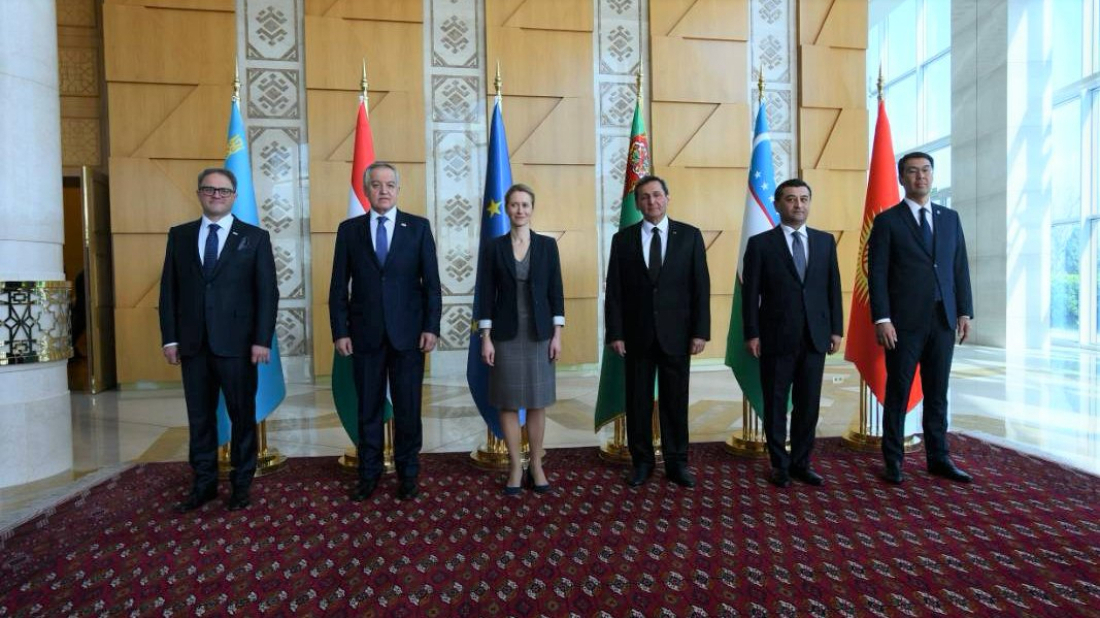
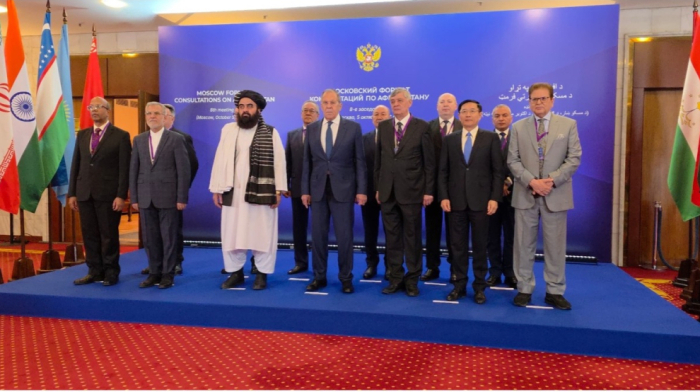
On 27 March 2025, the Foreign Ministers of the Republic of Tajikistan, Turkmenistan, the Republic of Uzbekistan, the Deputy Foreign Ministers of the Republic of Kazakhstan and the Kyrgyz Republic, as well as the European Union’s High Representative for Foreign Affairs and Security Policy held their 20th European Union-Central Asia Ministerial meeting in Ashgabat.
The Participants discussed the preparations for the organisation of the first EU-Central Asia Summit on 4 April 2025, which will demonstrate their commitment to deepening ties, at the highest level, materialising closer strategic cooperation, and marking an important step in the intensification of EU-Central Asia relations.
This builds upon the EU-Central Asia high-level regional meetings of the Heads of State of Central Asia and the President of the European Council, held in Astana in 2022 and Cholpon-Ata in 2023. Participants expressed their deep appreciation to the Republic of Uzbekistan for its offer to host the Summit in Samarkand.
In a joint communiqué, the ministers reaffirmed their joint commitment and political willingness to further strengthening their comprehensive partnership with the EU based on shared values and mutual interests, reflected in the ‘Joint Roadmap for Deepening Ties between the EU and Central Asia’ adopted during their last meeting in Luxemburg on 23 October 2023.
They welcomed valuable progress achieved in all five key areas of the Joint Roadmap: inter-regional political dialogue and cooperation; enhancing trade, investment and economic ties; engaging on energy, climate neutral economy and connectivity; addressing common security challenges; and strengthening people-to-people contacts and mobility.
The minsters reiterated their commitment to work together for peace, security, promotion of fundamental rights and sustainable development.
They noted the importance of further developing inter-parliamentary relations between Central Asia and the EU and welcomed the upcoming 150th Assembly of the Inter-Parliamentary Union, which will be held for the first time in Central Asia, in Uzbekistan, from 5 to 9 April 2025.
Additionally, the participants expressed anticipation for the organization of the next EU-Central Asia Economic Forum in 2025 in Uzbekistan, welcomed Turkmenistan's proposal to host the Forum in 2027, and emphasized the importance of creating more opportunities and meetings to further strengthen cooperation.
The EU is the second trading partner for the region (22.6% of combined foreign trade in 2023), as well as the largest investor, with over 40% of investment in the region originating from the EU. To further deepen bilateral ties, the EU has negotiated enhanced partnership and cooperation agreements (EPCAs) with all Central Asian countries, with the exception of Turkmenistan.











What is your opinion on this topic?
Leave the first comment