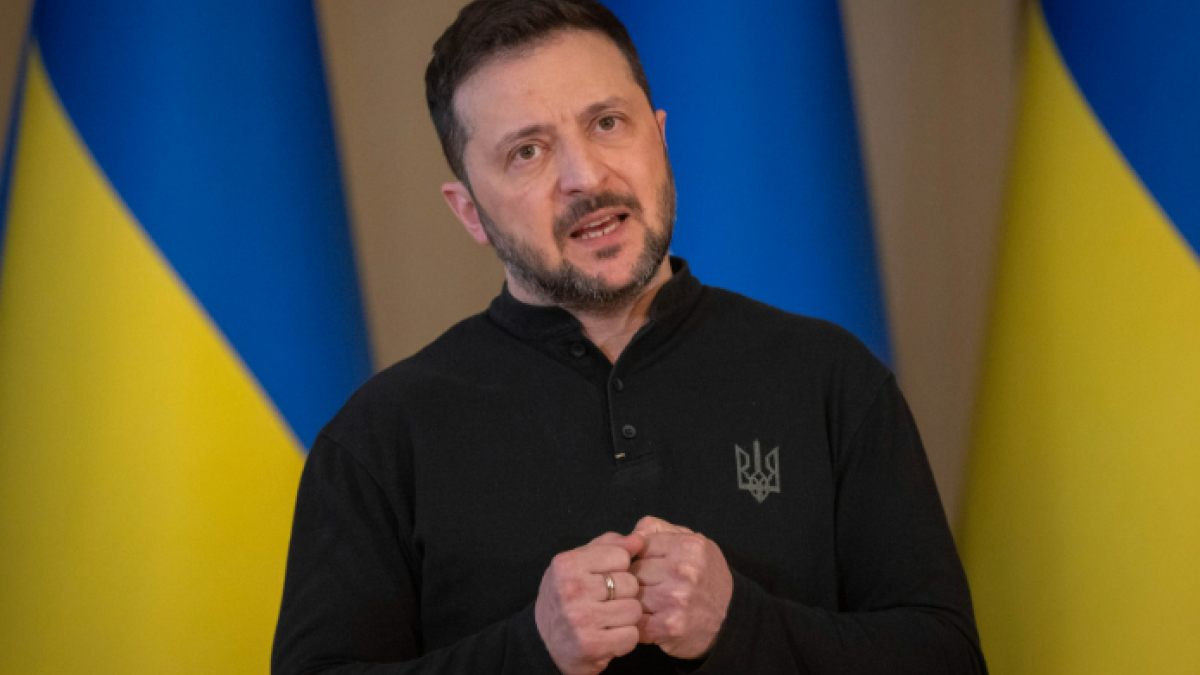
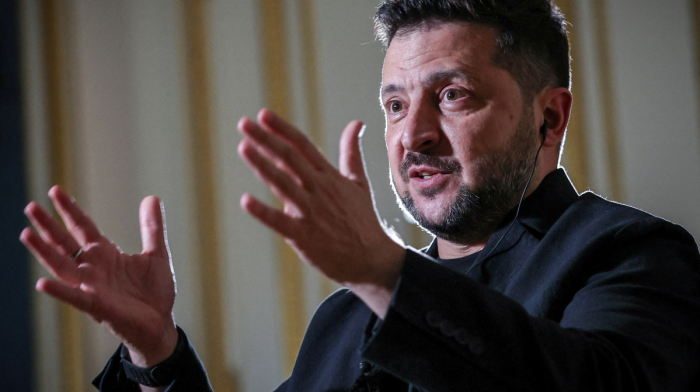
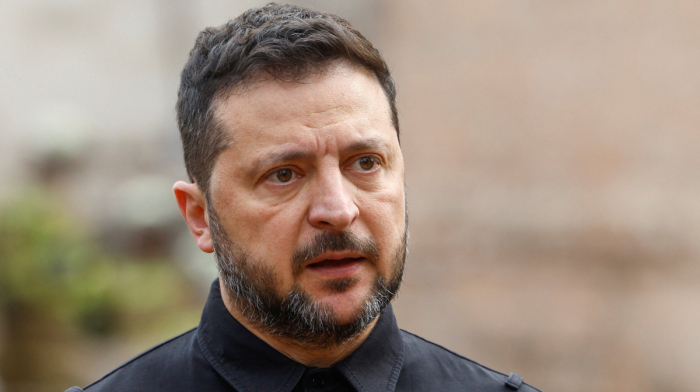
Ukrainian President Volodymyr Zelenskyy condemned a massive Russian attack involving 450 drones and 45 missiles, targeting Ukraine's energy infrastructure. He called for stronger sanctions against Russia’s energy sector to help end the war.
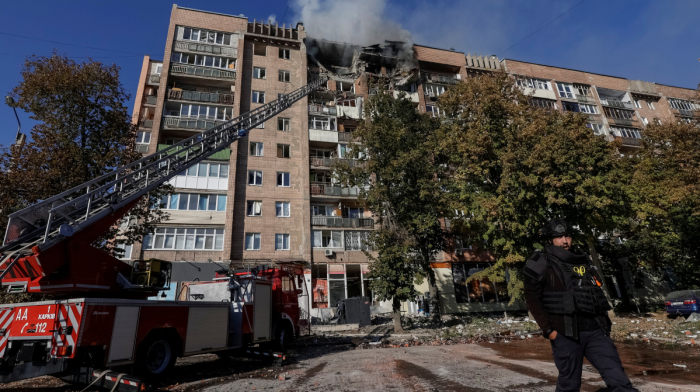
Ukrainian President Volodymyr Zelenskyy has condemned a massive Russian strike on Ukraine’s infrastructure, which took place on Saturday (November 8). Russia launched 450 drones and 45 missiles in an overnight attack targeting Ukraine's energy sector and other critical infrastructure.
Zelenskyy described the strike as "flagrant" and “largely demonstrative,” highlighting that it involved at least 25 ballistic missiles in addition to aeroballistic and cruise missiles.
"The strike was massive, with a lot of ballistic missiles... It was a very flagrant, largely demonstrative strike," Zelenskyy said in a statement.
The Ukrainian president emphasized that there is not enough pressure on Russia, which is allowing Russian President Vladimir Putin to continue the war. Zelenskyy said any easing of the existing pressure only motivates Russia to prolong the conflict and cause further harm to Ukraine.
“There is not enough pressure on Russia, and any ease of the existing pressure formats only motivates Putin to prolong this war, to cause more harm to our country and our people,” Zelenskyy said.
Zelenskyy also pointed out that Russia’s continued aggression is fueled by the weakness of the international response. He reiterated that more sanctions and pressure are necessary to limit Russia’s ability to continue its military operations.
“The weakness of the response to Russian arrogance gives Russia the motivation to continue the war. As many sanctions, as much pressure, as much support (to Ukraine) needed, so that Russia has no means left to survive in the conditions of war,” Zelenskyy added.
Zelenskyy’s comments come as Ukraine continues to deal with the aftermath of the attack, which has disrupted energy supplies and infrastructure across the country. He has reiterated his call for Kyiv’s allies to implement stronger sanctions, particularly targeting Russia's energy sector, in an effort to cripple the country's war effort.
The international community, including the European Union and the United States, is under increasing pressure to take further action against Russia's energy sector and to support Ukraine’s resilience in the face of ongoing Russian aggression.











What is your opinion on this topic?
Leave the first comment