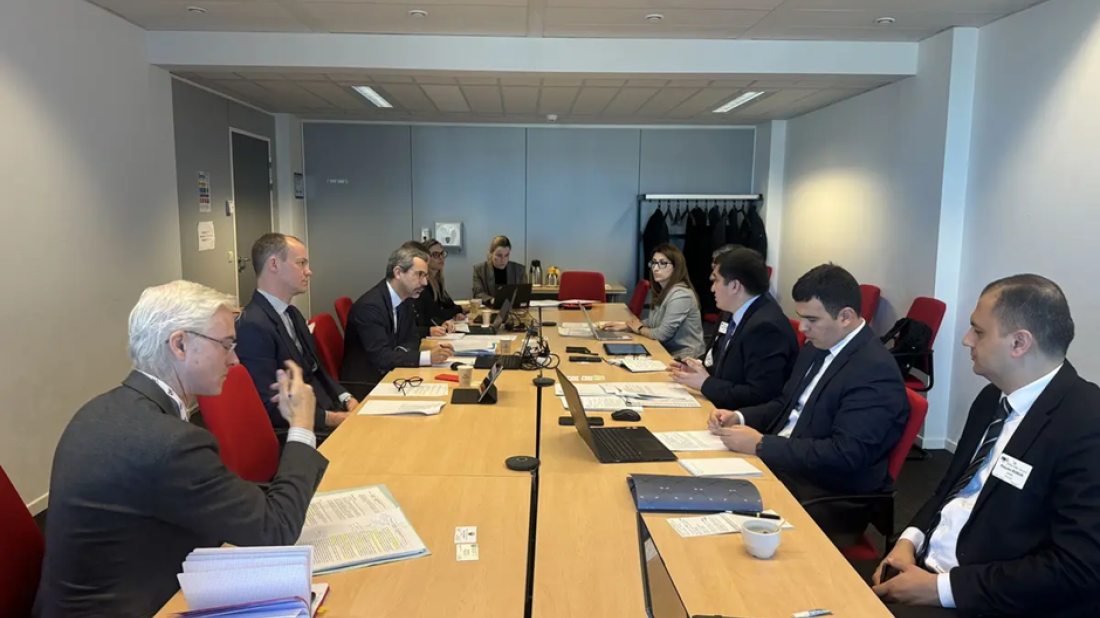
Uzbekistan and the European Union have successfully completed negotiations on the services aspect of Uzbekistan's long-awaited accession to the World Trade Organization (WTO).
This significant step was announced by Azizbek Urunov, the President of Uzbekistan’s special representative for WTO affairs, via LinkedIn.
Urunov confirmed that bilateral negotiations held in Brussels, marking a major milestone in Uzbekistan's WTO accession process.
"I am pleased to announce the completion of negotiations on the services aspect," he wrote. "We still have some work to do on the goods aspect, with the goal of finishing in the coming months."
The European Union has expressed strong support for Uzbekistan's accession ahead of the 14th WTO Ministerial Conference, which is scheduled for 2026 in Cameroon. Notably, in November 2024, Uzbekistan also concluded bilateral negotiations with the United States, becoming the 21st country to resolve its WTO accession issues. Furthermore, in March 2025, Uzbekistan engaged in talks with Russia on market access, another critical component of the WTO accession process.
Uzbekistan’s President, Shavkat Mirziyoyev, emphasized that the country is nearing the final stages of the WTO accession process. He acknowledged that while some benefits that conflict with WTO rules have been discontinued, Uzbekistan remains committed to supporting its businesses and ensuring fair competition. However, challenges remain, as the country has yet to finalize agreements with the United Kingdom, Switzerland, and several other nations.
Uzbekistan initially applied for WTO membership in 1994, but it wasn’t until 2020 that serious progress on this front began. One of the key developments in Uzbekistan's WTO accession process is the introduction of new export duties, set to take effect on July 1, 2025. The duties will apply to 86 types of goods, including leather, silk raw materials, meat, wheat, and mineral fertilizers. The move signals a return to export duties, which were previously abolished in 1997. These new duties will also apply to strategic raw materials produced within Uzbekistan.
The World Bank forecasts that Uzbekistan’s membership in the WTO will significantly boost the country's economy, with projected growth of 17% within 5 to 7 years of accession.
According to the Uzbek National Statistics Committee, Uzbekistan’s foreign trade turnover between January and February 2025 reached $10.8 billion, reflecting a 9.9% increase compared to the same period in 2024. China has emerged as Uzbekistan's largest trading partner, accounting for 20% of the total trade turnover, followed by Russia and Kazakhstan. Additionally, trade with Afghanistan has more than doubled to $276 million, while trade with Russia has seen a slight decline of 8.3%.
Looking ahead, Uzbekistan’s government plans to harness its growing industrial capacity to drive economic development. With a projected population growth to 41 million by 2030 and an expected one-and-a-half-fold increase in its economy, authorities aim to generate an additional $45 billion in industrial value, further propelling the country’s economic expansion.
The completion of WTO services negotiations marks a key milestone in Uzbekistan's economic transformation as it moves closer to full membership in the World Trade Organization.








What is your opinion on this topic?
Leave the first comment