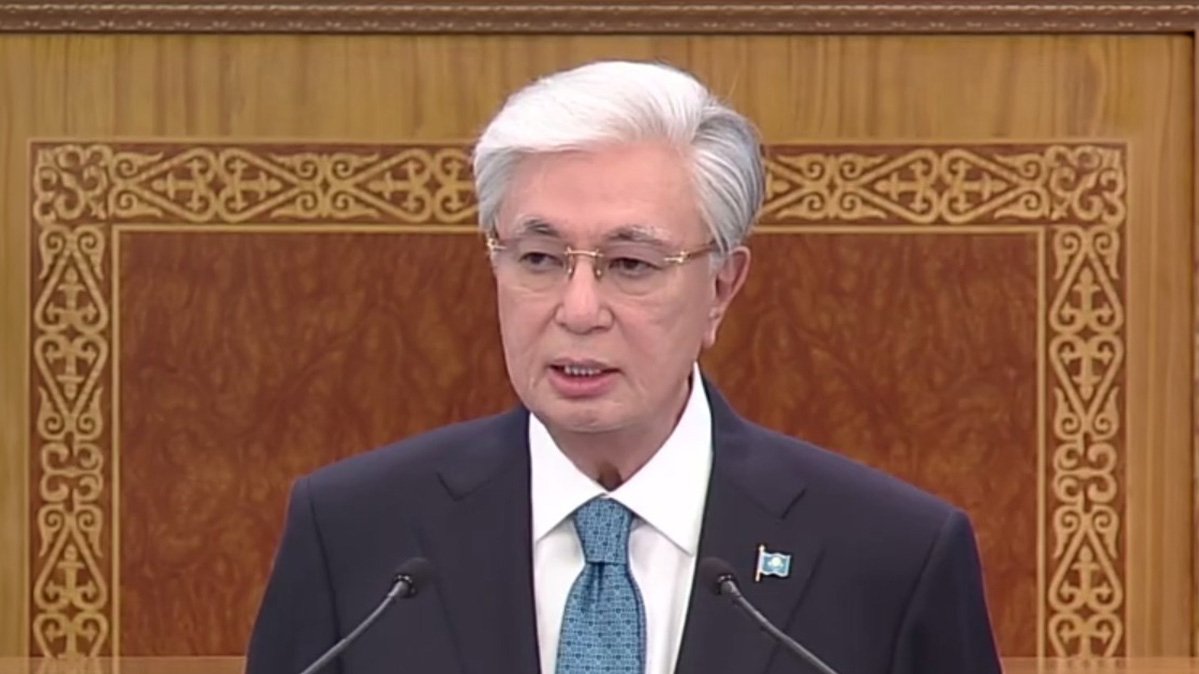
Kazakhstan’s President Kassym-Jomart Tokayev has unveiled plans to modernise infrastructure, strengthen trade links and boost electricity production in his annual address to the nation, outlining his economic priorities against a backdrop of global uncertainty.
The government plans to invest around $14 billion from the National Fund in infrastructure projects by the end of 2029. Tokayev called for a nationwide construction programme, including around 70 healthcare facilities and 50 projects covering education, sport and culture.
Disruptions to global shipping have increased demand for overland trade routes between Asia and Europe, creating new opportunities for Kazakhstan. Tokayev said the country should play a bigger role in managing international freight, rather than simply serving as a transit corridor.
“Kazakhstan must seize this historic opportunity to become a leading logistics hub in Eurasia in practice,” he said.
Plans for advanced logistics operations
To achieve this, the government plans to strengthen domestic logistics operators, build cargo distribution centres and digitise international transport routes.
The Bakhty-Ayagoz railway, due to open in 2027, is expected to boost annual freight capacity on the Chinese border by 20 million tonnes. Meanwhile, the planned Aral-Caspian highway could shorten the Trans-Caspian route by around 1,000 kilometres, cutting delivery times by up to three days, according to Tokayev.
But expanding transport and industry will also mean growing demand for electricity. Kazakhstan generated around 123 billion kilowatt-hours in 2025, but demand outstripped supply, forcing the country to rely on imports.
Tokayev aims to turn that deficit into a sustainable surplus by 2029, through new power stations and upgrades to existing facilities. Construction of the Balkhash nuclear power plant could begin in 2027, although it is unlikely to contribute to electricity supplies in the near term.
Tax reform, more support for businesses
The address also touched on inflation, tax reform and support for businesses, including a proposed three-year freeze on inspections of micro and small enterprises starting in January 2027. Small and medium-sized businesses already contribute around 40% of Kazakhstan’s GDP.
Tokayev also stressed that public investment should benefit local industry. He called for National Fund resources to boost domestic production rather than pay for imports, while seeking greater private-sector involvement in infrastructure development.
Read more:










What is your opinion on this topic?
Leave the first comment