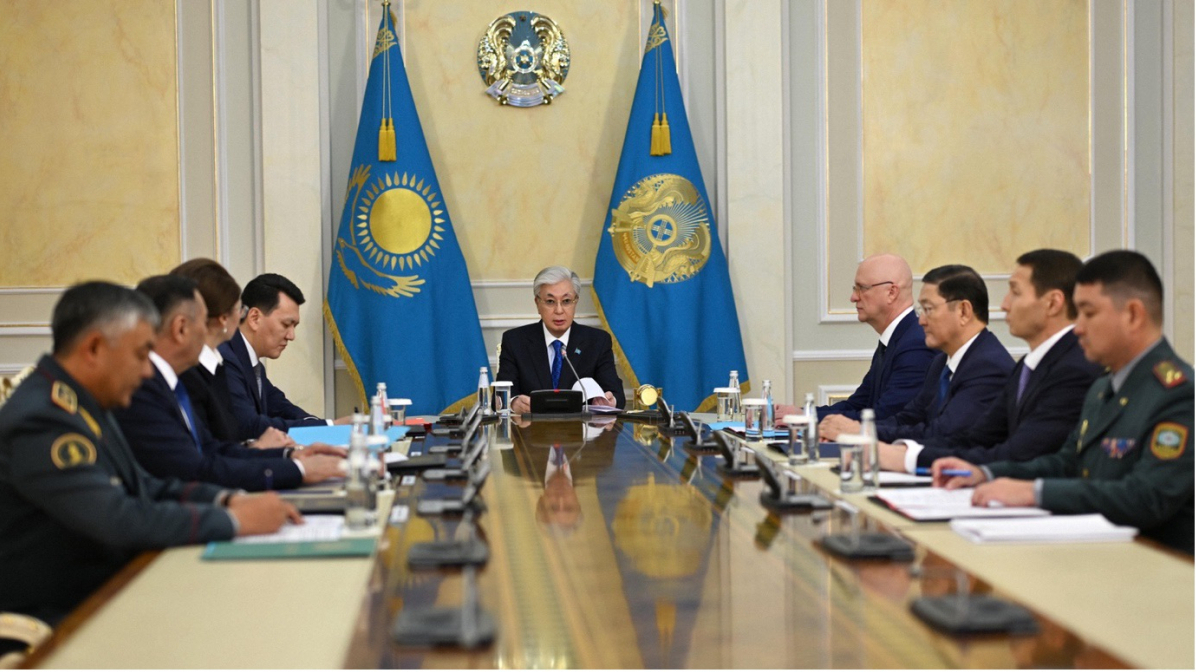
Kazakhstan is preparing sweeping military reforms after 14 service members died during exercises in the Caspian Sea. President Kassym-Jomart Tokayev approved the plans on 21 October, with major changes to training, oversight and defence capabilities set to begin in 2027.
The move follows the deadly exercises on 24 September, which exposed serious failures in military planning and personnel safety. A wider inspection of the Defence Ministry has led to 13 criminal cases involving suspected embezzlement, abuse of authority and other violations.
The findings have raised serious questions about military leadership and accountability, prompting Tokayev to demand sweeping reforms rather than piecemeal solutions.
“Special attention is required for service security, command culture, and the efficient use of public resources,” he said, adding that relations between the military and society also needed to change.
New training system aims to protect conscripts
A key element of the overhaul is a new two-stage system for Kazakhstan’s compulsory 12-month military service.
From 2027, recruits will undergo six months of training at dedicated centres before joining military units for the second half of their service. There, they will continue combat training and carry out operational duties alongside their assigned formations.
The system aims to help recruits adjust to military life while reducing hazing and abuse.
Political analyst Gaziz Abishev said the changes could make misconduct easier to detect and officers more accountable. Writing on Telegram, he argued that abuse is harder to monitor within regular military units, while dedicated training centres could provide closer supervision.
Tougher oversight and military discipline
The reforms also seek to improve personnel safety and strengthen discipline across the armed forces.
The government plans to introduce military adviser posts and establish an authorised body to oversee service members’ affairs.
Other measures include expanding specialised military schools, improving basic training and reinforcing military-patriotic education.
A new communications strategy aims to strengthen public trust in the armed forces, while internal educational programmes will focus more closely on the constitutional principle of Law and Order.
Drone warfare becomes a priority
Military modernisation is another central focus, with Kazakhstan planning to establish a dedicated branch for unmanned forces.
The initiative draws on lessons from modern conflicts, particularly the war in Ukraine, where relatively inexpensive drones have proved capable of destroying military equipment worth far more.
The reforms come as Kazakhstan looks to bolster its regional defence capabilities.
In the 2026 Global Firepower rankings, Kazakhstan stands 58th among 145 countries, behind Uzbekistan in 53rd place but ahead of Turkmenistan, Tajikistan and Kyrgyzstan, ranked 78th, 100th and 109th, respectively.
Global Firepower puts Kazakhstan’s 2026 defence budget at approximately $5.84 billion.
Reforms scheduled for 2027
The overhaul, presented by Deputy Security Council Chair Aida Balayeva, incorporates lessons from international military experience, developments in modern warfare and recommendations from domestic experts.
Defence Minister Aidos Myrzakhmetov outlined plans to modernise the armed forces, while Tokayev ordered officials to finish a comprehensive review of the Defence Ministry by the end of 2026.
Preparations are expected to be completed by the end of this year, paving the way for the main reforms to take effect in 2027.
The government and Security Council will be responsible for overseeing their implementation.
Read more:










What is your opinion on this topic?
Leave the first comment