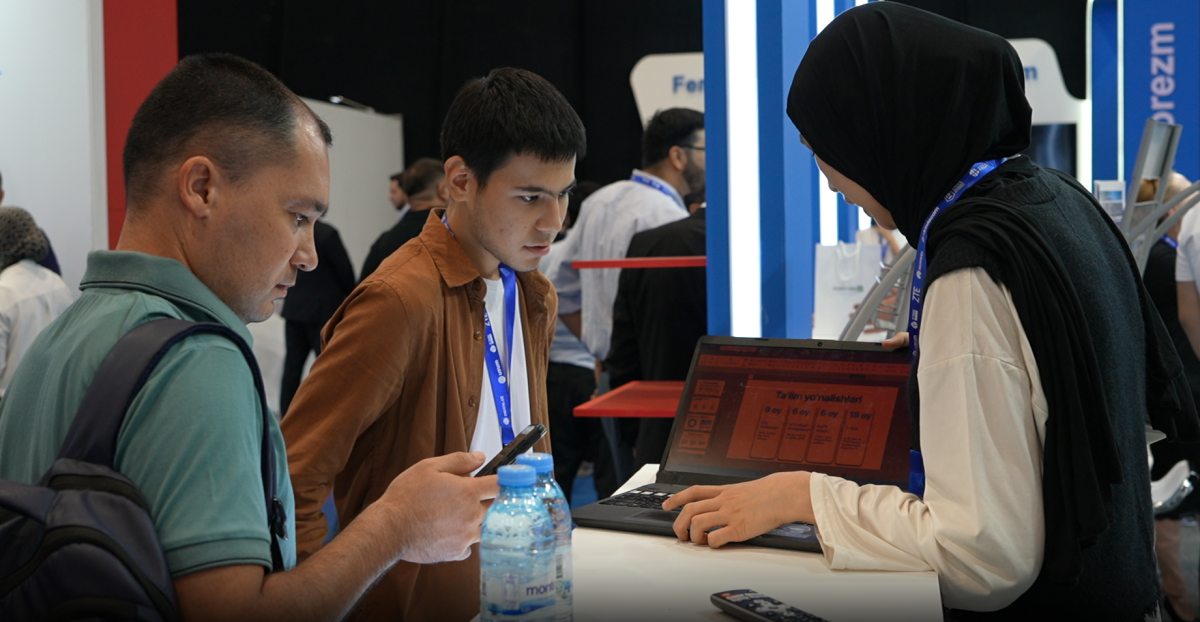
Over the past few years, Uzbekistan has expanded its startup ecosystem, IT exports and digital infrastructure - all highlighted recently as the country hosted ICTWEEK 2026. The next challenge is turning that growth into a larger part of the economy.
From digitalisation to a digital economy
Uzbekistan’s digital transformation is no longer limited to individual e-government services or technology projects. Under the Digital Uzbekistan 2030 strategy, digital technologies are being introduced across public administration, healthcare, agriculture and finance. IT service exports reached $940 million in 2025, approaching the $1 billion milestone.
The country is moving beyond building digital services towards developing companies, capital and infrastructure around them.
AI is becoming the next priority
Artificial intelligence is now one of the main areas shaping the next phase. Uzbekistan plans to develop around 200 applied AI projects by the end of 2027, covering areas including healthcare, energy, transport and customs. New AI laboratories and computing infrastructure are also being developed at universities.
This creates another question: whether Uzbekistan can move from adopting AI technologies to developing products and services that can be exported internationally.
More infrastructure, more computing power
The expansion of AI and cloud services will require significantly more digital infrastructure. Uzbekistan is developing new data centres and upgrading its public-private cloud infrastructure. One major project is Saudi Arabia-based DataVolt’s data centre in Tashkent, with an initial investment of $150 million and planned expansion of capacity.
The government is also planning additional computing infrastructure and specialised data centres as demand for cloud services and AI applications increases.
From a domestic market to global exports
Another measure of progress will be how much technology Uzbekistan can sell abroad. IT Park members already export digital services to 102 countries, while programmes such as Local2Global are designed to help Uzbek technology companies enter international markets.
The government has set further targets for the startup ecosystem by 2030, including thousands of active startups and billions of dollars in venture investment.
How far does Uzbekistan still have to go?
Uzbekistan will need to deepen its talent pool, increase private investment, develop advanced digital infrastructure and create more globally competitive technology companies.
ICTWEEK 2026 reflects that transition. The discussion is no longer simply about whether Uzbekistan can digitalise its economy, but about how large a role technology can ultimately play in the country’s economic growth.
Read more:





















What is your opinion on this topic?
Leave the first comment