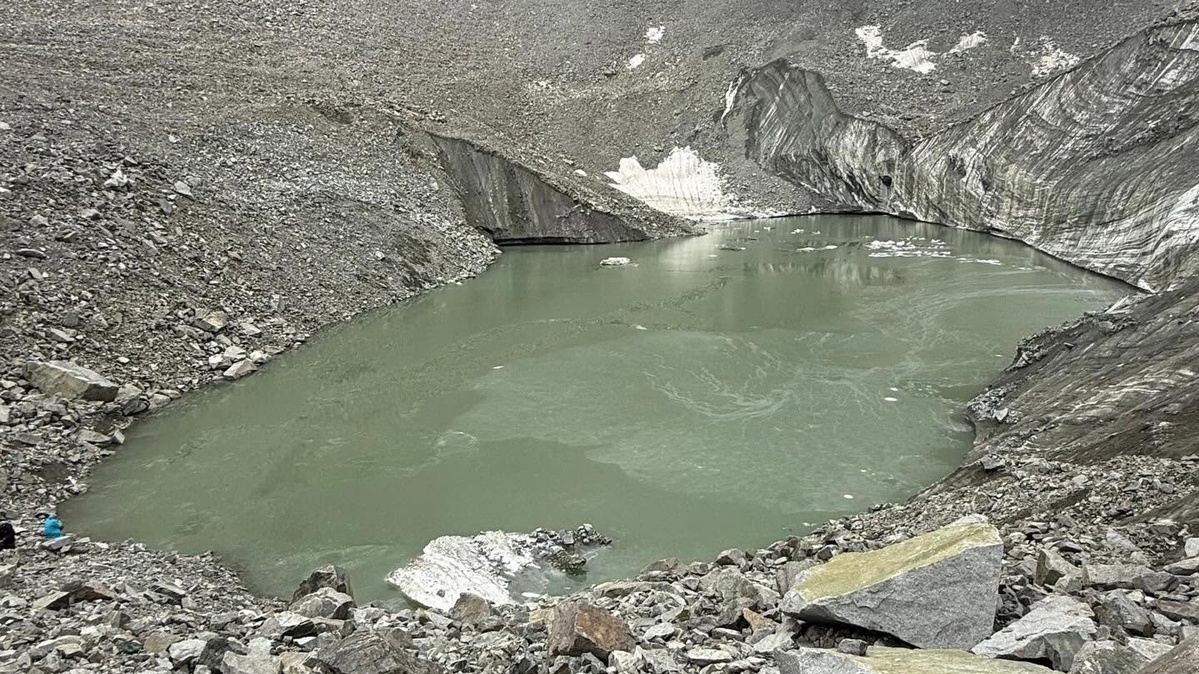
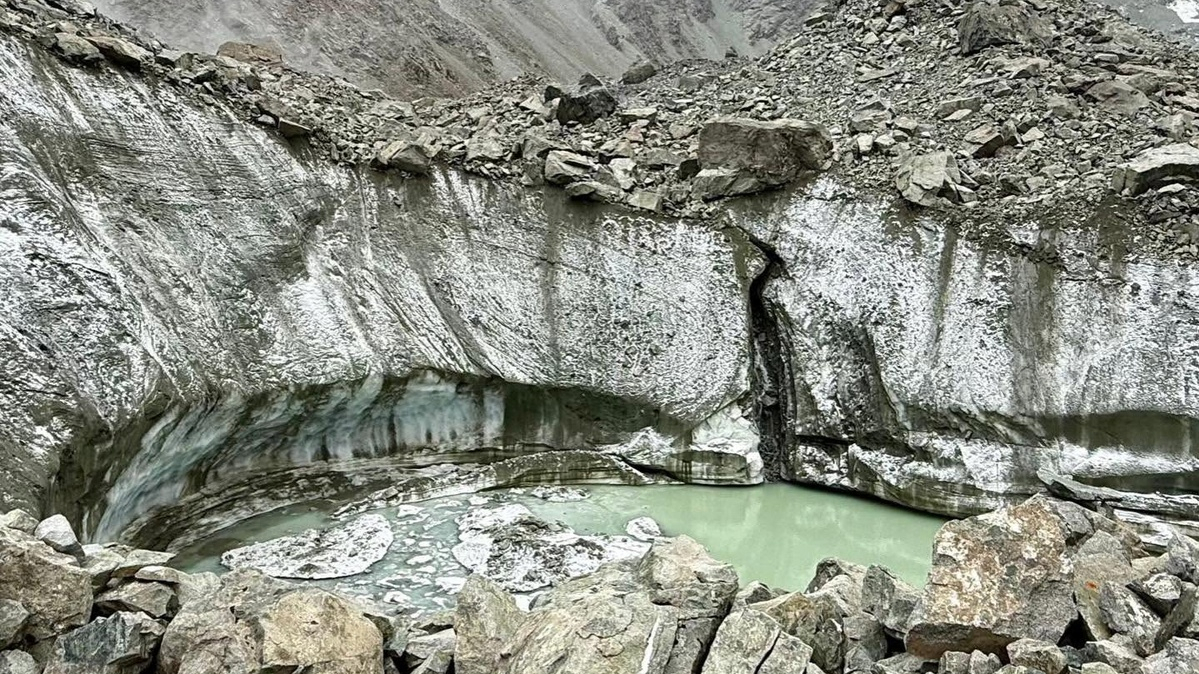
Glacier coverage in Kyrgyzstan’s Issyk-Kul Basin has shrunk by 33.7 per cent over the past 70–90 years, according to an updated glacier inventory by Kyrgyzhydromet. The agency says the pace of glacier retreat has accelerated sharply in recent years.
Updated inventory reveals accelerating glacier retreat
The revised glacier catalogue was prepared by Kyrgyzhydromet, the Hydrometeorological Service under the Ministry of Emergency Situations, using Copernicus Sentinel-2 satellite imagery, the QGIS geographic information system, Google Earth and data from previous glacier surveys.
Researchers updated glacier boundaries, compiled new morphometric data and documented glaciers that had fragmented, newly formed or disappeared completely.
According to the agency, the continued loss of glacier area is linked to climate change, with glacier coverage across the Issyk-Kul Basin declining by 33.7 per cent over the past 70–90 years. The retreat has accelerated in recent years, with glacier area shrinking by a further 23.1 per cent over the past decade.
Why it matters
The updated inventory will serve as an important resource for monitoring Kyrgyzstan’s cryosphere, providing government agencies, researchers and engineering organisations with up-to-date information on the country’s glaciers.
The cryosphere is the frozen water part of the Earth, including all ice, snow and permafrost.
The findings also have implications for the future of Lake Issyk-Kul, which is fed by rivers originating in the surrounding mountain glaciers. According to the 2018 Catalogue of Glaciers of Kyrgyzstan, the basin contained 957 glaciers covering 560.8 square kilometres, while about 118 rivers and streams flow into the lake, many of them sustained by snow and glacier melt.
Previous studies have shown that Lake Issyk-Kul’s water level fell by 2.75 metres between 1927 and 2003, highlighting the importance of glacier-fed river systems in maintaining water resources.
Supporting future water management
In December 2025, Kyrgyzstan approved the Concept for the Sustainable Development of the Ecological and Economic System of Lake Issyk-Kul through 2030, which includes measures to modernise irrigation infrastructure and expand water-saving technologies.
The country is also preparing a feasibility study for an integrated national cryosphere monitoring system, bringing together glacier and snow cover observations to strengthen future water management and climate risk assessments.
Read more from Kyrgyzstan:

















What is your opinion on this topic?
Leave the first comment