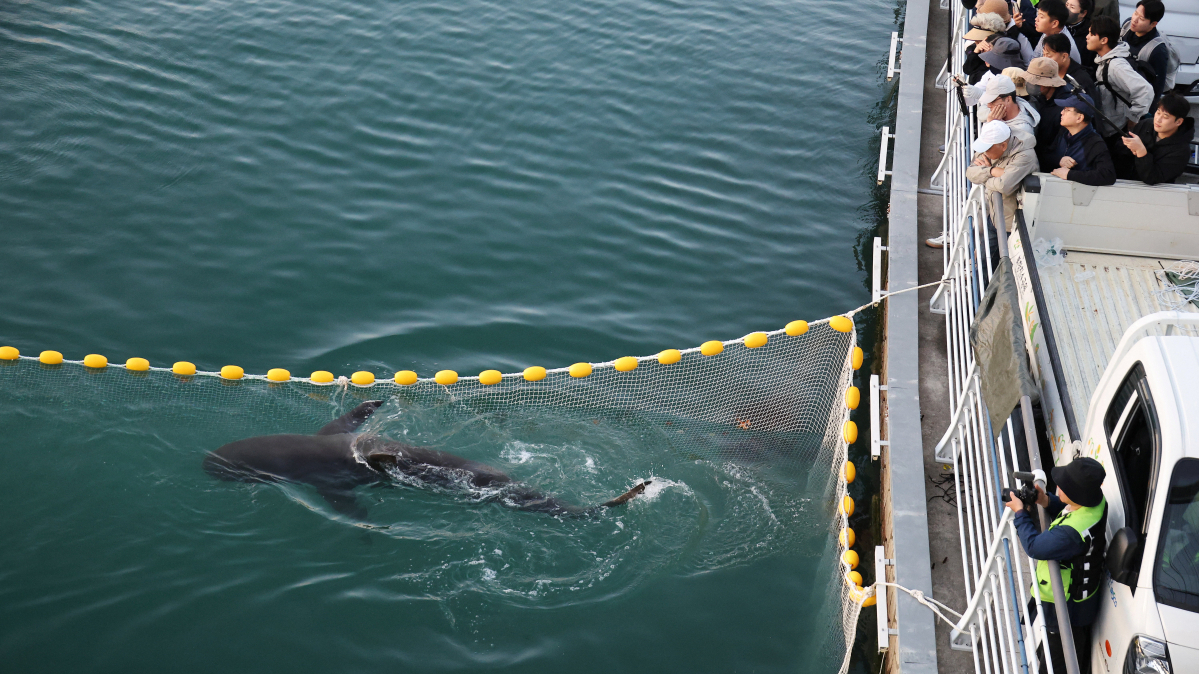
A female dusky shark trapped in a canal in Busan, South Korea, for more than a month has finally returned to the open sea after a successful rescue operation on Wednesday (21 October), following two failed attempts.
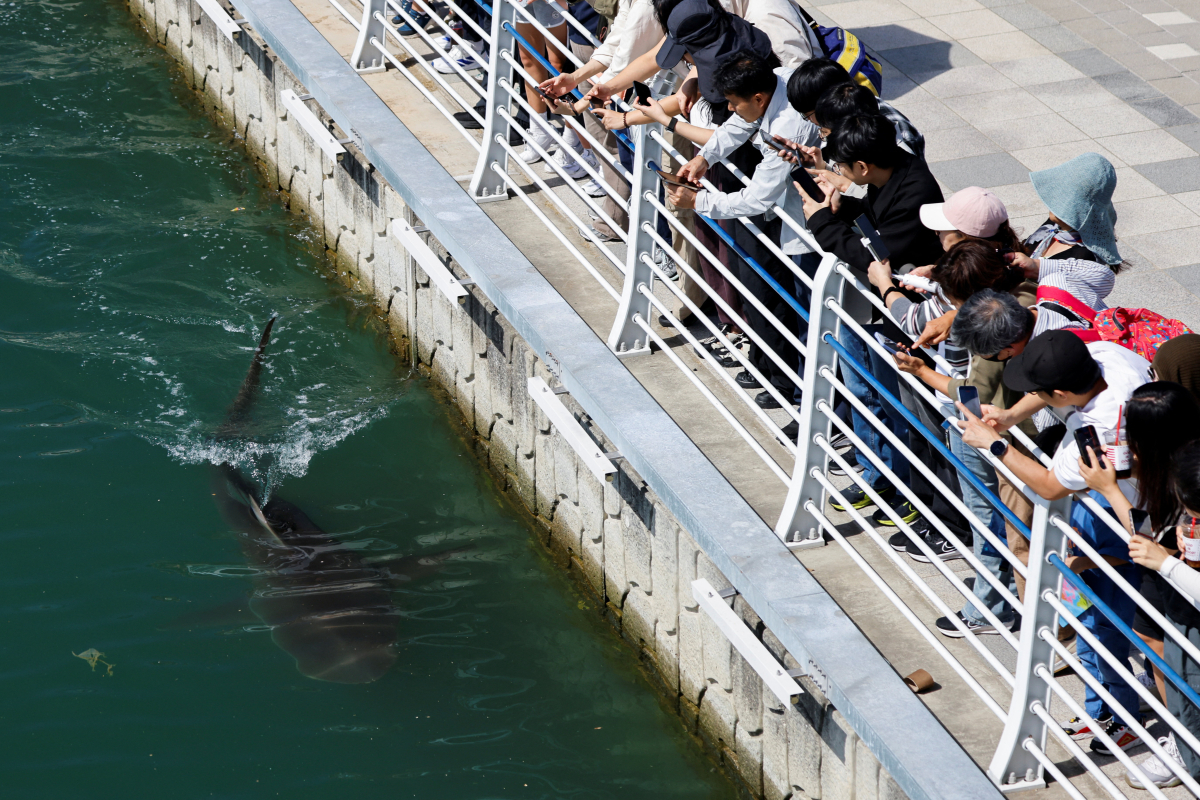
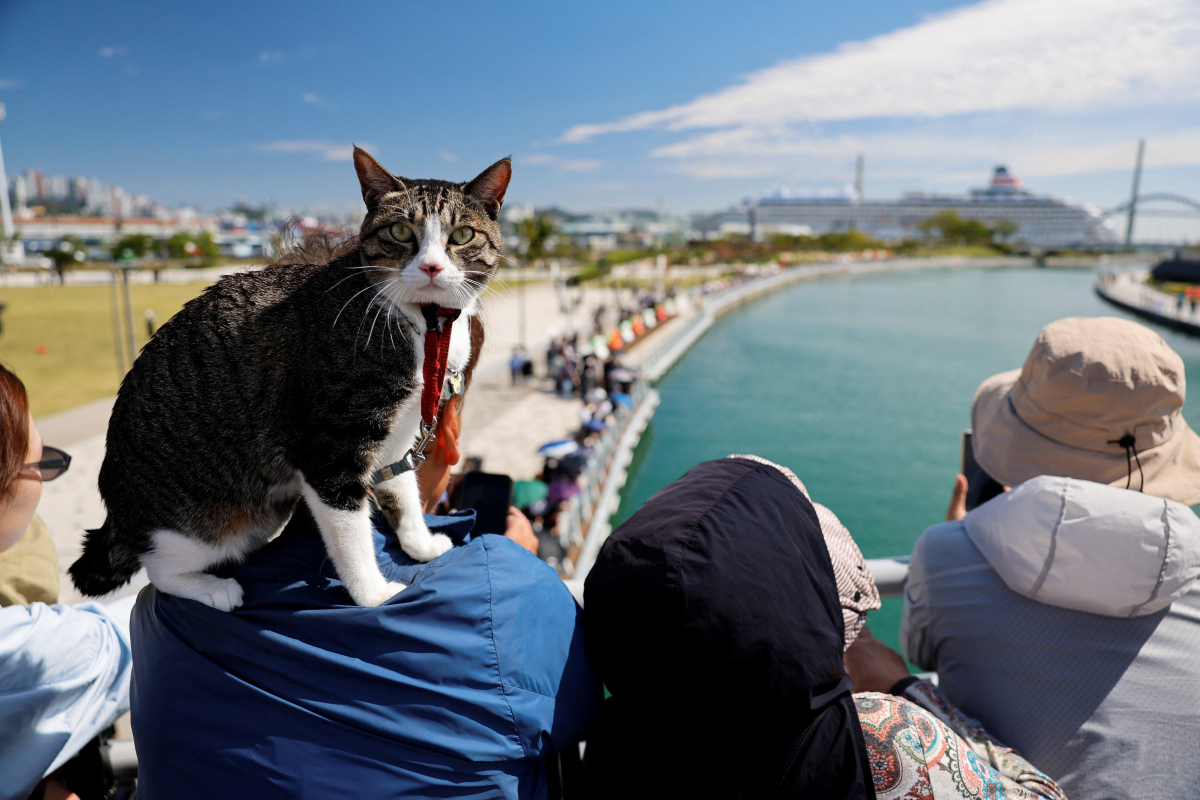
The three-metre-long shark, nicknamed Bukangi after Busan’s North Port, was first spotted in the artificial waterway on 18 September. The unusual visitor became a tourist attraction, drawing more than 1.6 million people to the waterfront park by 20 October, according to the Busan Infrastructure Corporation.
But concerns grew over the shark’s health after experts reported no confirmed sightings of it feeding and warned that falling water temperatures could further threaten its survival.
Third attempt succeeds
Authorities made two unsuccessful attempts to guide Bukangi back to sea, on 29 September and 2 October.
During the first operation, boats used water jets to steer the shark towards the canal exit, but rescuers abandoned the effort after around five hours when the animal repeatedly avoided the streams.
A second attempt using a 50-metre net also failed after it became caught on the canal floor. The shark later crossed the barrier and swam further into the waterway.
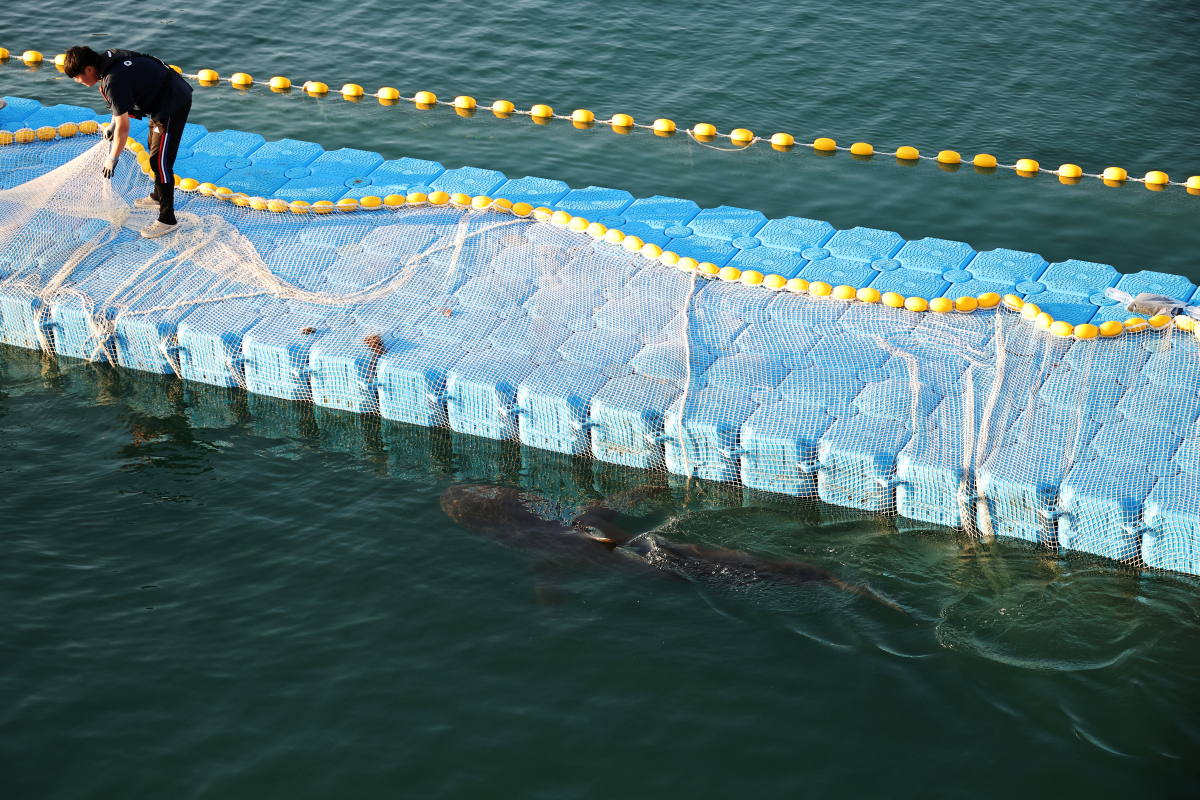
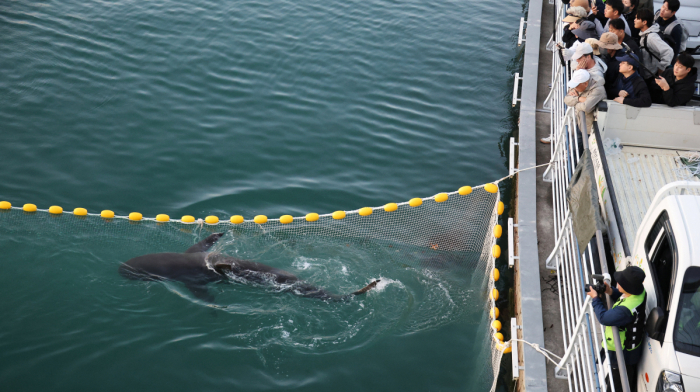
On Wednesday, rescuers changed their approach, deploying nets attached to floating platforms while divers helped navigate the canal’s uneven underwater terrain.
Workers gradually moved the platforms towards the sea, using barriers to stop the shark from turning back.
Footage captured earlier in the operation showed Bukangi lingering near the platforms and netting for hours before rescuers finally succeeded.
Busan Mayor Chun Jae-soo had described Bukangi as a symbol of the city, expressing hope that the shark would safely return to its natural habitat.
Concerns over the shark’s health
The National Institute of Fisheries Science identified Bukangi as a female dusky shark measuring approximately three metres long. The species is classified as endangered by the International Union for Conservation of Nature.
During its time in the canal, authorities recorded no confirmed sightings of the shark feeding and discovered injuries to its snout and right pectoral fin, believed to have been caused by contact with the concrete walls.
Choi Yoon, an ichthyologist and emeritus professor at Kunsan National University, warned that Bukangi appeared to be weakening as its energy reserves ran low. He estimated that the shark might have only around two weeks to live if its condition continued to deteriorate.
The crowds drawn to the canal may have added to the animal’s stress, with reports suggesting it reacted to bright lights at night.
Shark sightings raise questions about warming seas
Bukangi’s unexpected appearance has also raised questions about changing marine conditions around South Korea, with experts suggesting that warming seas may be contributing to an increase in large shark sightings.
The National Institute of Fisheries Science recorded 46 sightings of large sharks along South Korea’s east coast in the first half of 2026, compared with just 12 during the same period in 2025.
For visitors who had travelled to Busan repeatedly to catch a glimpse of Bukangi, the successful rescue brought a welcome sense of relief.
Lee Min-jeung, a 39-year-old travel content creator from Seoul, said she had made four trips to Busan to see the shark.
“I’m relieved that it seems to have returned to the sea,” she said.
“Goodbye. Don’t get sick,” she added.
Read more:



















What is your opinion on this topic?
Leave the first comment