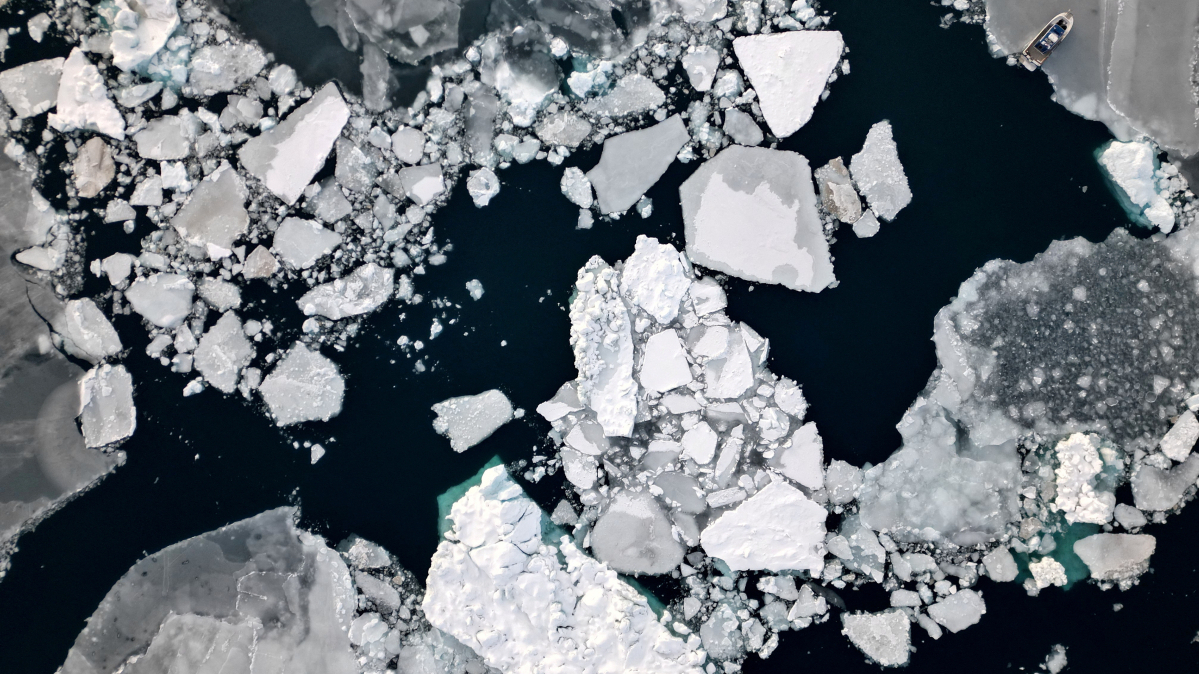
Greenland and Antarctica have shed a combined 11.3 trillion tonnes of ice since 1979, according to the most comprehensive satellite study of the planet's ice sheets to date, with researchers warning the pace of loss has accelerated sharply in recent decades.
The research, published in the journal Scientific Data, drew on data from 27 satellite missions, the longest such record ever compiled. It found the melting has added around 3.14cm to global sea levels.
Lead author Inès Otosaka, a climate scientist at Northumbria University, said the scale of loss was difficult to grasp.
”To put this very large number into context, 11.3 trillion tonnes of ice is enough ice to fill in a cube that would be 23 kilometres in height,” she said.
Greenland accounts for most of loss
About 60 per cent of the loss came from Greenland, despite the ice sheet being roughly an eighth the size of Antarctica's. The study found ice loss was relatively stable through the 1970s and 1980s before accelerating in the 1990s, with the pace quadrupling between the 1980s and 2010s.
Researchers said 84 per cent of the loss stemmed from glaciers discharging ice into the ocean more rapidly, rather than surface melting, pointing to warming oceans as the primary driver.
In Greenland, the Jakobshavn glacier is now retreating by up to 50 metres a day, Otosaka said.
A slowdown was recorded between 2020 and 2023, as heavy snowfall in East Antarctica and cooler Greenland summers temporarily offset losses elsewhere.
However, scientists cautioned this reflected a short-term weather variation rather than a reversal of the underlying trend.
They warned that ice sheets can take decades to respond to climate change, meaning further loss may be locked in even if warming is curbed.
Otosaka said the findings carried serious implications for coastal communities.
“Ice sheets are now a major driver of sea-level rise, accounting for about 25 per cent of all sea-level rise,” she said, noting that every additional centimetre puts two to three million more people at risk of annual coastal flooding.
The researchers said the total rise attributable to the ice sheets already puts a further six to nine million people at risk of coastal flooding and erosion worldwide.
Read more about the environment:




















What is your opinion on this topic?
Leave the first comment