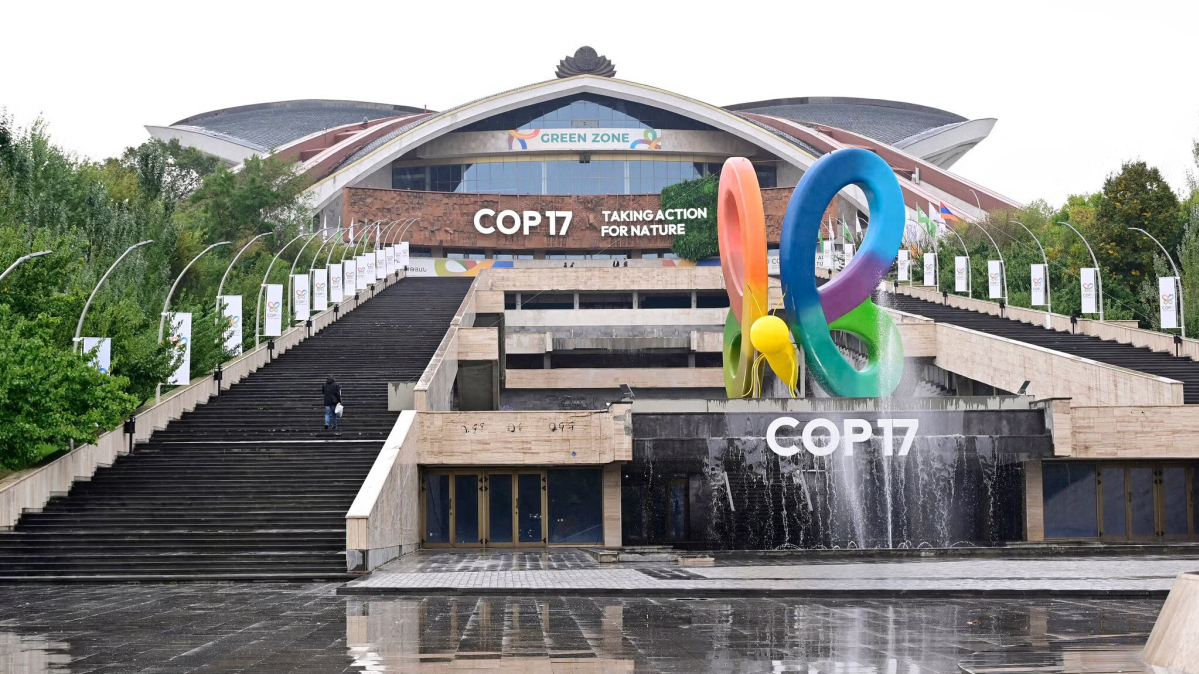
As Armenia prepares to host COP17, the 17th Conference of the Parties to the Convention on Biological Diversity, new projections reveal a widening gap between global conservation promises and what countries are on track to deliver by 2030.
The world has four years left to protect 30 per cent of its land and sea. But even if countries fulfil their existing commitments, they are projected to miss that target.
Speaking at the UN Biodiversity Leaders' Summit in Yerevan on 16 October, Secretary-General António Guterres warned that more than one million species face extinction.
“Progress is uneven, and far too slow,” he said, according to the UN Convention on Biological Diversity (CBD) Secretariat.
With COP17 scheduled for 19 to 30 October, attention is shifting from biodiversity commitments to measurable progress.
What are the global biodiversity targets for 2030?
In 2022, governments adopted the Kunming-Montreal Global Biodiversity Framework, setting 23 targets to halt and reverse biodiversity loss by 2030.
Its best-known commitment, “30x30”, calls for the effective conservation and management of at least 30 per cent of the world's land, inland waters, coastal areas and oceans.
According to the CBD's official conference programme, COP17 will provide an opportunity to assess progress and accelerate implementation.
How far behind is the world on the 30x30 target?
The latest projections suggest existing commitments are insufficient.
Guterres told the 16 October summit that even if current national commitments are fulfilled, only 26 per cent of terrestrial ecosystems and 12 per cent of marine ecosystems would be protected by 2030.
That leaves gaps of four and 18 percentage points respectively against the 30 per cent target.
These figures are projections based on national commitments, not current protected-area coverage.
What progress has been made since 2022?
Yes. According to Guterres, an additional 1.3 million square kilometres of land and 6 million square kilometres of ocean have come under formal protection since the biodiversity framework was adopted.
Nearly 90 per cent of parties to the convention have also established national biodiversity targets.
However, formally designating protected areas does not necessarily establish whether they are being effectively managed.
Who is funding global biodiversity protection?
At the leaders' summit, nine private donors, including the Bezos Earth Fund, announced a collective pledge of more than $500 million over the next five years to support threatened species recovery in more than 100 countries.
The new Species Recovery Alliance supports the global biodiversity framework's target of preventing extinctions.
Meanwhile, the European Commission said on 16 October that the EU remains on track to double international biodiversity funding from €3.5 billion to €7 billion.
The EU also plans to launch an initiative exploring how biodiversity credits could attract private investment.
Another financing mechanism under discussion is the Cali Fund, established in 2024 to share benefits from the commercial use of digital genetic information. Companies using such information are being encouraged to contribute to biodiversity conservation.
Why is Armenia hosting COP17?
Beyond conservation, COP17 offers Armenia a diplomatic opportunity.
Armenian Foreign Minister Ararat Mirzoyan said hosting the conference would strengthen international cooperation during Armenia's two-year COP17 presidency. He also stressed that biodiversity protection must remain a priority alongside economic development.
Armenian officials have highlighted the conference's political and economic significance, with international delegations gathering in Yerevan for negotiations and public events.
What will happen at COP17 in Armenia?
COP17 will conduct the first global review of progress towards the Kunming-Montreal framework's 23 targets.
According to the CBD's official annotated agenda, governments will examine national reports, implementation challenges and ways to accelerate action.
The conference's ministerial segment is scheduled for 27–28 October, before negotiations conclude on 30 October.
The next global review is planned for COP19 in 2030, when the targets are due.












What is your opinion on this topic?
Leave the first comment