Azerbaijan is seeking international investment in a 3,000-kilometre green energy corridor to Europe, with banks, investors and energy companies gathering in Baku on Thursday to discuss financing for the ambitious project.
The Caspian–Black Sea–Europe Green Energy Corridor would connect Azerbaijan to European electricity markets via Georgia, Romania and Hungary, opening up a new export route as the country expands its renewable energy sector.
The project would span approximately 3,000 kilometres of transmission infrastructure, including a submarine cable across the Black Sea.
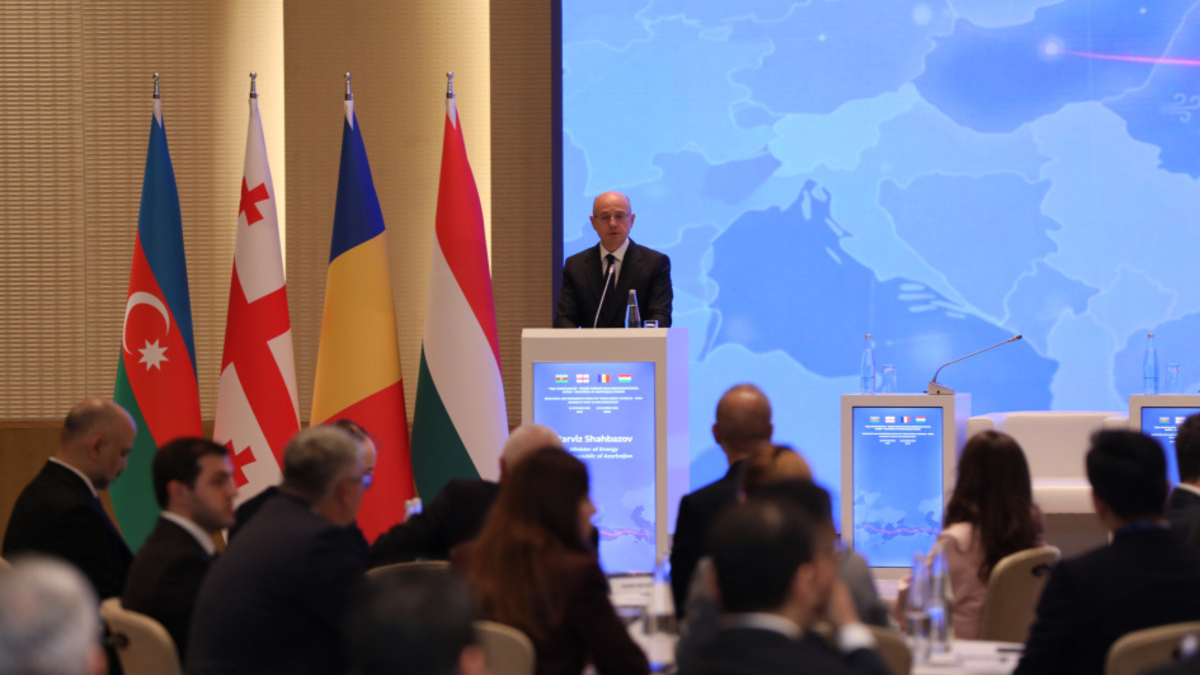
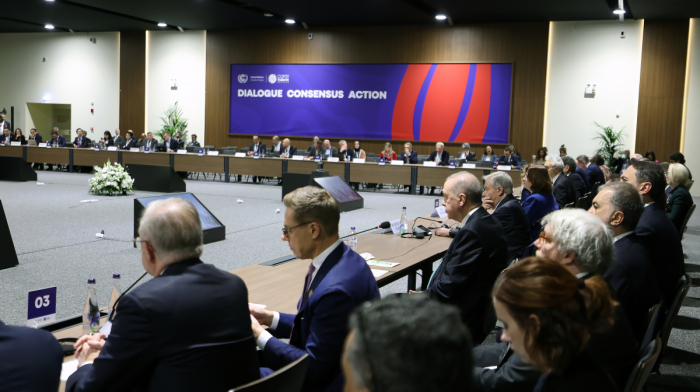
At a forum held on 22 October, findings from the project's feasibility study were presented to international investors, financial institutions and business partners for the first time, according to Azerbaijan's Ministry of Energy.
Turning green energy plans into investment
A feasibility study completed in July 2026 found the corridor to be technically feasible and economically attractive, according to the ministry.
Attention is now turning to securing the substantial funding needed to bring the project to life.
Representatives from the World Bank, European Investment Bank, European Bank for Reconstruction and Development and Asian Development Bank attended the forum, alongside private investors and international energy companies.
Discussions focused on financing options, risk-sharing arrangements and ways to combine public and private investment.
A separate panel examined potential ownership structures, private-sector involvement and the role of long-term electricity sales in making the project commercially viable.
The proposed business model includes long-term power purchase agreements, under which buyers would commit to purchasing electricity on agreed terms.
However, no new financing commitments were announced.
Energy Minister Parviz Shahbazov said the aim was to turn the corridor into a commercially viable regional infrastructure project.
“Our objective is to transform the Green Energy Corridor into a regional infrastructure project with a clear business model, a sustainable financial structure and attractive conditions for investors,” Shahbazov said.
A new electricity export market for Azerbaijan
The corridor is expected to have a transmission capacity of 4 gigawatts (GW), with operations due to begin in phases from 2032.
According to the feasibility study cited by the ministry, the project could help develop at least 8 GW of renewable energy capacity across the region.
From 2040, it could also enable annual electricity exports to Europe of approximately 20 billion kilowatt-hours and cut carbon emissions by up to 3.6 million tonnes.
For Azerbaijan, the corridor represents a chance to diversify beyond oil and natural gas exports and gain a foothold in Europe's renewable electricity market.
The initiative builds on a strategic partnership agreement signed by Azerbaijan, Georgia, Romania and Hungary in 2022.
Building the Black Sea connection
A major engineering hurdle will be laying a submarine cable across the Black Sea, where depths along the proposed route could reach 2,200 metres.
During the forum, Belgian marine engineering company Jan De Nul showcased cable technology designed for deployment at depths exceeding 4,000 metres.
Azerbaijan's Ministry of Energy described the technology as a world first. The presentation offered a potential solution to the challenges of deep-water cable installation, although no supplier has yet been selected.
The next major milestone is a final investment decision, targeted for 2029.
That will depend on securing funding, bringing investment partners on board and putting long-term commercial agreements in place.
If completed, the corridor could reinforce Azerbaijan's position as a regional energy hub and establish a new route for supplying renewable electricity to European markets.











What is your opinion on this topic?
Leave the first comment