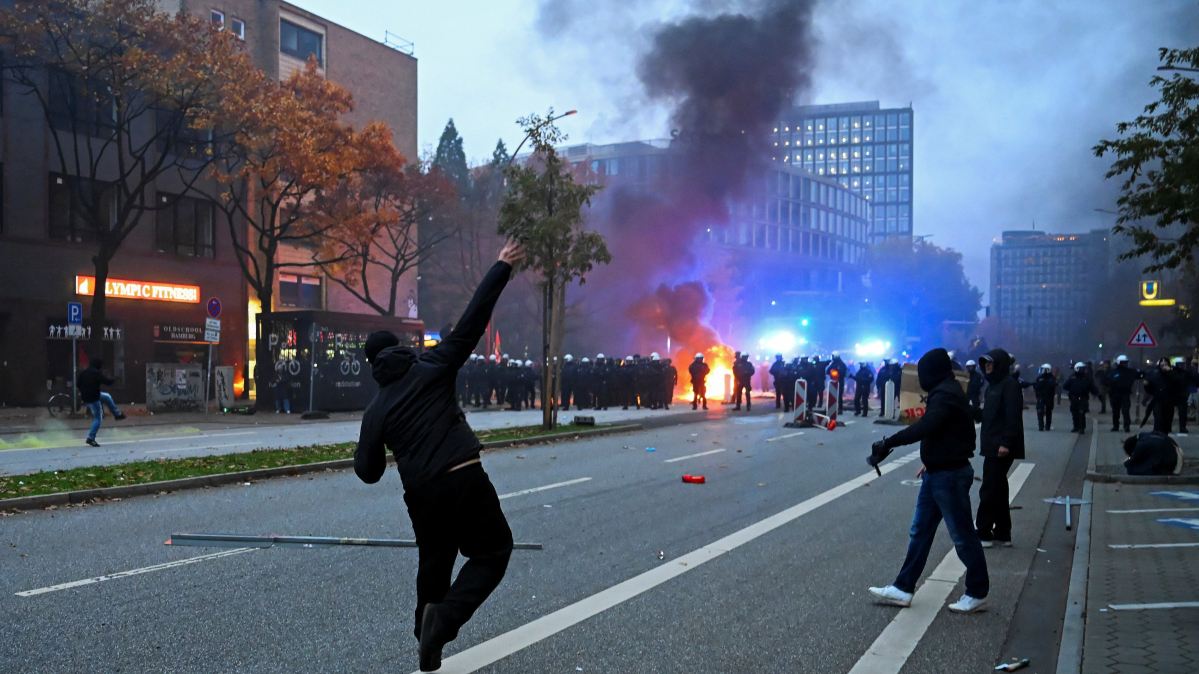
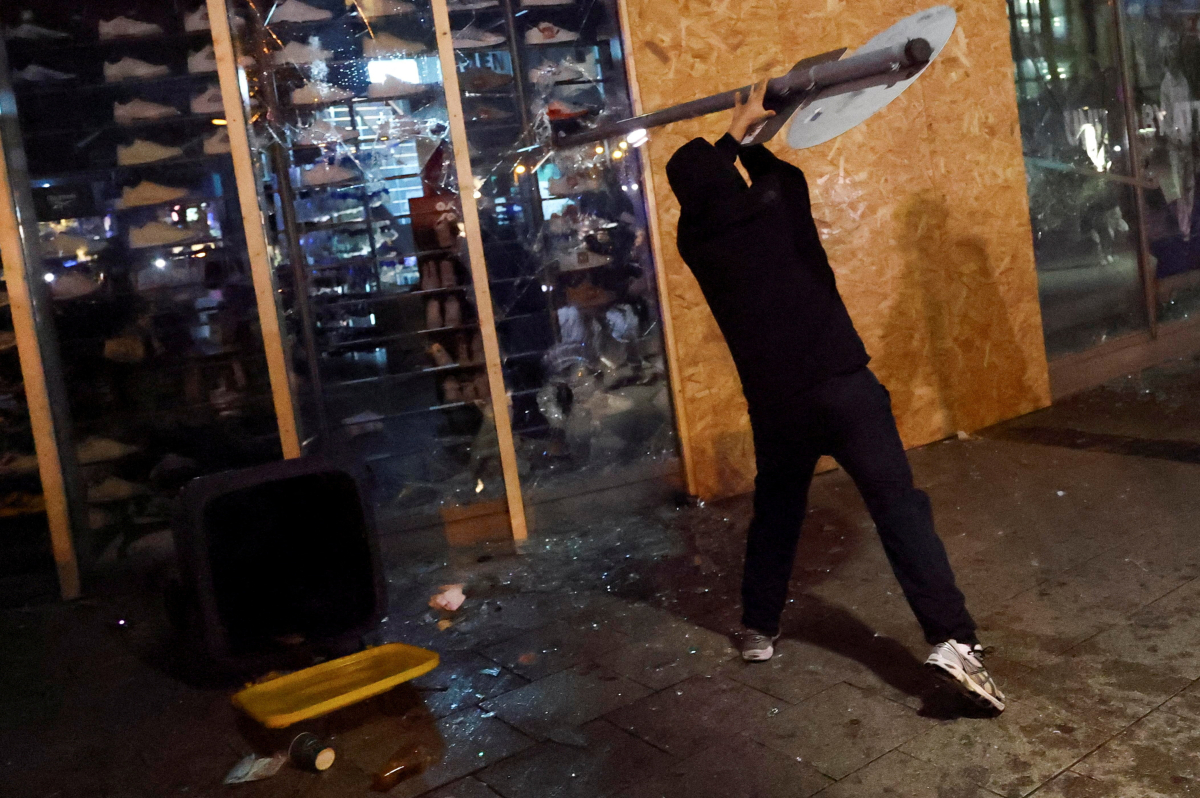
Gen Z protests swept 34 German cities on Saturday (31 October) over education and living costs. Violence erupted in Frankfurt, where shops were looted and police reported Molotov cocktail attacks.
The demonstrations, organised by the campaign group Gen Z regelt, meaning Gen Z takes charge, followed a wider wave of youth-led protests across Europe, including in France and Albania, where weeks of unrest have caused extensive damage to businesses.
Although organisers initially expected as many as 182,000 participants, reported turnout in Germany's main cities was considerably lower. Police figures from Frankfurt, Berlin and Munich indicated up to 18,000 demonstrators, compared with approximately 36,000 expected by organisers in those cities.
Hesse's Interior Minister Roman Poseck warned against a repeat of the violence seen during protests in France, where shops were looted and police vehicles attacked.
“We all have those images from France in our minds, looting, burning houses, burning police vehicles, and attacks on police officers,” Poseck said.
“France must not be held up as a model in this regard.”
What sparked Germany's Gen Z protests?
The movement has brought together young Germans concerned about education funding and rising living costs.
Its organisers argue that Chancellor Friedrich Merz's government is placing additional financial and social burdens on younger generations while failing to invest sufficiently in schools, universities and healthcare.
Speaking at a demonstration in Berlin, Gen Z regelt spokesperson Lina Friedrich said protesters wanted greater investment in public services and a fairer distribution of financial responsibilities.
Students have also raised concerns about deteriorating university facilities.
What happened during the Frankfurt protests?
Most demonstrations across Germany remained peaceful, but at least two stores were looted and several others damaged in Frankfurt late on Saturday, according to a witness.
Frankfurt police said windows had been smashed in the city centre and Molotov cocktails thrown at emergency services. Officers urged bystanders to avoid the affected area.
In Hamburg, barricades were set on fire, while some businesses in Berlin had already boarded up windows or planned early closures ahead of the demonstrations.
Who is behind Gen Z regelt?
Gen Z regelt organised demonstrations in 34 cities, including Berlin, Frankfurt and Munich.
The campaign presents itself as a youth-led movement focused on education, living costs and opposition to compulsory military service.
However, questions have emerged over the movement's leadership and political affiliations because a broader mix of political and civil society organisations has participated in its mobilisation.
Germany's Federal Interior Ministry said parts of the country's far-left extremist scene and groups linked to foreign extremist movements had joined efforts to mobilise support for the demonstrations.
Germany's national school student umbrella organisation, BSK, has distanced itself from the campaign.
BSK Secretary-General Amy Kirchhoff said the organisation supported students' concerns but wold not associate itself with Gen Z regelt.
The organisation plans to hold a separate day of protest on 20 November.
How do Germany's protests compare with France?
Germany's demonstrations follow weeks of unrest in France, where students, trade unions and Yellow Vest protesters have mobilised over living costs, education and public services.
According to France's Interior Ministry, 320,000 people demonstrated nationwide on Saturday, 31 October, including 70,000 in Paris.
That was below the 410,000 recorded the previous weekend and 550,000 on 17 October.
French police reported clashes in Paris, Lyon and Toulouse on Saturday, although authorities said public order had largely been maintained.
The economic impact has also been substantial. France's Chamber of Commerce estimated that retailers lost more than €1 billion during three weeks of unrest, including damage and disrupted business activity.
The German protests have not yet been associated with a comparable nationwide economic loss estimate.
What happens next?
Gen Z regelt has not secured the policy changes it is demanding.
The separate student protest planned by BSK for 20 November could provide another indication of the scale of youth mobilisation in Germany.
For Chancellor Friedrich Merz's government, the immediate questions concern education funding, the cost of living and military service policy.
For authorities, Saturday's unrest raises a separate challenge: protecting the right to peaceful protest while preventing violence and damage to businesses.
The distinction remains important. Most demonstrations were reported as peaceful, despite the violence in Frankfurt and isolated incidents elsewhere.
Read more about other student protests:













What is your opinion on this topic?
Leave the first comment