live Pezeshkian calls for greater economic cooperation among Muslim countries
Iranian President Masoud Pezeshkian has called for greater economic cooperation among Muslim countries, saying their combined economic weight remai...
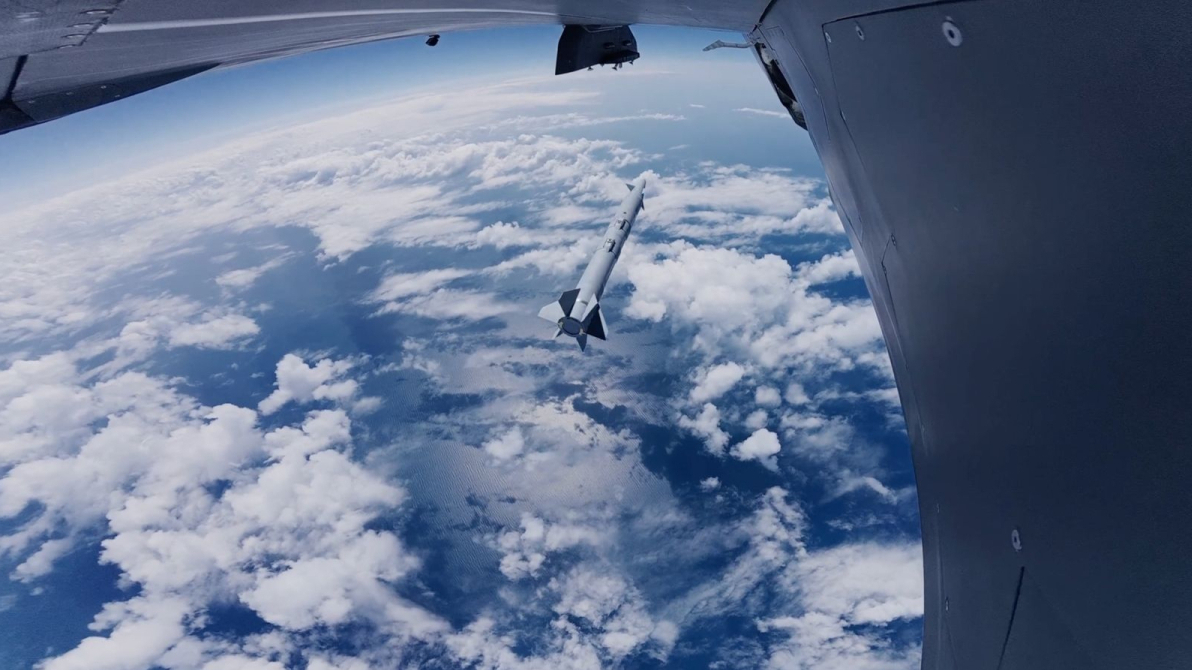
Türkiye's first unmanned fighter aircraft has successfully completed a live-fire test using a domestically developed supersonic missile, striking a target more than 120 kilometres away over the Black Sea in another milestone for the country's defence industry.
Baykar, a leading Turkish defence company, announced on Monday that its jet-powered Kızılelma combat drone struck a designated target with a JET-230 supersonic air-to-surface missile, marking another milestone in the development of Türkiye's first unmanned combat fighter aircraft.
According to the company, the live-fire test was carried out over the Black Sea.
The aircraft took off carrying two JET-230 supersonic missiles and successfully engaged its target from a distance of more than 120 kilometres (approximately 75 miles), demonstrating its ability to conduct long-range precision strikes using domestically produced munitions.
Following the successful test, Baykar chairman and chief technology officer Selçuk Bayraktar hailed the achievement.
"Another milestone has been achieved," he said, congratulating the technical team that oversaw the live-fire test.
This week's live-fire test expands the Kızılelma's growing arsenal of integrated weapons.
The aircraft has previously completed successful tests with the domestically developed Gökdoğan air-to-air missile, as well as the Tolun, Teber-82, KGK and LGK-82 precision-guided munitions.
The Kızılelma programme is central to Türkiye's long-standing ambition to build a self-sufficient defence industrial base and become a leading exporter of advanced military technologies.
In recent years, Ankara has stepped up investment in indigenous air, naval and missile systems to reduce its dependence on foreign suppliers.
The policy gained fresh momentum following export restrictions and sanctions imposed on Türkiye's domestic defence sector by some Western allies.
Defence manufacturing has become a strategic pillar of Ankara's industrial policy, with domestically produced platforms - including the Kızılelma, the KAAN fighter jet and the ALTAY main battle tank - forming the backbone of this effort.
Meanwhile, Baykar has emerged as one of the world's leading manufacturers of combat drones.
Last year, the company recorded US$2.2 billion in exports, signing sales agreements with dozens of countries for its advanced unmanned aerial systems.

Oil prices fell after the U.S. expanded economic sanctions on Iran, as Tehran vowed to retaliate and warned it had tools to respond, raising concerns over potential disruption to regional oil supplies.
Rescuers in Nepal used helicopters on Thursday to scour for hundreds still missing after a wall of mud and rock collapsed into a river on the Himalayan border with China's Tibet, sending catastrophic floods through towns and valleys, killing 162 people.
Secretary of State Marco Rubio told allied foreign ministers Washington will focus on sanctions and other pressure on Iran “for the time being”, Axios reports. Meanwhile, Iran and Oman have resumed talks on a temporary shipping route through the Strait of Hormuz.
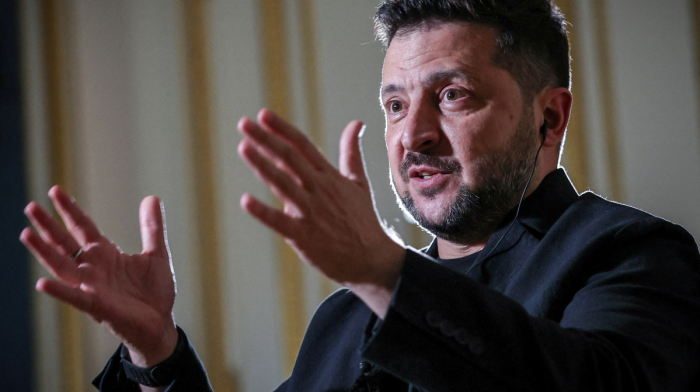
Kyiv has recently received a small number of U.S.-made Patriot interceptors capable of downing Russian ballistic missiles, Ukrainian President Volodymyr Zelenskyy has said. It comes as Britain and France pledged stronger military support for Ukraine.
Iranian President Masoud Pezeshkian has called for greater economic cooperation among Muslim countries, saying their combined economic weight remains disproportionately small compared with their population, strategic location and resources.
The inaugural Silk Road Finance & Technology Forum brought together policymakers, investors and technology companies as Central Asia looks to build a more connected financial system and compete for a bigger share of global fintech investment.
Uzbekistan's region of Karakalpakstan is developing three cryptocurrency mining facilities and three data centers with a combined investment of $5.1 billion, as the region seeks to attract larger and higher-quality investments.
A restaurant payment with a Visa card in Damascus has become a symbol of Syria’s reconnection with the global financial system.
The Silk Road Finance & Technology Forum will bring more than 6,000 policymakers, investors and technology leaders from 74 countries to Tashkent, as Central Asia seeks a bigger role in the global fintech landscape.
Kazakhstan is considering the Baku-Supsa pipeline as an alternative oil export route after Caspian Pipeline Consortium disruptions cost the country an estimated 3.5 million tonnes of oil, Energy Minister Yerlan Akkenzhenov said.
You can download the AnewZ application from Play Store and the App Store.
What is your opinion on this topic?
Leave the first comment