live President Trump warns of intensified attacks if no deal is reached - Middle East conflict on 6 May
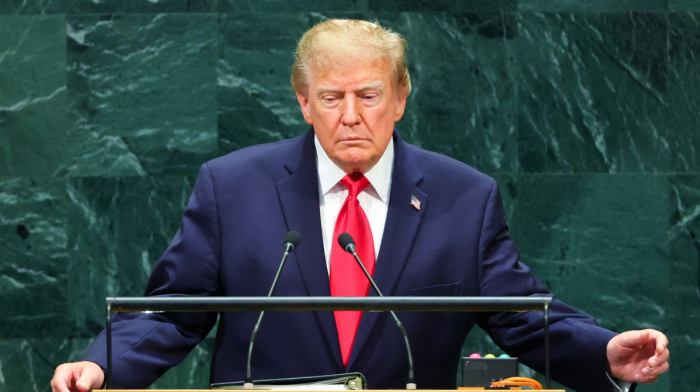
President Donald Trump cited "great progress" toward a comprehensive agreement with Iran as he announced he would briefly pause the ...
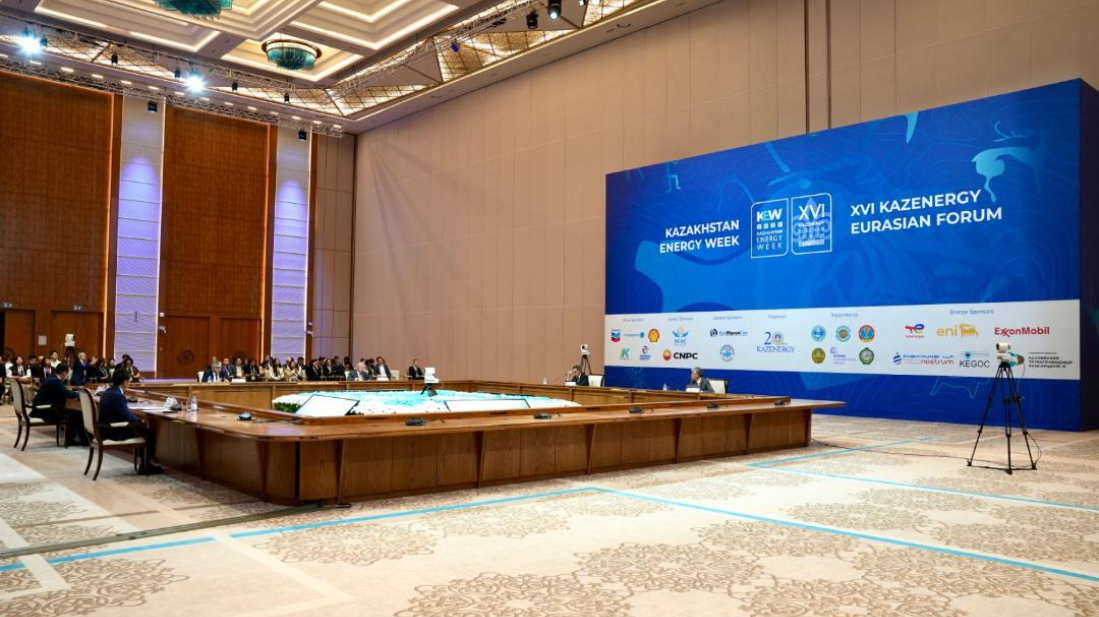
Kazakhstan Energy Week underlined that doubling energy efficiency gains could cut global CO₂ emissions by half by 2040, with officials calling efficiency the cornerstone of a pragmatic and balanced energy transition.
At Kazakhstan Energy Week, senior officials and energy leaders stressed that the world’s transition cannot be achieved through the exclusion of hydrocarbons alone, but rather through cleaner and more efficient use of all resources. Vice minister of energy Sanzhar Zharkeshov said global energy demand could climb by 46% by 2050 compared with 2020, making it critical to optimise every source — oil, gas, coal, nuclear, solar and wind.
“The main task is not to remove sources but to make them cleaner and more efficient,” Zharkeshov told the forum. He said many governments are now pivoting from an overemphasis on rapid decarbonisation toward a more balanced and pragmatic energy policy. For developing countries, he stressed, national realities and individual transition speeds must be respected.
Zharkeshov placed special emphasis on efficiency as the fastest and most cost-effective tool to cut emissions. “By doubling the rate of energy efficiency improvement, global CO₂ emissions could be halved by 2040,” he said. He added that digitalisation and artificial intelligence can transform energy systems, boosting grid reliability, reducing losses, and lowering costs.
Kazakhstan is pursuing what it calls an evolutionary approach to the transition. Hydrocarbons will remain central to its economy but will increasingly be paired with clean technologies such as carbon capture. At the same time, the renewable sector is expanding: 158 facilities with a total capacity above 3.2 GW are already operating. Renewables provided 6.4% of the country’s electricity in 2024, with the government targeting 15% by 2030.
Energy experts at the event agreed that efficiency, supported by innovation and technology, will define the pace and scale of change. For Kazakhstan, the approach blends economic realism with climate ambition, aiming to keep hydrocarbons cleaner while rapidly expanding renewable capacity. The message from Astana was clear: efficiency is not just an add-on but the foundation of the global energy transition.

A 77-year-old man and a 63-year-old woman were killed on Monday (4 May), after a man drove a car into a crowd on a pedestrianised street in the the eastern German city of Leipzig, authorities said.
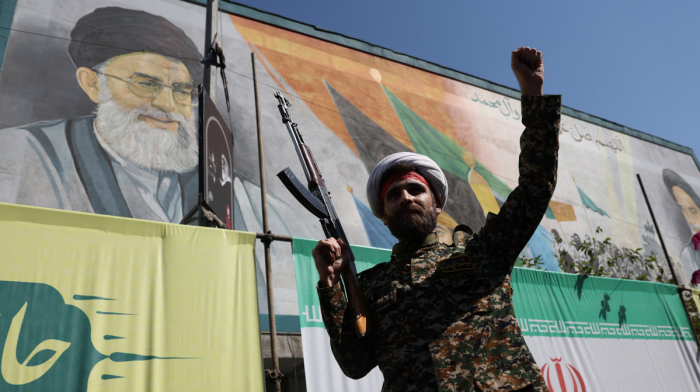
Iran warned Armerican forces on Monday (4 May) not to enter the Strait of Hormuz, after the U.S. said it had launched a mission to try and reopen the sea passage. Meanwhile, Iran's Foreign Minister said there was no military solution to the Middle East conflict.
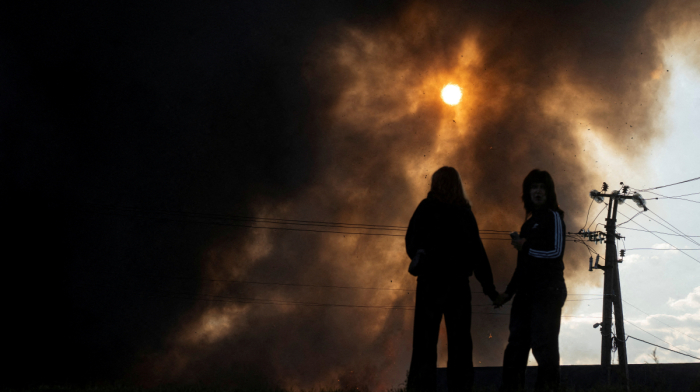
The United Arab Emirate said it was dealing with missile and drone attacks from Iran for the second day in a row on Tuesday (5 May), despite denials from authorities in Tehran who threatened a "crushing response" if the UAE retaliated.
President Donald Trump cited "great progress" toward a comprehensive agreement with Iran as he announced he would briefly pause the operation to escort ships through the Strait of Hormuz. Meanwhile, U.S. Secretary of State Marco Rubio urges China to pressure Tehran over its actions in the Hormuz.
All remaining passengers aboard a luxury cruise ship hit by a deadly hantavirus outbreak are asymptomatic, Spain’s Health Minister Mónica García said on Wednesday.
The Turkish Vice President’s visit to Yerevan this week marked a “turning point” in bilateral ties, Türkiye’s special envoy for normalisation with Armenia has said.
The Middle East crisis is set to dominate the ASEAN summit on 8 May, shifting focus away from regional diplomacy.
While the U.S. and Iran exchange strong messages over the Strait of Hormuz, their words may be misunderstood and lead to wider instability across the whole of the Middle East, according to a Baku-based political commentator.
The husband of imprisoned Iranian Nobel Peace Prize laureate Narges Mohammadi has expressed growing concern over her health following her hospitalisation for severe medical complications, warning that her condition could become life-threatening without proper treatment.
New high-speed trains launched between Uzbekistan’s capital Tashkent and the UNESCO-listed Silk Road city of Khiva will slash journey times from 14 hours to 7.5 hours according to Uzbekistan's state railway company, Uzbek City.
You can download the AnewZ application from Play Store and the App Store.
What is your opinion on this topic?
Leave the first comment