Tajikistan will receive a $50 million concessionary loan to support the construction of the Rogun Hydropwer Plant from the Qatar Development Fund.
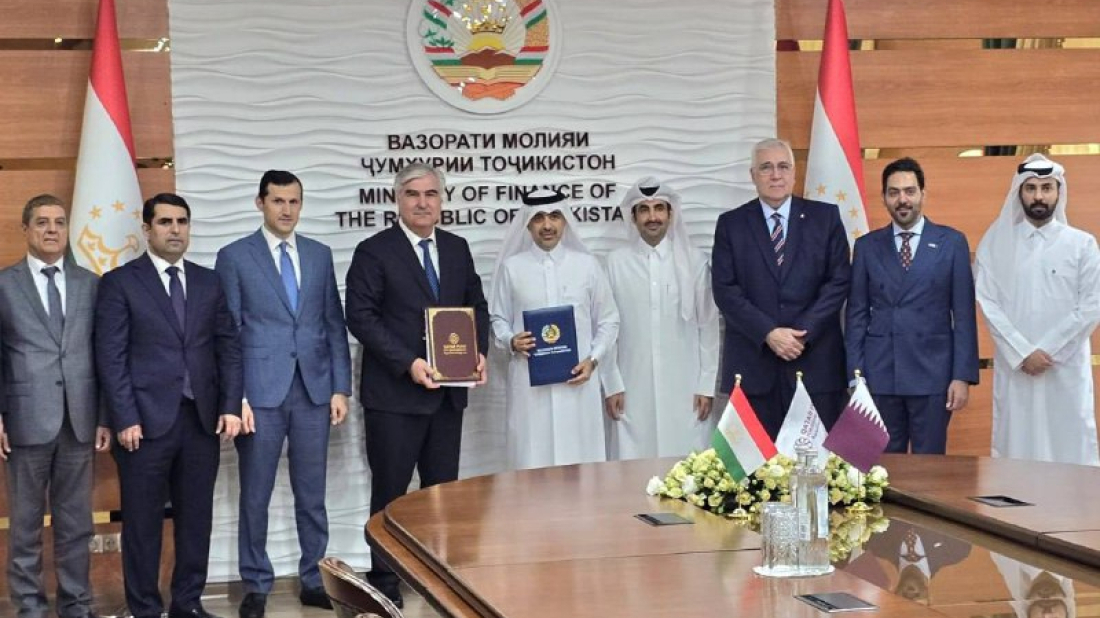
The Director General of the Qatar Development Fund, Fahad Hamad Al-Sulaiti was shown around the plant at the weekend. Afterwards, the Minister of Finance of Tajikistan, Faiziddin Kahhorzoda, and Fahad Hamad Al-Sulaiti, signed an agreement.
According to the Tajik Ministry of Finance, the funds will be allocated to a key phase of the Rogun HPP project, the country’s largest energy facility, aimed at strengthening Tajikistan’s energy security and increasing electricity production for both domestic consumption and export to neighbouring countries. Details of the loan terms have not been disclosed.
During a visit, the Qatari delegation, including representatives from leading Qatari banks, reviewed the progress of construction and infrastructure works at the Rogun Hydropower Plant. The delegation was accompanied by Tajikistan’s Deputy Prime Minister, Usmonali Usmonzoda. The guests toured the main facilities of the power plant and received detailed information about the implementation of this strategic project, which is viewed as a key factor in the country’s energy independence and the development of regional export potential.
Fahad Hamad Al-Sulaiti emphasised the significance of the Rogun HPP not only for the sustainable development of Tajikistan’s economy but also for strengthening mutually beneficial regional cooperation in the energy sector.
“We consider this project strategic and are ready to support its implementation,” he said.
The Rogun Hydropower Plant is a national policy priority for Tajikistan. Once fully operational, it is expected to significantly increase the production of renewable electricity, provide a more stable energy supply to the population and industry, and create export opportunities to neighbouring countries such as Uzbekistan, Afghanistan and Pakistan, which face electricity shortages.
Construction of the hydropower plant began in 1976 and remains the largest hydropower project in the country. The first turbine was commissioned in 2018, with full operation of all units scheduled by 2029. The plant’s installed capacity is projected at 3,600 MW, with an estimated annual electricity generation of 13.8 billion kWh.
Previously, President Emomali Rahmon had announced that the third turbine unit was expected to be commissioned in 2025. The project requires substantial investments - the government has already invested several billion dollars - but its completion remains a top priority given its scale and importance to the country.
During the negotiations, both parties also discussed the potential to expand bilateral cooperation and Qatar Development Fund’s involvement in other priority state projects in Tajikistan.
The Ministry of Finance noted that the agreement with Qatar represents an important step towards strengthening national energy security and ensuring sustainable economic development in Tajikistan.












What is your opinion on this topic?
Leave the first comment