International law remains codified through treaties, charters, and resolutions, but enforcement depends largely on political will. When major powers choose not to comply, there is no global authority capable of compelling implementation.
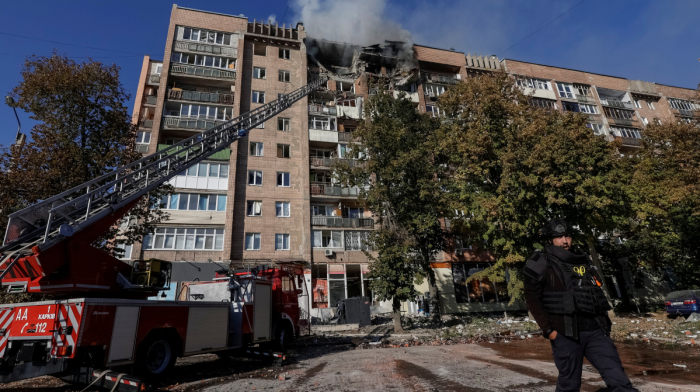
The UN Security Council, responsible for maintaining international peace and security, is constrained by veto power. Since 2022, several resolutions related to Ukraine have failed to advance despite widely recognised principles of territorial integrity. Similar divisions have affected resolutions on Gaza, where calls for ceasefires and humanitarian access have repeatedly stalled.
A comparable pattern was evident in the South Caucasus. In 1993, the UN Security Council adopted four resolutions, 822, 853, 874, and 884, affirming the territorial integrity of Azerbaijan and demanding the withdrawal of occupying forces from Karabakh and surrounding districts. Despite their binding status, these resolutions remained unimplemented for many years.
In each case, legal positions were formally recorded, while outcomes were determined outside judicial or multilateral enforcement mechanisms.
Rearmament accelerates as international law erodes
The erosion of international law is increasingly reflected in global defence spending.
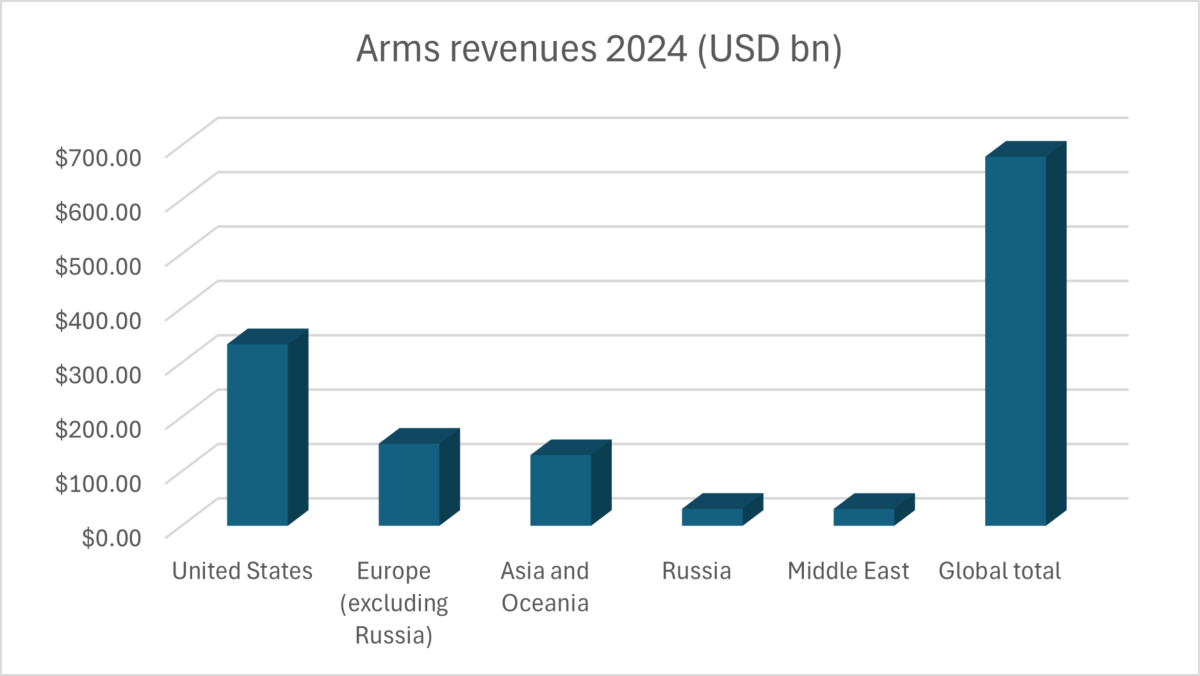
Data from the Stockholm International Peace Research Institute shows that global arms revenues reached a record 679 billion dollars in 2024, driven by conflicts in Ukraine and Gaza and by broader geopolitical tensions.
For the first time since 2018, all five of the world’s largest arms producers reported revenue growth. Companies based in the United States dominated the sector, with 39 firms generating a combined 334 billion dollars, a 3.8% year-on-year increase, despite delays and cost overruns in major programmes such as the F-35 fighter jet and the Columbia class submarine.
European companies recorded one of the sharpest regional increases. Of the 26 European firms in the Top 100 ranking, 23 reported growth, raising total regional revenues to 151 billion dollars as governments accelerated procurement linked to the conflict in Ukraine.
The Middle East reached a record presence in the ranking, with nine companies generating 31 billion dollars in combined revenue. Israeli firms accounted for 16.2 billion dollars, while Turkish defence companies increased their combined revenue to 10.1 billion dollars, up 11%.
Asia and Oceania was the only region to record a decline, with revenues falling 1.2% to 130 billion dollars. This was largely due to a 10% drop among Chinese companies, including a 31% fall at NORINCO. In contrast, defence revenues rose sharply in Japan, South Korea, and India.
Power goes beyond weapons
Power today extends well beyond military strength. As international law has weakened, states increasingly rely on economic capacity, connectivity, technology and resilience to protect their interests.
Trade is central. Global goods and services trade is worth about 66 trillion dollars, with energy alone accounting for more than 20% of merchandise trade, giving producers and transit states added leverage.
Connectivity also matters. Around 80% of global trade by volume moves by sea, while land routes are gaining importance.
The Middle Corridor linking China to Europe via Central Asia and the South Caucasus has cut transit times to roughly 12-15 days since 2021.
China’s Belt and Road Initiative reinforces this shift through infrastructure investment across around 150 countries.
Technology is another pillar. Nearly 6 billion people use the internet, 5G covers over half the world’s population, and spending on data centres and cloud infrastructure exceeded 50 billion dollars in 2024.
Resilience underpins all of this. Since 2020, advanced economies have deployed trillions in fiscal support, including more than 5 trillion dollars in the U.S., 800 billion euros under the EU’s NextGenerationEU, and over 300 trillion yen in Japan.
Together, these trends show that modern power is shaped not just by weapons, but by trade, routes, technology, energy and the capacity to absorb shocks.
Ilham Aliyev: In order to have peace, you must be strong
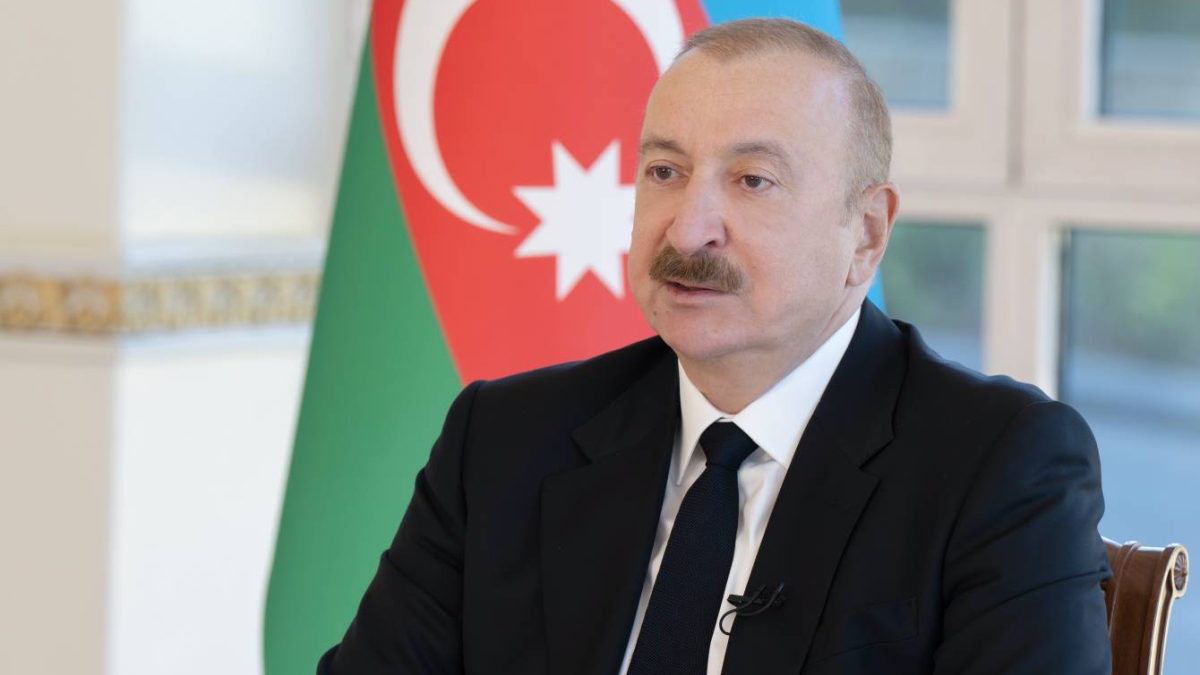
On 5 January, Ilham Aliyev was interviewed by local television channels. Responding to a question from AnewZ journalist Nadia Gyane, the president addressed how Azerbaijan balances strengthened military capabilities with his assertion that war belongs to the past.
Aliyev framed Azerbaijan’s recent history as a clear example of the limits of international law when enforcement mechanisms fail. Referring to the UN Security Council resolutions adopted in the 1990s on Karabakh, he noted that they “remained on paper for 27 years and would have remained on paper forever if we had not liberated our lands by force”.
He argued that this experience reflects a wider global reality, where legal norms exist formally but lack effective implementation. “International law norms do not function,” Aliyev said, adding that global actors now operate in a system where “nobody cares which organisation adopts what resolution”.
At the same time, he said this erosion has accelerated global rearmament. “The developments unfolding in the world are going in such a direction that each country should, first of all, strengthen its military potential and security,” he said, noting that this trend is being “confirmed almost every week in one region or another”.
However, Aliyev repeatedly stressed that power today extends well beyond weapons. He described Azerbaijan as “a living bridge and a reliable partner” connecting Central Asia with the West, arguing that connectivity, transport routes and logistics capacity are now strategic assets alongside military strength.
Technology and energy were central to this broader concept of power. Aliyev said Azerbaijan aims to become “a regional AI hub, an IT hub”, highlighting data centres, cyber security and digital infrastructure as key pillars of future influence. “Data centres need a lot of energy,” he noted, adding that Azerbaijan’s surplus electricity provides a regional advantage.
He also linked national resilience to social development, stressing that stability depends on public confidence and welfare. “The people of Azerbaijan are at the centre of our policy,” he said, pointing to sustained investment in salaries, pensions, education and infrastructure as an integral part of long-term security.
Aliyev said the changing global environment leaves little room for idealism. “When international law is ruined, then whoever is strong is right,” he said, stressing that Azerbaijan’s actions were grounded in “historical, legal and human justice”.
The president underlined that peace remains the ultimate objective, but warned that it cannot be sustained without deterrence. “The best thing is peace, but in order to have peace, you must be strong.”










What is your opinion on this topic?
Leave the first comment