The AnewZ Opinion section provides a platform for independent voices to share expert perspectives on global and regional issues. The views expressed are solely those of the authors and do not represent the official position of AnewZ
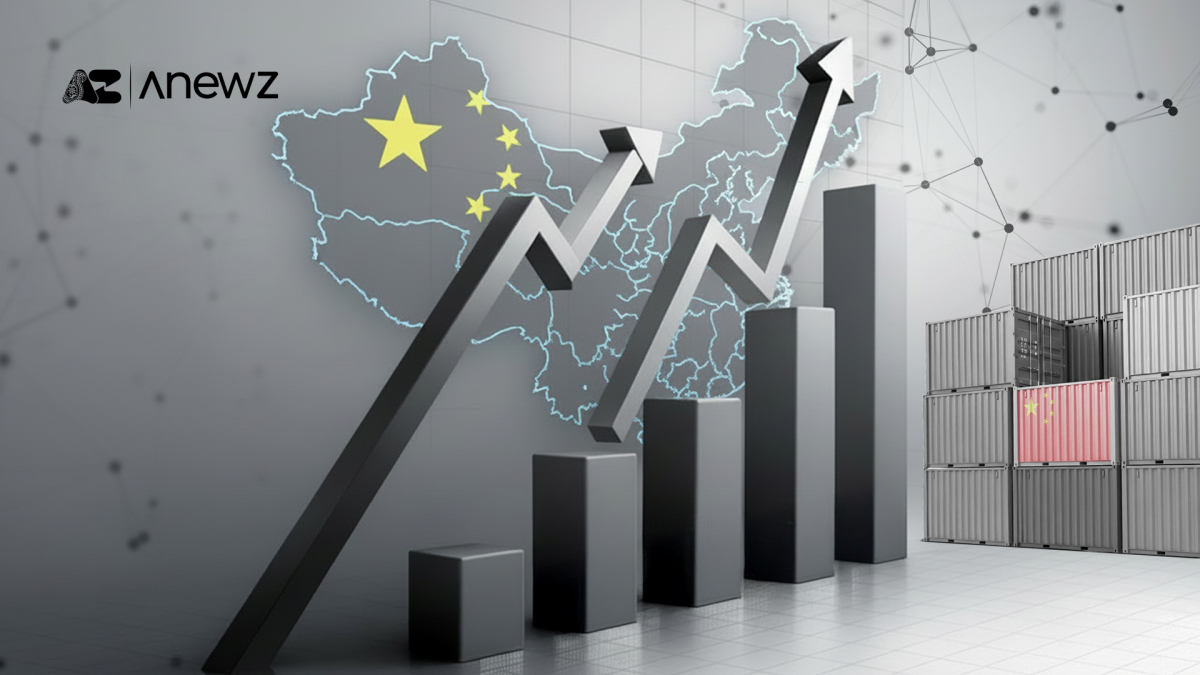
Last year, China’s imports hit a record value of 18.48 trillion yuan ($2.65 trillion). For decades, the orthodox view of the Chinese economy focused almost exclusively on its export prowess. However, the granular breakdown of the 2025 data reveals that this operating model has been superseded.
The resilience of China’s imports now reflects a sophisticated industrial upgrading and a domestic market that has become indispensable to global growth.
To understand the significance of the 18.48 trillion yuan import figure, one must examine the industrial engine it feeds. The import record is inextricably linked to China’s manufacturing output. In 2025, exports of equipment manufacturing products reached 16.03 trillion yuan ($2.3 trillion), a rise of 9.2% from the previous year, now accounting for 59.4% of total exports.
This correlation is critical. The importation of vast quantities of energy, raw materials, and high-tech components is the necessary fuel for this 16.03 trillion yuan output.
The data indicates a "processing trade" evolution that shows that China is importing higher-value intermediate goods to produce increasingly sophisticated capital goods. (Intermediate goods are products sold business-to-business for resale or sold to companies to create another product).
Structural data further clarifies this shift. Between January and October 2025, trade in intermediate goods grew by 9.7%, significantly outpacing other categories. This aligns with the long-term trend where the share of intermediate goods in China’s trade profile rose from 42% in 2015 to 46% by mid-2025.
Conversely, the share of consumer goods dropped from 37% to 31%.
So the clear picture is this - China is not just buying finished products, it is also integrating deeper into the global supply chain, importing the essential "industrial staples" - from semiconductors to specialised alloys - that drive the global manufacturing system.
Put simply, China is importing more key essential items to create additional intermediate products that global companies need, and is producing less for the consumer.
Private sector
A distinctive feature of the 2025 trade performance is the leading role played by private enterprises, which now shoulder the bulk of this import-export dynamism. No longer is the landscape dominated solely by state-owned giants. Private firms have become the primary actors, displaying remarkable agility.
Geographically, the import map of 2025 confirms a decisive shift toward the Global South, driven by reciprocal supply chain integration. Trade data reveals that exports to, and implicitly, industrial integration with, ASEAN, rose by 14.6%, while trade with Africa surged by 26.3%.
This is not accidental. It is the dividend of capital flow. From January to November 2025, China’s non-financial outbound direct investment (ODI) reached 1.13 trillion yuan ($162.15 billion), a year-on-year increase of 7.5%.
This "developmental trade" stands in stark contrast to extractive models. As Western markets fluctuated, China’s open door provided a crucial safety valve for the Global South.
The broader geopolitical context of early 2026 makes this import record even more salient. We stand at a juncture where the post-Cold War consensus on free trade is fraying.
In such an environment, an economy that maintains a 6.1% overall export growth while simultaneously hitting record import values is performing a global public service.






















What is your opinion on this topic?
Leave the first comment