The AnewZ Opinion section provides a platform for independent voices to share expert perspectives on global and regional issues. The views expressed are solely those of the authors and do not represent the official position of AnewZ
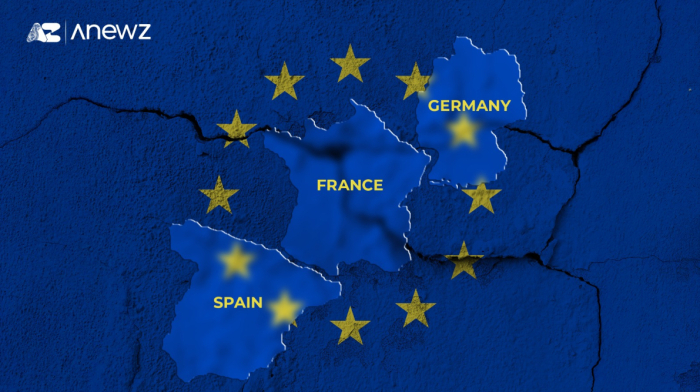
The European Union stands at a crossroads: to receive new members and accelerate the enlargement process in order to strengthen its role in the international arena, or to risk strategic stagnation by delaying expansion in favor of internal reform.
While the majority of former socialist countries that remain outside the EU are still enthusiastic about potential membership, Brussels sends mixed signals about their accession prospects.
Reports indicate that Montenegro and Albania have the highest chances of joining the 27-nation bloc in 2028 and 2029. The authorities in Podgorica are confident that the tiny Balkan nation of around 620,000 people will accede to the European Union as its first new member since Brexit. However, back in 2018 they—together with the then EU leadership—expressed confidence that Montenegro, alongside Serbia, would join the EU in 2025, which ultimately did not happen.
Nevertheless, optimism in Montenegro prevails, especially after France first blocked and then reversed its veto, clearing the way for the closure of two additional chapters in the EU accession process. But to join the bloc, Podgorica will have to close 21 negotiation chapters by the end of next year. Given that enlargement is primarily a matter of political will and consensus in Brussels, Montenegro could close all remaining chapters with relative ease if sufficient support exists.
From a geostrategic perspective, it would make sense for the EU to allow Montenegro and Albania—both of which have access to the Adriatic Sea—to join the bloc, as that would complete its Three Seas Initiative. With the two nations in, the Adriatic Sea – excluding the small portion of Neum belonging to Bosnia and Herzegovina – would effectively become “an internal lake” for the EU and NATO. In the Baltics, Russia’s exclave of Kaliningrad is already surrounded by NATO and EU members, while the Black Sea is no longer seen as “Russia’s lake.”
Moreover, from a purely military perspective, the EU could potentially fast-track Moldova’s accession. The landlocked nation of 2.4 million people – sandwiched between Romania and Ukraine – is of crucial importance, as its railways are a natural pathway for military logistics, especially for moving supplies from the EU into Ukraine or projecting force.
Thus, if the European Union is seriously preparing for an increasingly likely direct military confrontation with Russia, Montenegro, Albania, and Moldova would be natural choices to bolster the EU’s strategic positioning. Other candidate states – namely Serbia, North Macedonia, Bosnia and Herzegovina, and Georgia – would be less likely to receive priority.
These countries, as well as Türkiye, do not seem pleased with the EU’s approach to enlargement, particularly concerning Ukraine, given frequent suggestions that the war-torn nation could be admitted to the bloc ahead of schedule. Ankara, having spent decades in the EU’s “eternal waiting room,” is no longer listed by Brussels among potential members in the foreseeable future. North Macedonia, despite changing its name to appease EU member Greece and making numerous concessions to another EU member, Bulgaria, has remained stuck in the EU’s accession limbo since 2005.
Bosnia and Herzegovina, on the other hand, has not yet opened any formal negotiation chapters for EU accession, while Georgia – after the European Parliament condemned the country’s 2024 parliamentary elections – has suspended its membership application process until the end of 2028. Neighboring Armenia, meanwhile, has repeatedly stressed that it aims to launch EU negotiations, even though it remains a member of the Russian-led Eurasian Economic Union (EAEU) to this day. In order to accede to the EU, Yerevan will likely need not only to withdraw from the EAEU but also to fully normalize relations with Azerbaijan.
Although this step remains deeply unpopular in Armenian society, recent polls show that in Armenia, as in most aspiring EU members, the majority of citizens support their governments’ ambitions to join the bloc.
The sole exception is Serbia, where only a third of the population backs EU membership. The Southeast European nation has been effectively following the “EU path” for 25 years and attained formal candidate status in 2012. One reason enthusiasm for EU membership in the Balkan state is so low could be that, unlike Ukraine, Georgia, and Moldova – who enjoy Brussels’ full support for their territorial integrity – Serbia is the only country required to formally recognize the secession of part of its territory in order to join the EU.
Fully aware that Belgrade is unlikely to make such a move, the European Union reportedly plans to allow new members to join without granting them veto rights. Under such conditions, if Serbia ever joins the EU, it would not be able to block Kosovo’s accession. The problem, however, is that without veto power, new EU members would automatically be in an unequal position compared with the rest of the bloc.
To prevent such an imbalance, the EU could begin by reforming its internal rules, though this would be a lengthy process. With a trade war with China knocking on the EU’s door, Brussels’ tense relations with Washington, and a potential escalation of the Ukraine war, it remains unclear if the 27-nation bloc has time to undertake such deep structural changes.
One thing is for sure: in the coming months and years, the European Union will continue investing in its defense, preparing for the possibility of a war with Russia. If a large-scale conflict eventually breaks out, the new EU members will undoubtedly have to participate. Although they may suffer casualties and damage, in the event of the EU’s victory – which is entirely possible, given that Russia would enter the conflict exhausted and weakened from the Ukraine war – they would reap the security, political, and economic benefits of EU membership.











What is your opinion on this topic?
Leave the first comment