The AnewZ Opinion section provides a platform for independent voices to share expert perspectives on global and regional issues. The views expressed are solely those of the authors and do not represent the official position of AnewZ
For nearly three decades following the dissolution of the Soviet Union, the international system was defined by a singular, overwhelming reality: American unipolarity.
It was a period described by Western scholars as the "End of History," a moment where liberal democracy and free-market capitalism were presumed to be the final destination of human political evolution. Yet, history has a way of returning with a vengeance. As we navigate the turbulent waters of the mid-2020s, the "unipolar moment" has undeniably passed, replaced by a complex, fractious, and nascent multipolar order. This transition is not merely a theoretical proposition debated in the halls of Tsinghua or Harvard; it is a visceral reality felt in supply chains, diplomatic cables, and the strategic calculations of capitals from Brasilia to Jakarta.
The emergence of a multipolar world—where power is distributed among several major states rather than concentrated in a single state—is often viewed in the West with trepidation, as a harbinger of chaos and instability. However, a more dispassionate analysis suggests that multipolarity is not an aberration but a return to the historical norm. The challenge, as outlined by pragmatic voices in the strategic community, is not to resist this tide but to understand how to navigate it. The imperative now is "making multipolarity work"—a sentiment that requires abandoning the rigid, bloc-based mentality of the Cold War in favour of a more fluid, interest-based pragmatism.
The Myth of Containment
The primary driver of this geopolitical shift is, of course, the economic and political resurgence of the Global South, anchored by the rise of China but by no means limited to it. For years, the prevailing doctrine in Washington was one of engagement, followed by a sharp pivot to "strategic competition" or containment. Yet, as recent strategic discourse suggests, the sheer weight of the emerging powers makes containment a strategic cul-de-sac. A world in which the G7 accounts for a shrinking share of global GDP cannot be managed by dictating terms from a singular pulpit.
The reality is that the Global South does not wish to choose sides in a binary struggle between Washington and Beijing. The reluctance of major democracies in Africa, Latin America, and Asia to join sanctions regimes or isolate global powers is not born of anti-Americanism, but of a desire for strategic autonomy. These nations see multipolarity as an opportunity to diversify their partnerships, leveraging relationships with multiple poles to maximise their own economic development.
From Beijing’s perspective, the vision is not one of supplanting one hegemon with another, but the pursuit of an "equal and orderly multipolar world." The emphasis here is on economic integration and the democratisation of international relations—a rejection of unilateralism. For the developing world, this model of non-interference and infrastructure-led development offers a compelling alternative to the often conditional aid provided by traditional Western donors.
The Great Recalibration
We are witnessing what can be termed a “Great Recalibration." The institutional architecture of the post-1945 order—the IMF, the World Bank, and the United Nations Security Council—is increasingly seen as anachronistic, failing to reflect the realities of the modern distribution of power. This has led to the revitalisation of alternative forums. The expansion of BRICS and the rising prominence of the G20 are not merely symbolic gestures; they are manifestations of a desire for a representative global governance structure.
The concept of "Active Non-Alignment," championed by Latin American scholars and embraced globally, perfectly captures this mood. It is a refusal to accept the "West vs. the Rest" or "Democracy vs. Autocracy" binaries. Instead, nations are forming issue-based coalitions. The "Troika" of G20 presidencies—India, Brazil, and South Africa—symbolises this shift, ensuring that the agenda of the Global South (climate finance, debt restructuring, and food security) remains front and centre, regardless of Great Power distractions.
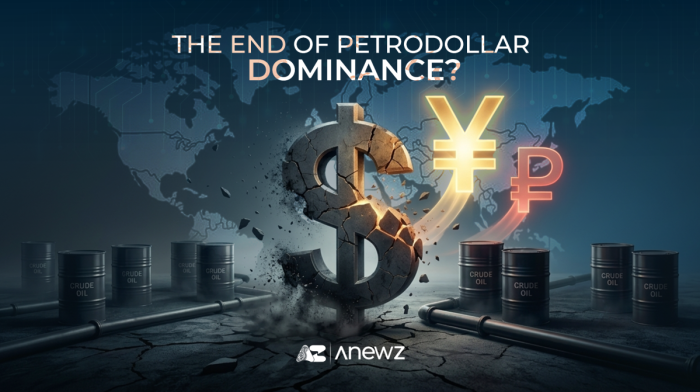
In this new dispensation, economic interdependence is both a stabilising force and a weapon. The weaponisation of the dollar and global finance has accelerated the drive for local currency settlements and alternative payment systems. While the dollar’s dominance remains entrenched, the trend lines are clear: the world is moving towards financial multipolarity to match its geopolitical fragmentation.
The Rise of the "Middle Powers"
Perhaps the most defining feature of this new era is the agency of "middle powers." No longer content to be pawns on a chessboard, nations like Brazil, Indonesia, and Saudi Arabia are becoming independent power brokers, driving their own agendas independent of Great Power dictation.
In Latin America, Brazil has exemplified this "multi-alignment" strategy. Under President Lula da Silva, Brasilia has deftly balanced its relations, strengthening ties with China—its largest trading partner—while simultaneously engaging the White House on climate change and democratic norms. Brazil’s foreign policy is not about picking a winner but about placing Brazilian interests first, leveraging its position as an agricultural and environmental superpower to demand a seat at the top table.
Similarly, in Southeast Asia, Indonesia’s "free and active" foreign policy has evolved into a robust pragmatism. Under the administration of President Prabowo Subianto, Jakarta has courted Chinese investment for its downstreaming industries—turning raw nickel into EV batteries—while maintaining deep security ties with the West. Indonesia’s refusal to be drawn into anti-China containment pacts, despite maritime disputes, underscores a sophisticated understanding that economic prosperity requires engagement with all poles.
In the Middle East, Saudi Arabia’s "Vision 2030" has driven a similar diversification. The Kingdom has moved beyond its historical reliance on the US security umbrella to build comprehensive partnerships with Beijing and Moscow. By hosting events like the Global Industry Summit and mediating regional disputes, Riyadh is signaling that it is no longer just an oil producer, but a geopolitical heavyweight capable of shaping outcomes from the Red Sea to Central Asia.
The transition to multipolarity is not a panacea for the world’s ills. It brings with it the risks of miscalculation and the friction of competing nationalisms. Yet, it also democratises the international system, forcing major powers to listen rather than dictate. The narrative that portrays this shift as a catastrophe for the "rules-based order" is a dangerous oversimplification. The "order" was never truly global if it excluded the voices of the majority of humanity.
Ultimately, the stability of the 21st century will depend on the capacity of the United States and China to establish a modus vivendi—a framework for peaceful coexistence that allows for competition without catastrophe. But equally, it depends on the ability of the Global South to assert its agency, building a more equitable, albeit complex, global architecture. The unipolar sun has set; the challenge now is to ensure the multipolar dawn does not lead to a scorching noon of conflict, but rather a balanced day of shared prosperity.










What is your opinion on this topic?
Leave the first comment