Seven killed in Qatar military helicopter crash during joint training exercise with Türkiye
Qatar has confirmed that seven people, including four of its military personnel and three Turkish nationals, were killed on Sunday (22 March) ...
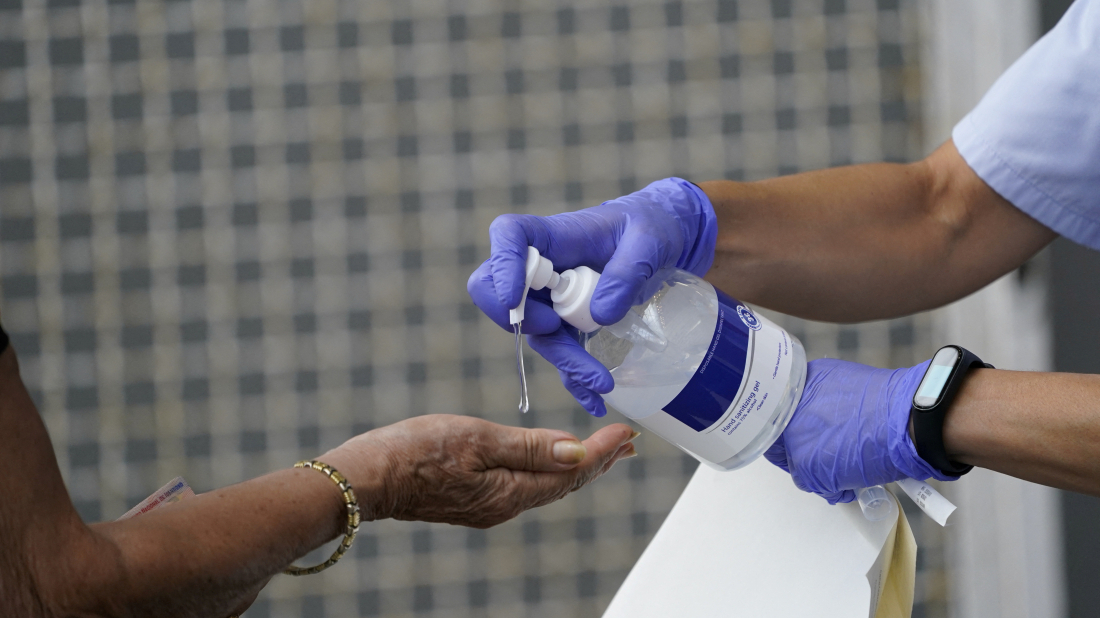
The European Union is reportedly considering banning the use of ethanol as an active ingredient in biocidal products — including hand sanitisers — due to rising concerns about potential cancer risks, the Financial Times reported on Tuesday.
According to the report, an internal recommendation dated 10 October from a working group within the European Chemicals Agency (ECHA) identified ethanol as a toxic substance linked to an increased risk of cancer and pregnancy complications, suggesting it should be replaced in cleaning and other related products.
The ECHA’s Biocidal Products Committee is scheduled to convene between 25 and 27 November.
In an emailed statement to Reuters, the ECHA said it was currently assessing ethanol’s suitability for biocidal use. The agency noted that if its expert committee determined ethanol could cause cancer or adversely affect human reproduction, it would recommend substituting the substance.
The ECHA added that evaluations were ongoing and no final conclusions had yet been reached. A definitive decision will be made by the European Commission after the committee issues its scientific opinion.
The World Health Organization continues to classify both ethanol and isopropanol as safe for use in hand hygiene.

President Donald Trump said the U.S. was considering "winding down" its military operation against Iran, as Iran and Israel traded attacks on Saturday (21 March) and Iranian media said the nuclear enrichment facility in Natanz had been attacked.
U.S. President Donald Trump warned that American forces could target Iranian power plants if the strategic Strait of Hormuz remains closed, and Iran, in return, warned that any attack on its energy infrastructure would trigger strikes on regional facilities.
Slovenia heads to the polls on Sunday (22 March) in a closely contested race between incumbent Prime Minister Robert Golob and right-wing former Prime Minister Janez Janša.
Italy is voting on 22 and 23 March in a judicial reform referendum that could reshape the justice system and test Prime Minister Giorgia Meloni’s political strength ahead of the 2027 general election.
Iceland could reopen talks on joining the European Union after a 13-year pause, as shifting security concerns and renewed economic debate bring EU membership back to the centre of national politics.
The UK Health Security Agency (UKHSA) said that as of Wednesday evening, it has identified six new cases of meningococcal disease in Kent, bringing the total of confirmed or suspected cases to at least 27.
The Scottish Parliament has voted against legalising assisted dying, ending a years-long campaign to make Scotland the first part of the UK to allow the practice.
The war in the Middle East is beginning to disrupt the flow of critical medicines to Gulf countries, raising concerns about the supply of cancer treatments and other temperature-sensitive drugs, according to pharmaceutical industry executives.
The World Health Organization (WHO) has released $2m in emergency funding to support health responses in Lebanon, Iraq and Syria as escalating regional conflict strains hospitals, raises displacement and increases pressure on already fragile health systems.
Measles cases across Europe and Central Asia fell sharply in 2025 compared to the previous year but health officials have warned that the risk of fresh outbreaks remains unless vaccination gaps are urgently addressed.
You can download the AnewZ application from Play Store and the App Store.
What is your opinion on this topic?
Leave the first comment