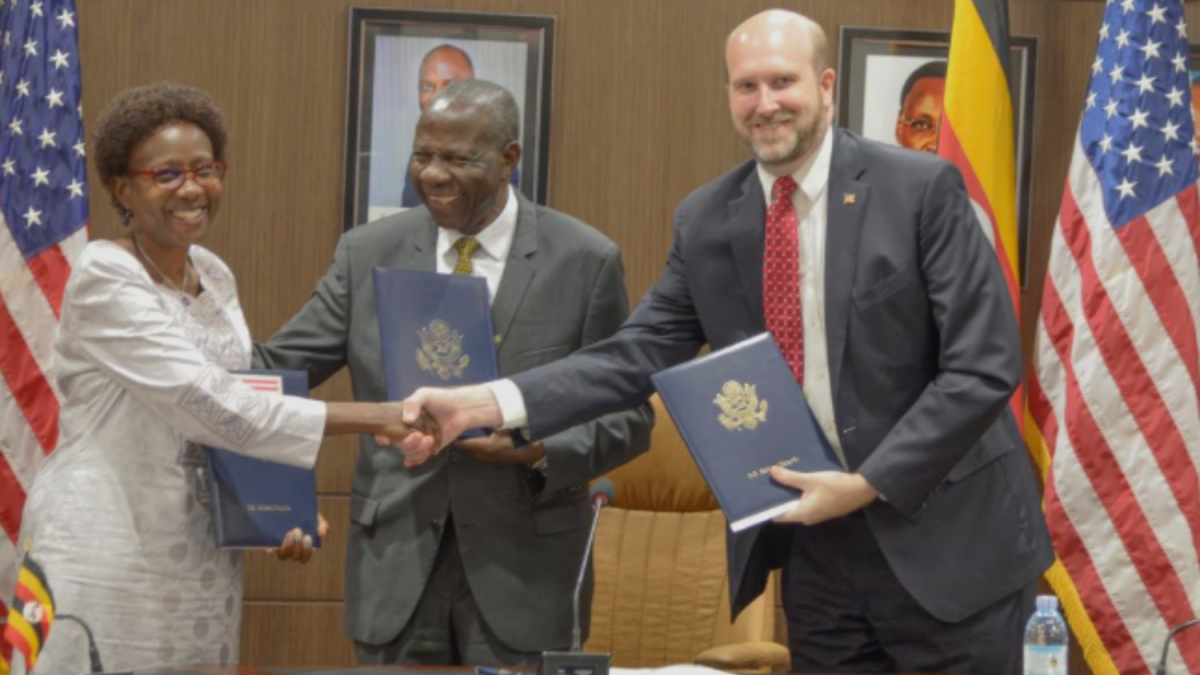
The United States has signed significant health cooperation agreements with Uganda and Lesotho, further strengthening bilateral relations and advancing global health initiatives, the U.S. State Department announced on Wednesday.
The agreements, which span five years, highlight the U.S.’s ongoing commitment to supporting health systems in Africa, with substantial financial commitments to Uganda and Lesotho.
The U.S. and Uganda have reached a nearly $2.3 billion pact aimed at enhancing Uganda's health infrastructure, improving public health services, and tackling various health challenges. The agreement is designed to boost efforts in addressing HIV/AIDS, malaria, and other infectious diseases, as well as improving maternal and child health outcomes in Uganda.
Principal Deputy Spokesperson for the U.S. State Department, Tommy Pigott, confirmed the deal, emphasising the long-term nature of the agreement and the significant financial resources being allocated to Uganda.
"This agreement represents a strong partnership between the U.S. and Uganda in promoting health, saving lives, and building sustainable health systems for the future," Pigott said in the statement.
"It underscores our commitment to supporting Uganda in addressing its public health priorities," he said.
In addition, the U.S. and Lesotho have signed a $364 million bilateral memorandum of understanding, focusing on similar health priorities. This agreement will support Lesotho’s healthcare sector, particularly in combating HIV/AIDS, tuberculosis, and other public health challenges. The deal also aims to improve health service delivery and strengthen health systems in the small southern African nation.
Both agreements are part of the broader U.S. initiative to partner with African nations in addressing health challenges and building resilient health systems. The U.S. has long been a key partner in global health efforts, with a particular focus on Sub-Saharan Africa, where health outcomes often lag behind global averages.
The cooperation agreements come at a crucial time as the world continues to recover from the COVID-19 pandemic, which has strained health systems worldwide. These partnerships with Uganda and Lesotho are expected to play a key role in improving public health infrastructure, increasing access to essential health services, and fostering long-term health improvements.
The U.S. State Department has made it clear that these partnerships go beyond just financial support; they are aimed at building long-term relationships and ensuring that the health systems of Uganda and Lesotho are self-sustaining in the future.
As the agreements begin to take effect, both Uganda and Lesotho will benefit from increased technical assistance, resources, and expertise from the U.S. government and its health agencies. These agreements demonstrate the U.S.'s commitment to global health and its role in supporting sustainable healthcare development in developing countries.



















What is your opinion on this topic?
Leave the first comment