Thailand Cambodia clashes: Hope for ceasefire grows as China steps in
The foreign ministers of Cambodia and Thailand have told Chinese Foreign Minister Wang Yi that they are willing to pursue a ceasefire, as tensions fla...
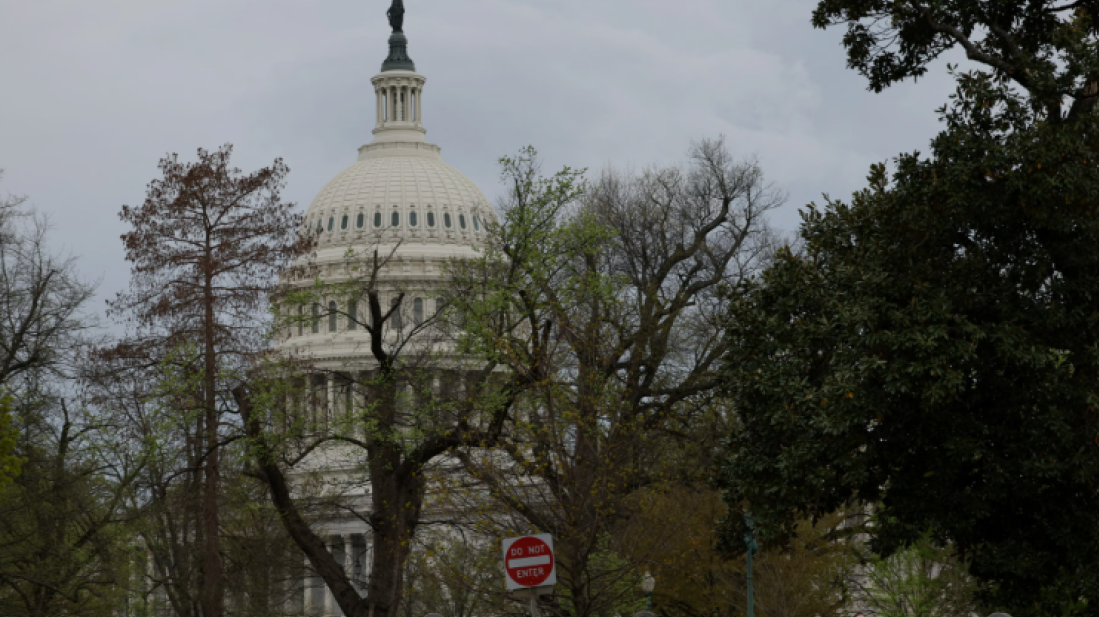
The U.S. budget deficit surged nearly 20% in July to $291 billion despite a significant increase in customs duty collections from President Donald Trump’s tariffs, as government spending outpaced revenue growth.
According to the Treasury Department, total receipts increased by 2% to $338 billion, while government outlays soared 10% to a record $630 billion for the month.
Adjusting for fewer business days in July compared to last year, receipts would have been about $20 billion higher. Customs duties alone rose sharply to approximately $27.7 billion from $7.1 billion the previous July, reflecting the impact of Trump’s tariff policies.
Although tariffs have boosted federal revenue, the additional costs often trickle down to consumers through higher prices.
Consumer price data revealed price hikes in tariff-sensitive items such as furniture, footwear, and auto parts, partially offset by falling gasoline prices.
For the first 10 months of the fiscal year, customs duties totalled $135.7 billion, up 116% from the previous year.
Meanwhile, the year-to-date budget deficit expanded by 7% to $1.629 trillion, with record-high receipts of $4.347 trillion and outlays of $5.975 trillion.

European Union leaders have agreed to raise up to €90 billion through joint borrowing to support Ukraine’s defence in 2026 and 2027, opting not to use frozen Russian state assets amid legal and political concerns.
Petroleum products are being transported by rail from Azerbaijan to Armenia for the first time in decades. The move is hailed as a tangible breakthrough in efforts to normalise relations between the long-time rivals.
European Union foreign policy chief Kaja Kallas has warned that attempts to reach a peace agreement in Ukraine are being undermined by Russia’s continued refusal to engage meaningfully in negotiations.
U.S. President Donald Trump delivered a wide-ranging address from the White House in which he sought to highlight what he described as his administration’s achievements while laying the groundwork for his plans for the year ahead and beyond, on Wednesday (18 December).
Chinese Foreign Minister Wang Yi has held a phone conversation with his Venezuelan counterpart Yvan Gil at the latter’s request.
Warner Bros Discovery’s board rejected Paramount Skydance’s $108.4 billion hostile bid on Wednesday (17 December), citing insufficient financing guarantees.
Ford Motor Company said on Monday it will take a $19.5 billion writedown and scrap several electric vehicle (EV) models, marking a major retreat from its battery-powered ambitions amid declining EV demand and changes under the Trump administration.
Iran has rolled out changes to how fuel is priced at the pump. The move is aimed at managing demand without triggering public anger.
U.S. stock markets closed lower at the end of the week, as investors continued to rotate out of technology shares, putting pressure on major indices.
The U.S. Federal Reserve’s Federal Open Market Committee (FOMC) cut its benchmark interest rate by 25 basis points to a range of 3.50% to 3.75% following its two-day policy meeting, according to an official statement issued on Wednesday, 10 December.
You can download the AnewZ application from Play Store and the App Store.
What is your opinion on this topic?
Leave the first comment