Georgia and Armenia restart border talks after years of deadlock
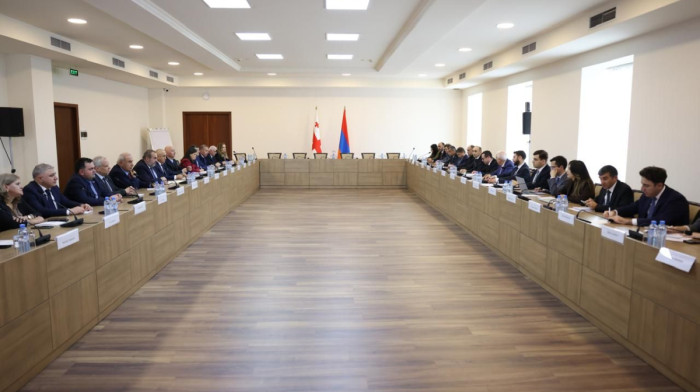
Georgia and Armenia have resumed talks on their 225-kilometre border after years of limited progress, with disputes over historical boundaries, far...
The United States has sanctioned six entities and six individuals based in Iran and the People’s Republic of China (PRC) for their role in a network procuring ballistic missile propellant ingredients on behalf of Iran’s Islamic Revolutionary Guard Corps (IRGC).
Accordgin to the statement of the U.S. Department of the Treasury, this network has facilitated the procurement of sodium perchlorate and dioctyl sebacate from the China to Iran. Sodium perchlorate is used to produce ammonium perchlorate, which is controlled by the Missile Technology Control Regime (MTCR), a multilateral political understanding among states that seek to limit the proliferation of missiles and missile technology. Both ammonium perchlorate and dioctyl sebacate are chemicals usable in solid propellant rocket motors, which are commonly used for ballistic missiles.
“Iran’s aggressive development of missiles and other weapons capabilities imperils the safety of the United States and our partners,” said Secretary of the Treasury Scott Bessent. “It also destabilizes the Middle East, and violates the global agreements intended to prevent the proliferation of these technologies. To achieve peace through strength, Treasury will continue to take all available measures to deprive Iran’s access to resources necessary to advance its missile program.”
Iran-based Saman Tejarat Barman Trading Company (STB) has procured sodium perchlorate for use by the IRGC, and Iran-based STB associate Mohammad Asgari (Asgari) has coordinated the shipment of that sodium perchlorate from China to the IRGC in Iran with China-based Shenzhen Amor Logistics Co Ltd (Shenzhen Amor).
Shenzhen Amor has also coordinated the STB shipment with other China-based companies, including Yanling Chuanxing Chemical Plant General Partnership, China Chlorate Tech Co Limited and Yanling Lingfeng Chlorate Co Ltd.
The gunman who allegedly killed six people in Poland’s unprecedented mass shooting in central Kraków on Saturday has died in hospital, police said early Monday. The attacker had demonstrated advanced military-style marksmanship skills, according to a spokesperson for the shooting club he attended.
Poland has declared two days of national mourning after a gunman opened fire in Kraków's historic main square. Investigators are examining possible far-right influences and the discovery of three bodies at the suspect's home.
Monday marks the second of two days of national mourning in Poland as police bolstered security after six people were killed in a mass shooting in Kraków.
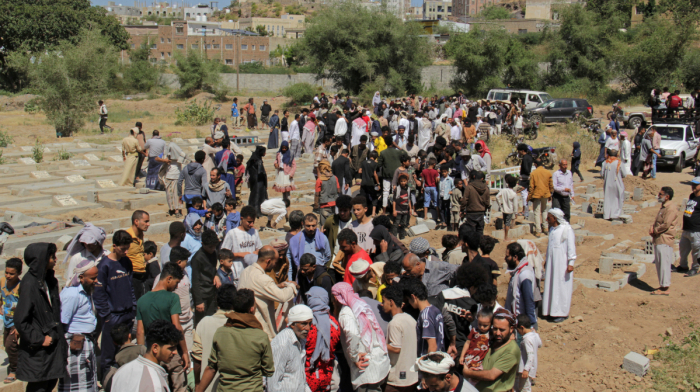
The Saudi-led coalition fighting Yemen's Houthis said it intercepted and destroyed two ballistic missiles fired by the Iran-aligned group towards Riyadh on Sunday (8 November), after loud booms were heard in the Saudi capital. The Aramco building was damaged by falling debris.
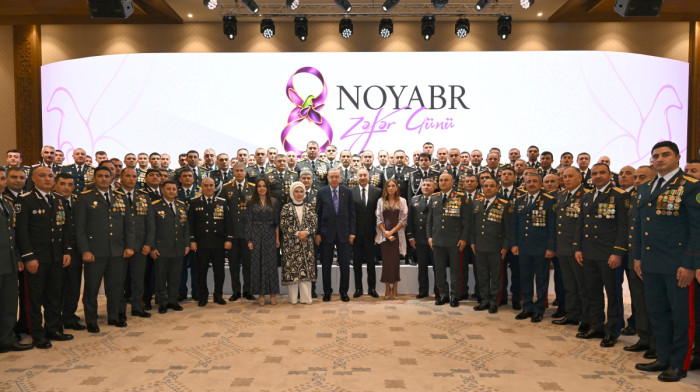
Azerbaijan is marking the sixth anniversary of Victory Day on Sunday, 8 November, with President Ilham Aliyev visiting the Victory Monument in Khankendi, laying a wreath and paying tribute to servicemen killed during the 44-day Second Garabagh War in 2020.
Nvidia has launched an independent investigation into whether its chief executive, Jensen Huang, was targeted in a foreign intelligence operation, following allegations that a businesswoman with whom he had a relationship passed information to Beijing.
Australian design platform Canva has announced a major restructuring affecting 22 per cent of its workforce, with 1,271 employees facing job cuts, relocations or changes to their roles as the company grapples with slowing growth and rising AI costs.
British Petroleum (bp) spent nearly $1.5 billion with suppliers and contractors across Azerbaijan, Georgia and Türkiye in the first nine months of 2026, highlighting the economic reach of major energy projects beyond oil and gas production.
Seven OPEC+ countries agreed on Sunday, 1 November, to keep oil production targets unchanged for December, extending an earlier freeze. But with the Iran war disrupting supplies and prices fluctuating, what is really driving the global oil market?
Cryptocurrencies are volatile, and their crashes make headlines. But does a slump in digital coins ever spill over into the pounds, dollars and euros in people's bank accounts? The short answer is not directly, but indirectly it can, and regulators are increasingly worried about how.
You can download the AnewZ application from Play Store and the App Store.
What is your opinion on this topic?
Leave the first comment