Hungarian parliament rules out Orbán return with eight-year limit for prime ministers
Hungary's parliament on Monday approved a constitutional amendment limiting prime ministers to a maximum of eight years in office, a move that effecti...
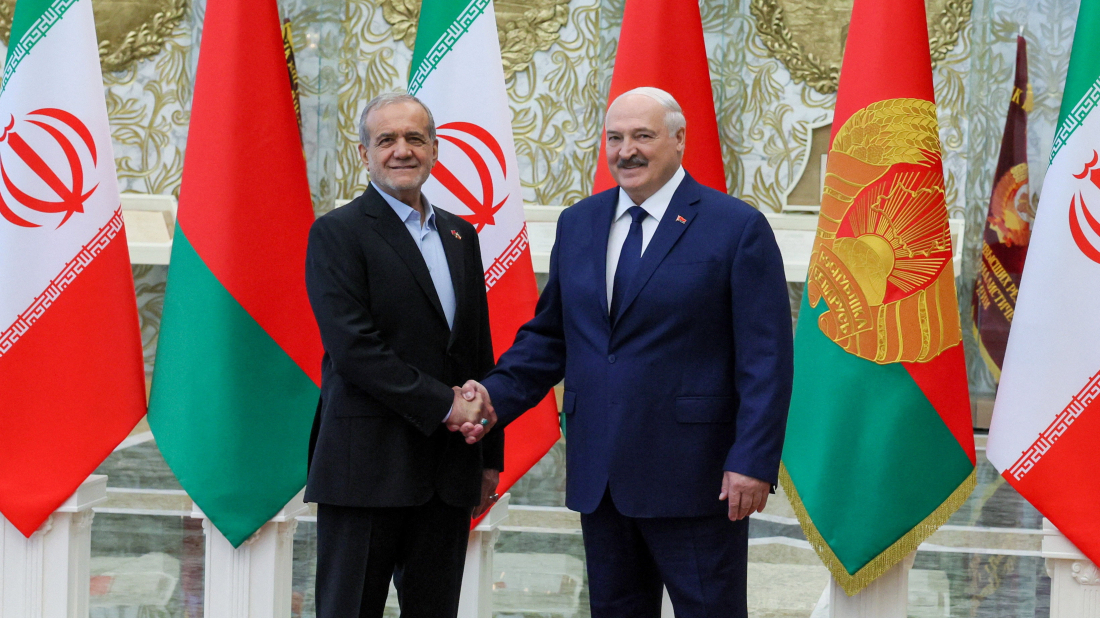
Belarus and Iran, both under Western sanctions, announced plans to intensify bilateral cooperation during a meeting in Minsk on Wednesday.
Belarusian President Alexander Lukashenko and his Iranian counterpart Masoud Pezeshkian said they would begin work on a strategic partnership treaty covering multiple areas, including military-technical cooperation.
He made this statement at the meeting in Belarusian capital saying that the two nations are keen on strengthening their partnership.
According to Belta, the state news agency, Lukashenko said "In conditions of geopolitical turbulence, Minsk and Tehran are undertaking consistent and balanced steps to further develop cooperation. We ready to discuss any issues, we have no closed topics."
Lukashenko reaffirmed that the countries would expand collaboration in defence and other domains.
Belarus is facing sanctions for allowing Russia to use its territory as a base for launching military operations in Ukraine and is hosting Russian tactical nuclear weapons.
Iran for its part has supplied drones to Russia and signed a strategic agreement with President Vladimir Putin earlier this year, though the deal did not contain a mutual defence clause.
Pezeshkian told Lukashenko that Iran would share its experience in handling sanctions, stating that "Iran is ready to help Belarus neutralise such measures." He added that their shared political trust should now be translated into practical economic and cultural ties.
"Of course, our common views should be implemented in the economic and cultural spheres, in the development of tourism... and also... in the development of military-technical cooperation," Pezeshkian was quoted as saying.
The talks underscore both countries’ aim to deepen alliances beyond the West, using shared isolation as a platform for long-term strategic engagement.

Details of a reported draft memorandum of understanding between the United States and Iran offer the clearest picture yet of how both sides plan to end months of conflict and move towards a longer-term settlement.
The U.S. and Iran say they have reached a deal to end their conflict, with an immediate ceasefire and reopening of the Strait of Hormuz after the lifting of the U.S. naval blockade. Talks will continue over the next 60 days to finalise the agreement
A senior U.S. official said on Monday that the memorandum of understanding linked to the U.S.-Iran agreement had been signed by President Donald Trump, Vice President JD Vance and Iranian Parliament Speaker Mohammad Bagher Qalibaf.
Israeli Prime Minister Benjamin Netanyahu has told U.S. President Donald Trump that Israel does not consider itself bound by a Lebanon-related provision in an emerging agreement with Iran, according to Israeli officials.
Switzerland on Sunday rejected a referendum proposal to cap its population at 10 million, a projection showed, as voters prioritised economic stability and the country's ties with the European Union over immigration concerns.
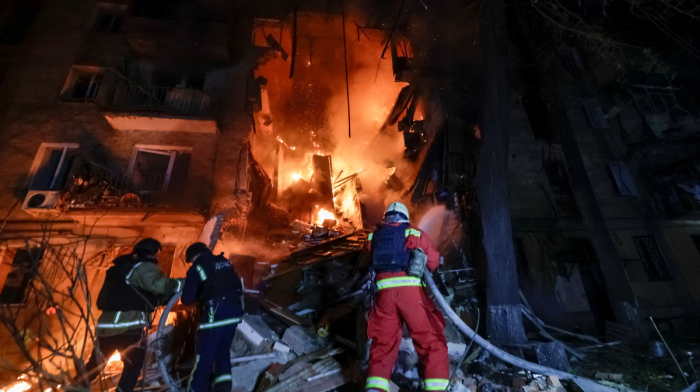
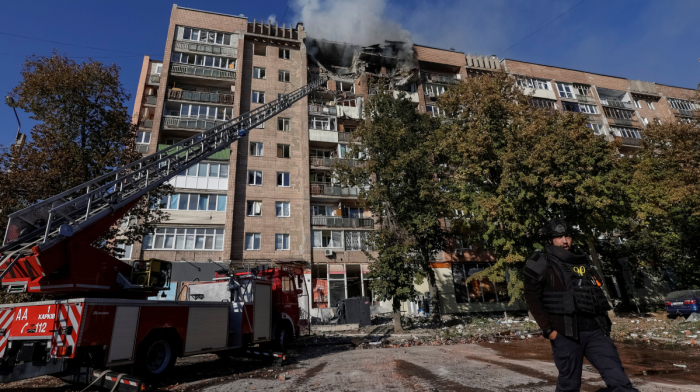
Firefighters and workers were clearing debris on Monday after what Ukraine described as a deliberate Russian strike severely damaged a nearly 1,000-year-old cathedral in Kyiv, one of the country's most important religious and cultural landmarks.
One month after Ebola cases were confirmed in eastern Democratic Republic of the Congo, health officials and aid organisations say the true extent of the outbreak remains unclear because of major gaps in testing, reporting and disease surveillance.
The first day of the Group of Seven (G7) summit in Évian-les-Bains, France, was dominated by discussions on the Middle East, Ukraine and the global economy, as leaders grappled with multiple crises that have reshaped the international landscape.
Pakistan's political leadership on Monday welcomed a breakthrough agreement between the U.S. and Iran aimed at ending more than three months of conflict, with Prime Minister Shehbaz Sharif describing it as a major diplomatic success and a victory for peace.
Hungary's parliament on Monday approved a constitutional amendment limiting prime ministers to a maximum of eight years in office, a move that effectively prevents former premier Viktor Orbán from returning to the country's top political post.
You can download the AnewZ application from Play Store and the App Store.
What is your opinion on this topic?
Leave the first comment