Apple has unveiled a long-awaited upgrade to Siri, aiming to close the gap with technology rivals and emerging artificial intelligence firms in an increasingly competitive market.
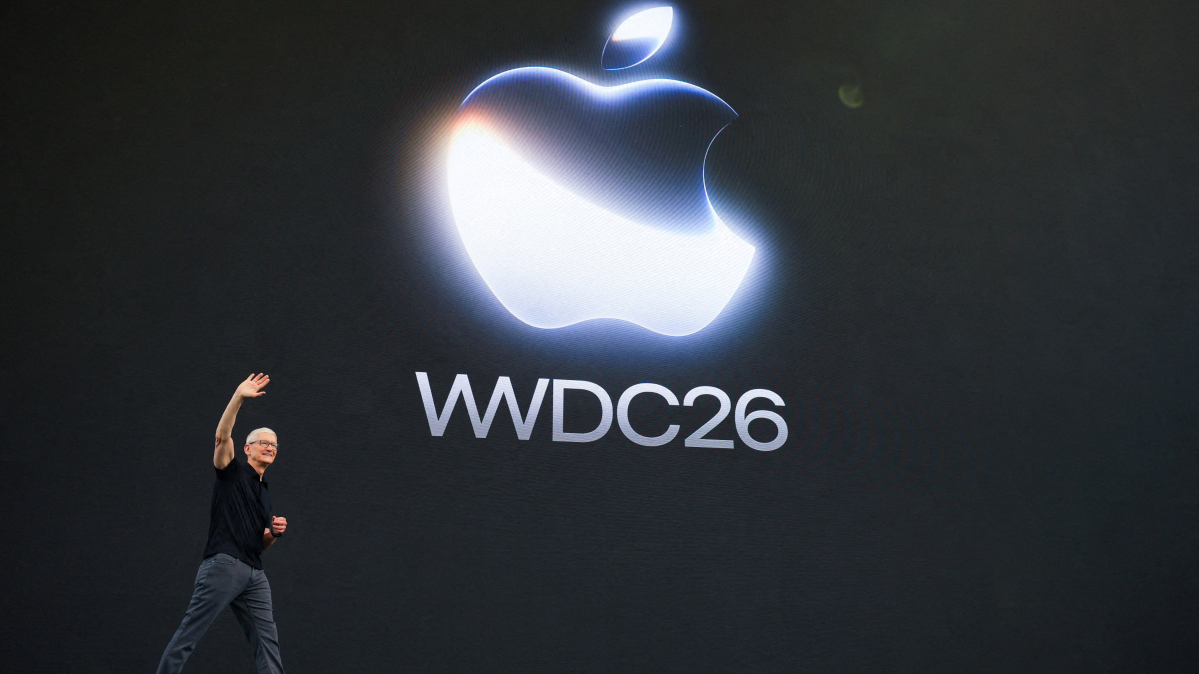
The revamped assistant, known as Siri AI, was unveiled at the company's annual Worldwide Developers Conference in Cupertino, California. It features a more natural conversational style, a dedicated app and the ability to analyse content displayed on a user's screen while retrieving information from the internet.
The launch comes two years after Apple first announced major improvements to Siri, which were delayed several times.
More personalised and context-aware
Apple said users will be able to return to previous Siri conversations, while the assistant can identify and retrieve information such as addresses mentioned in messages, even if they were never formally saved.
The update represents Apple's most ambitious effort yet to modernise Siri, which has lagged behind AI products such as ChatGPT, Claude and Gemini in adopting more advanced capabilities.
During the keynote presentation, Apple's software chief, Craig Federighi, appeared to draw a contrast with competitors.
"Some appear to be racing forward, seemingly pursuing AI for the sake of AI, without clear regard for the people, all of us, that it's ultimately meant to serve," he said.
Unlike some rivals pursuing fully autonomous AI agents, Apple continues to focus on integrating AI into everyday tasks and applications.
Analysts see progress but not a breakthrough
Industry observers welcomed the improvements but stopped short of describing them as transformative.
Bob O'Donnell, president and chief analyst at TECHnalysis Research, said the update finally fulfils Siri's original vision.
"This finally delivers on the promise of Siri from 15 years ago. It's AI for the masses; it's not really agentic."
Meanwhile, MoffettNathanson analyst Craig Moffett said the new features were not revolutionary but could help Siri become both a credible chatbot and a useful AI assistant.
Apple shares fell 1.9% to close at $301.54 on Nasdaq following the announcement.
Privacy concerns emerge
Apple revealed that some of its AI models are built using Google's Gemini technology, while larger models operate through cloud infrastructure powered by Nvidia chips.
The company stressed that personal information would remain protected, with most processing taking place directly on users' devices or through Apple's own privacy-focused cloud systems.
However, analysts noted that Siri AI's ability to understand screen content and activity across apps could raise privacy concerns.
Paolo Pescatore, an analyst at PP Foresight, said the technology creates a balance between convenience and data protection.
"The challenge for Apple is convincing consumers that intelligence does not have to come at the expense of privacy."
Apple said Siri AI will be able to search messages and emails, answer questions related to content currently displayed on-screen, and synchronise searches and images across iPhones, iPads and Macs through its private cloud infrastructure.
EU and China rollout delayed
Apple confirmed that Siri AI will not initially be available on iPhones and iPads in the European Union, citing privacy and security considerations amid ongoing scrutiny under the EU's Digital Markets Act.
The company also said the feature would not launch in China immediately as it continues to address regulatory requirements.
New safety and AI features
Alongside Siri AI, Apple announced several additional updates, including expanded child safety tools that allow parents to control which apps, websites and contacts their children can access.
Messaging applications will now blur graphic images by default and notify parents, building on existing protections aimed at limiting exposure to explicit content.
Apple also upgraded its image-generation tools and introduced new AI-powered features in Safari, including the ability to monitor products online and notify users when out-of-stock items become available again.
Read more:























What is your opinion on this topic?
Leave the first comment