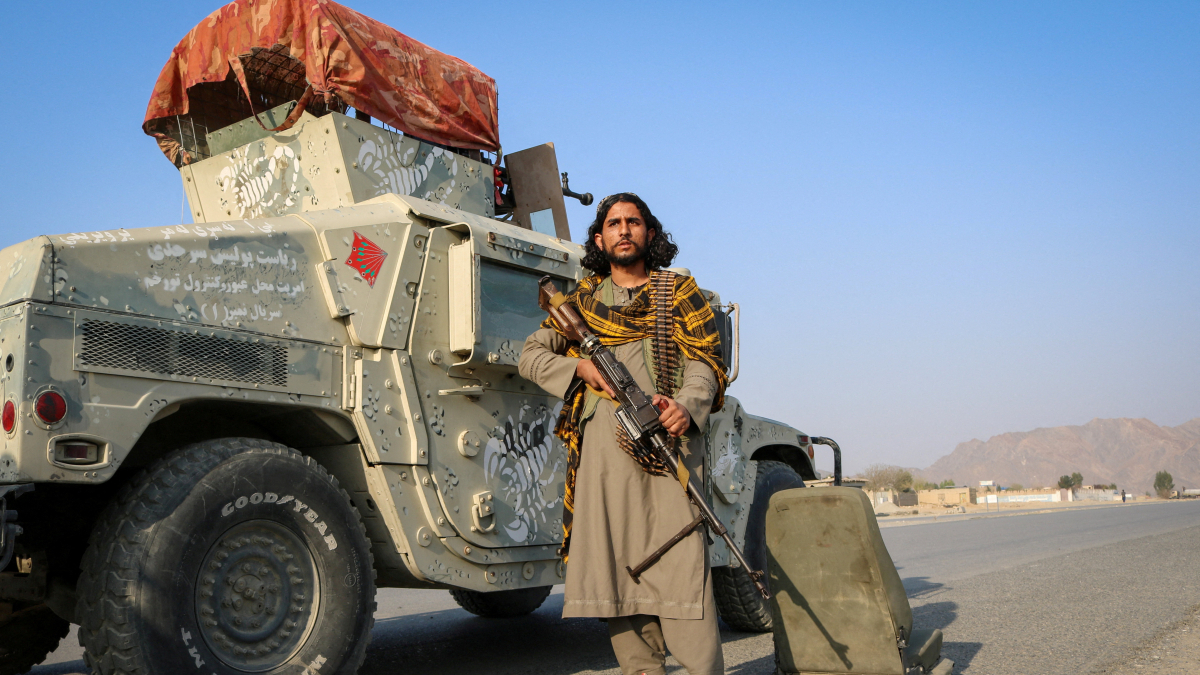
Pakistan says it has killed 26 militants in strikes on terrorist hideouts along the Afghan border, marking the most significant escalation between the neighbouring countries since a China-brokered diplomatic effort helped ease tensions earlier this year.
Pakistan's Information Minister, Attaullah Tarar, said on Wednesday that the operation was launched following a series of deadly attacks on Pakistani security forces, including Tuesday's assault on a Federal Constabulary (FC) post in Musa Dara, Peshawar.
According to Pakistani officials, six FC personnel were killed and four wounded when militants attempted to overrun the post. Security forces repelled the attack and killed eight assailants. Three personnel were reportedly abducted during the clash.
Pakistan links strikes to rising militant attacks
Islamabad says the latest operation was a direct response to an increase in militant violence originating from across the border.
Officials pointed to a vehicle-borne suicide attack on a military post in North Waziristan on 2 June, as well as attacks in Bannu in May that left police officers and security personnel dead. Pakistan has repeatedly blamed the banned Tehreek-e-Taliban Pakistan (TTP) for the attacks and alleges the group operates from sanctuaries inside Afghanistan.
The government says it has repeatedly urged the Afghan Taliban administration to dismantle militant networks and prevent Afghan territory from being used to launch attacks against Pakistan.
Kabul rejects those accusations, insisting that security challenges inside Pakistan are an internal matter and maintaining that Afghan soil is not being used to launch attacks on neighbouring countries.
A history of growing Pakistan-Afghanistan tensions
Relations between Islamabad and Kabul have deteriorated sharply since the Afghan Taliban returned to power in 2021.
Pakistan has long accused the Taliban authorities of failing to curb TTP activity, while Afghan officials have criticised Islamabad's border policies and security operations.
Tensions nearly escalated into a wider conflict last year after Pakistan carried out air strikes inside Afghanistan following a series of deadly militant attacks. The Taliban responded with cross-border fire targeting Pakistani positions along the Durand Line, the roughly 2,600-kilometre frontier separating the two countries.
The confrontation disrupted trade, closed border crossings and affected thousands of people living in communities that depend on cross-border movement.
China steps in as mediator
Concerned by growing instability on its western doorstep, China has intensified diplomatic efforts to reduce tensions between Pakistan and Afghanistan.
In April, Beijing hosted representatives from both sides in Ürümqi, Xinjiang, helping secure a ceasefire that significantly reduced hostilities. The latest strikes are the first major test of that fragile understanding.
China's Special Envoy for Afghan Affairs, Yue Xiaoyong, has since visited Kabul, Islamabad and Doha to advance negotiations and encourage continued dialogue. Pakistani officials say discussions have focused on regional security threats, including the TTP and the Eastern Turkistan Islamic Movement (ETIM).
Diplomatic sources indicate Beijing is preparing a second round of talks to keep the reconciliation process on track.
Why stability matters for China
China has substantial economic and strategic interests in both countries.
Beijing has invested around $65 billion in Pakistan through the China-Pakistan Economic Corridor (CPEC), a flagship project of its Belt and Road Initiative. It is also increasingly interested in Afghanistan's vast reserves of lithium, gold, oil and rare earth minerals.
Analysts say persistent instability threatens not only existing investments but also China's broader vision of connecting Central and South Asia through trade and transport corridors. Proposed railway and infrastructure projects linking Central Asia to Pakistan's Gwadar port through Afghanistan depend heavily on regional stability.
For now, China appears determined to prevent renewed violence from derailing diplomacy. However, with militant attacks continuing and mutual distrust between Islamabad and Kabul remaining high, the durability of the ceasefire and the future of regional co-operation face a critical test.















What is your opinion on this topic?
Leave the first comment