The U.S. has deployed weapons in Earth’s orbit capable of defending its forces against hostile action, Air Force Secretary Troy Meink said, marking the first public acknowledgement of such capabilities.
Meink gave no details about the weapons or when they were deployed. The disclosure comes as Washington strengthens its military capabilities in space amid growing concerns over Russian and Chinese counterspace programmes.
U.S. confirms space-based weapons
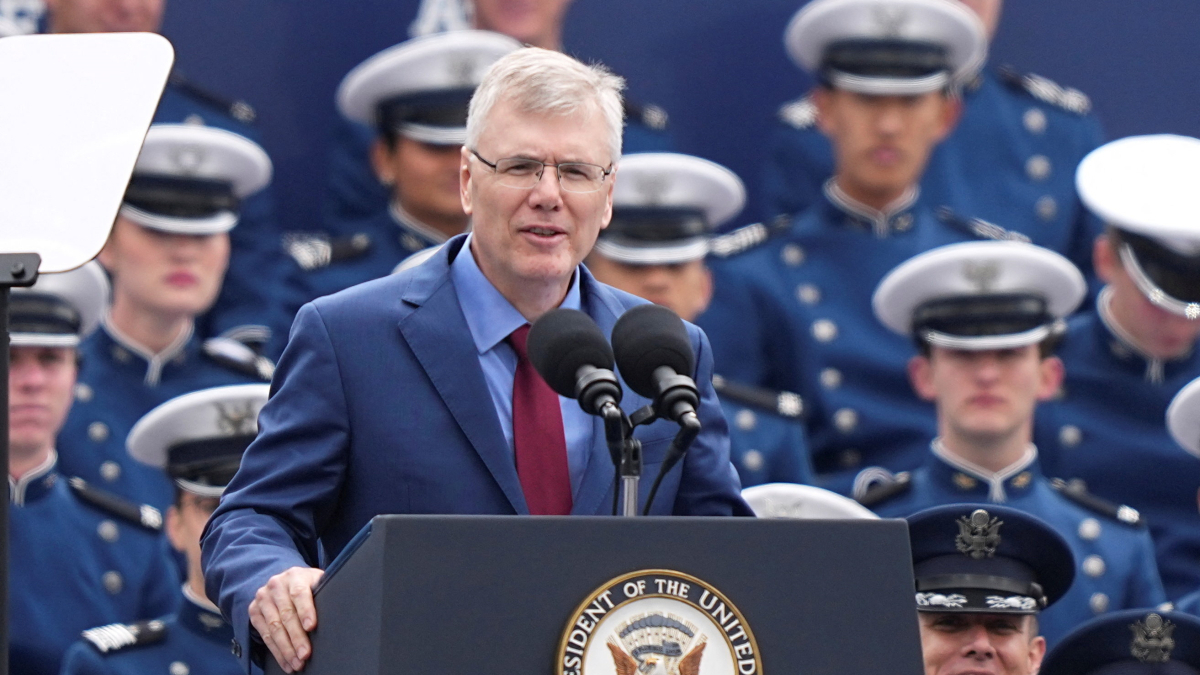
Speaking at the Air, Space and Cyber Conference in Maryland, Meink said the U.S. must remain prepared to respond to threats in space.
“Today we continue to ensure we remain ready to meet the challenges of evolving threats wherever they exist,” Meink said. “This is why the United States now has on-orbit space control weapons capable of defending the joint force against hostile adversary action.”
Asked about the systems’ capabilities and deployment, Meink declined to provide further details.
Washington points to Russian, Chinese capabilities
U.S. officials have increasingly warned that Russia and China are developing systems designed to interfere with or attack satellites.
The U.S. Space Force says China is developing and operating space and counterspace capabilities as part of its military modernisation, while Russia views space as a potential battlefield and considers control of the domain important to future conflicts.
Space weapons raise wider risks
Satellites are critical to modern military operations, providing communications, navigation, intelligence and targeting information. Conflict in orbit could also disrupt civilian systems dependent on satellite infrastructure.
The 1967 Outer Space Treaty prohibits nuclear weapons and other weapons of mass destruction from being placed in orbit, but does not explicitly ban conventional weapons in space.
U.S. pushes for space superiority
President Donald Trump made space security a priority and established the U.S. Space Force in 2019 as a new military service under the Department of the Air Force.
In December 2025, Trump signed an executive order calling for U.S. space superiority and the development of next-generation missile defence technologies.
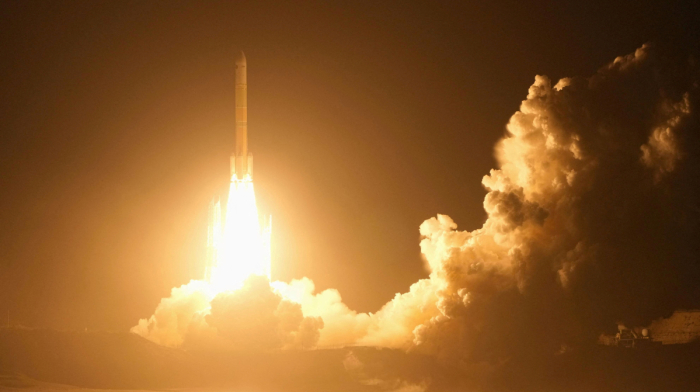
Meink also said a U.S. space-based interceptor programme had moved from an initial contract to flight-ready hardware in less than a year. He provided no further details.




















What is your opinion on this topic?
Leave the first comment