Microsoft has introduced new tools to stop AI agents from accessing data without permission, alongside a Nvidia-powered Surface laptop that can run advanced AI directly on the device.
Microsoft has introduced a new AI coding model that runs directly on personal computers, alongside security technology designed to prevent autonomous AI agents from accessing data without authorisation.
The announcements were made on Wednesday, 7 October, at a launch event in San Francisco, where Microsoft also unveiled its new Nvidia-powered Surface Laptop Ultra.
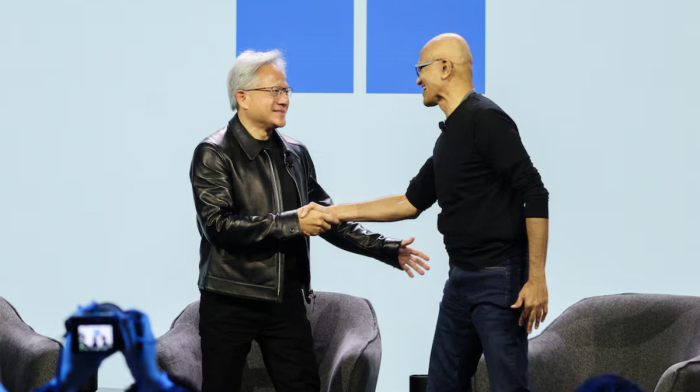
The event brought together Microsoft CEO Satya Nadella and NVIDIA CEO Jensen Huang, highlighting years of collaboration between the two tech giants.
The companies are seeking to bring AI tools, including coding assistants and automated business applications, directly to personal computers, reducing the need to rely entirely on cloud-based services.
Huang said the technology could transform how software is developed, with a new generation of programmers increasingly relying on AI to create applications, build models and develop software.
“We're going to have a whole new generation of software developers, and these software developers are going to be AI software developers,” Huang said.
Microsoft introduces new AI agent security tools
The announcement comes as technology companies face growing questions about the security of AI agents capable of accessing files, using applications and completing tasks without constant human supervision. Unlike traditional chatbots, these systems can take actions on behalf of users, raising concerns about data access and control.
To address these risks, the company introduced Microsoft Execution Containers (MXC), a security system designed to isolate AI agents within controlled environments and restrict their access to files, networks and sensitive information.
Huang said the technology would allow organisations to establish clear restrictions on what AI agents can access, making it possible to deploy autonomous systems more securely.
“With MXC, agents are contained in a runtime composable sandbox,” Huang explained.
According to Microsoft, the system can record actions performed by AI agents, allowing security teams to monitor their activity, investigate suspicious behaviour and restrict access when necessary. However, the effectiveness of these protections in real-world use remains to be seen.
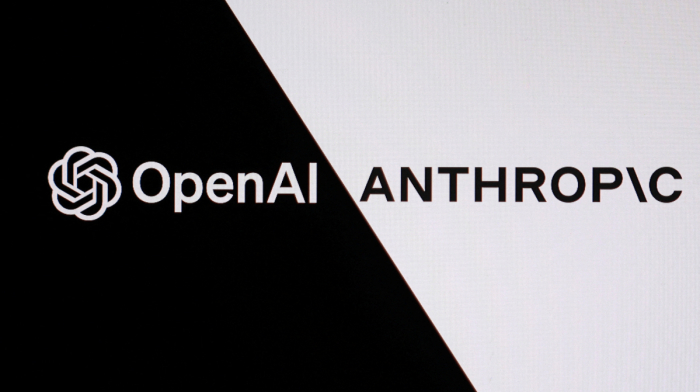
The company also announced that OpenAI and Anthropic would adopt MXC to improve AI agent security. Although the technology is designed to operate across Windows, macOS and Linux, Microsoft said Windows would offer deeper integration
Microsoft pushes AI beyond the cloud
The announcements form part of Microsoft's broader strategy to develop a new generation of AI-powered operating systems. The company describes its approach as “hybrid intelligence”, combining the processing capabilities of personal devices with cloud-based computing services.
Running AI models directly on personal computers can reduce dependence on internet connections and allow some sensitive data to remain on the device. It could also help reduce cloud processing costs, although performance depends on the hardware and the complexity of the AI models being used.
Nadella said users would increasingly expect AI capabilities to work seamlessly across local devices and the cloud, without having to distinguish between the two.
“The trajectory for me is so clear,” Nadella said. “There will never be a moment where we will go and look and say, oh, this runs locally, this runs in the cloud. You will expect. This hybrid intelligence to be everywhere and pervasive.”
The approach could also help Microsoft reduce its reliance on expensive cloud infrastructure by allowing more AI workloads to run directly on personal computers.
Nvidia-powered Surface Laptop Ultra unveiled
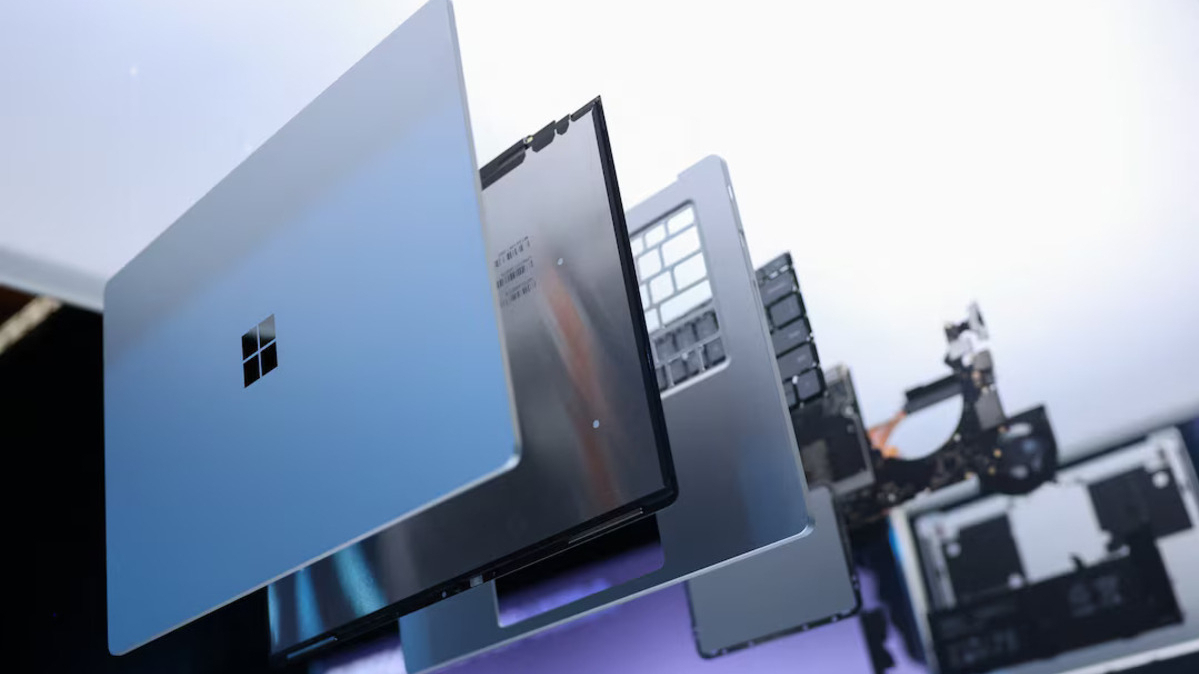
Alongside the software announcements, Microsoft presented the Surface Laptop Ultra, a new high-performance laptop aimed at developers and content creators.
Designed for software developers and content creators, the laptop is powered by Nvidia's RTX Spark technology and offers up to 128 gigabytes of unified memory, a PixelSense touchscreen and one petaflop of AI processing performance.
These specifications are intended to support demanding AI tasks, including running and developing complex models directly on the laptop.
Microsoft said the device provides 2.5 times the thermal capacity of competing laptops while weighing approximately 4.5 pounds, or just over two kilograms.
It also features a magnetic USB-C charging system called Magnetic Connect.
Prices for the Surface Laptop Ultra start at $2,599 and reach $5,899 for the highest-end model. The device is currently available for pre-order, with RTX Spark-powered systems expected to begin shipping next week.
Microsoft also announced that Meta's Muse AI model would become available on Windows, while the video game “Call of Duty” is expected to arrive on RTX Spark systems in 2027.
The announcements reflect a wider shift towards running AI directly on personal computers, as Microsoft and Apple compete to expand on-device AI capabilities. While the technology could offer benefits in speed, privacy and cost, questions remain about the performance and security of increasingly autonomous AI systems.
Read more:


















What is your opinion on this topic?
Leave the first comment