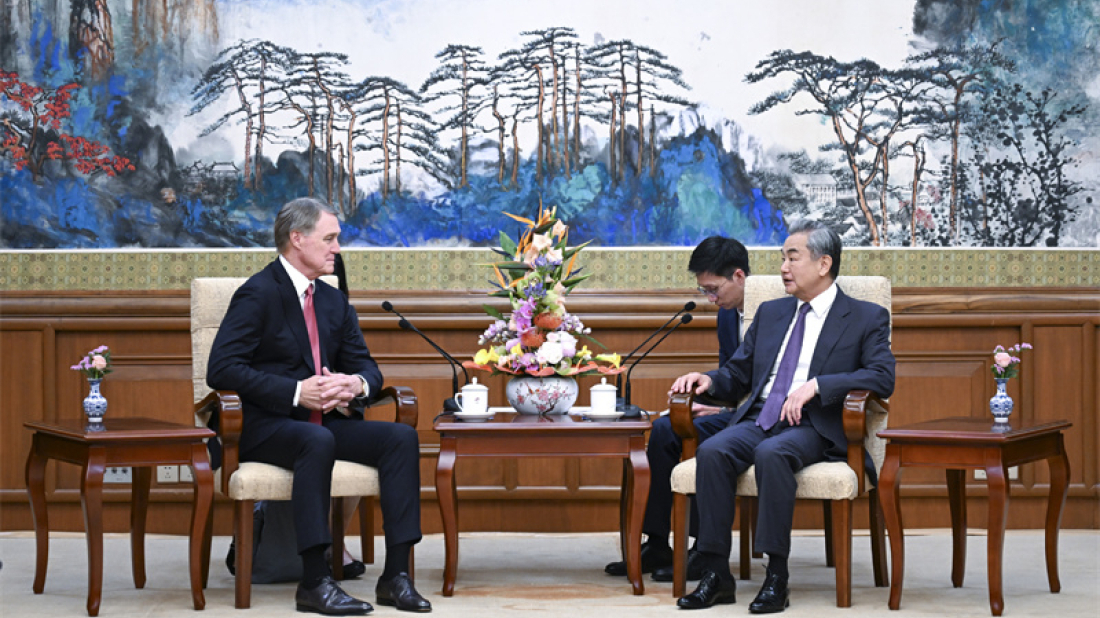
Chinese Foreign Minister Wang Yi met with U.S. Ambassador David Perdue on Tuesday in a meeting that underscored both the hope for improved bilateral relations and the mounting strain over critical mineral exports.
The meeting comes at a sensitive moment, as China continues to tighten controls on key mineral resources, triggering renewed friction with Washington.
During the talks in Beijing, Wang emphasized China’s commitment to fostering “healthy and sustainable” ties with the United States, expressing hope that both countries could steer their relationship back toward stability. “Mutual respect, peaceful coexistence, and win-win cooperation should be the guiding principles,” Wang said, according to a statement from the Foreign Ministry.
However, the conciliatory tone contrasted sharply with ongoing tensions surrounding China’s recent actions in the critical minerals sector. The U.S. has accused Beijing of reneging on commitments made last month during a high-level trade meeting in Geneva, where both sides agreed to ease restrictions on the export of seven key minerals essential to high-tech manufacturing, green energy, and defence industries.
In recent weeks, China has moved to tighten its control over these materials, launching a domestic crackdown on illegal mining operations and strengthening oversight on rare earth producers. Chinese officials argue these actions are aimed at environmental protection and national security, but U.S. trade representatives view them as an indirect form of economic coercion.
The minerals at the centre of the dispute - including gallium, germanium, and rare earth elements - are vital for semiconductors, electric vehicle batteries, missile guidance systems, and other critical technologies. China controls a substantial portion of the world’s supply and processing capacity, making its trade policies a significant factor in global economic stability.
While Ambassador Perdue echoed Wang’s call for improved ties, he reportedly raised concerns over the lack of follow-through on the Geneva agreement and reiterated the United States’ position that stable trade in strategic materials is essential for global markets and mutual trust.
The meeting is seen as part of a broader diplomatic push by both sides to manage competition while avoiding escalation. President Trump is expected to speak directly with President Xi Jinping later this week, with trade disputes - including the mineral export row - likely to dominate the agenda.
As tensions rise over strategic resources, both Washington and Beijing face the challenge of balancing national security with the urgent need for cooperation in a deeply interconnected global economy.

















What is your opinion on this topic?
Leave the first comment