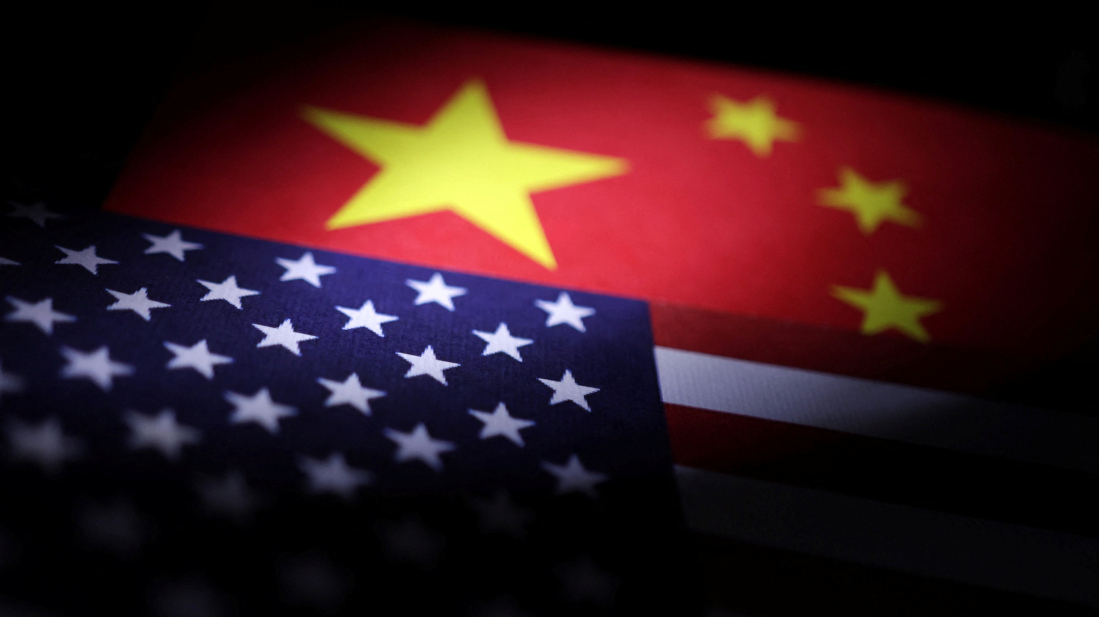
Chinese state media on Thursday issued a seven-point rebuttal to U.S. calls for Beijing to wind back its rare earth controls, as both sides struggle to move beyond a volley of barbs and accusations of blindsiding the other.
U.S. Trade Representative Jamieson Greer on Wednesday called China's new rare earth export restrictions "a global supply-chain power grab," and suggested Beijing could stave off President Donald Trump's threat to reimpose triple-digit tariffs on Chinese goods by shelving the measures set to take effect on 8 November.
Beijing maintains it not only notified Washington before announcing the new licensing regime, but that the controls are also consistent with measures long in place in other major economies.
The U.S. and China have been embroiled in a war of words since a September telephone call between Trump and Chinese leader Xi Jinping, with each accusing the other of stoking tensions weeks ahead of an expected meeting between the two men.
Beijing attributes the ramped-up rhetoric to the U.S. Commerce Department's surprise expansion of its "Entity List" in late September to include companies in China and elsewhere that use subsidiaries to bypass export restrictions on chipmaking equipment and other high-tech goods.
Washington pins the start to China's critical minerals move, which Trump described as "shocking."
"The United States has long overstated national security concerns and abused controls, adopting discriminatory practices against China," read one of seven infographics published by People's Daily, the official newspaper of the governing Communist Party.
The poster added that Washington maintains a control list over 3,000 items long, compared to the 900 on Beijing's catalogue.
"Implementing such export controls is consistent with international practice," the first poster said, reiterating Beijing's stance on the measures since their announcement.
Washington has had similar rules since the 1950s, and has been using them in recent years to stop foreign semiconductor companies selling chips to China if they are made using U.S. technology.
"Washington should not be surprised by China's 'tit-for-tat'," read an editorial in the Global Times, a People's Daily-owned tabloid, which has often been first to report on China's next steps in trade disagreements.
"The sudden shift in the trade atmosphere caught many by surprise, yet that's not surprising," the editorial continued.
"The direct trigger for this round of tension was Washington's breach of promises - an all-too familiar pattern."



















What is your opinion on this topic?
Leave the first comment