U.S. President Donald Trump kicked off his Gulf tour with a high-profile visit to Saudi Arabia, securing a major strategic economic agreement and pledging deep investment ties between the two nations.
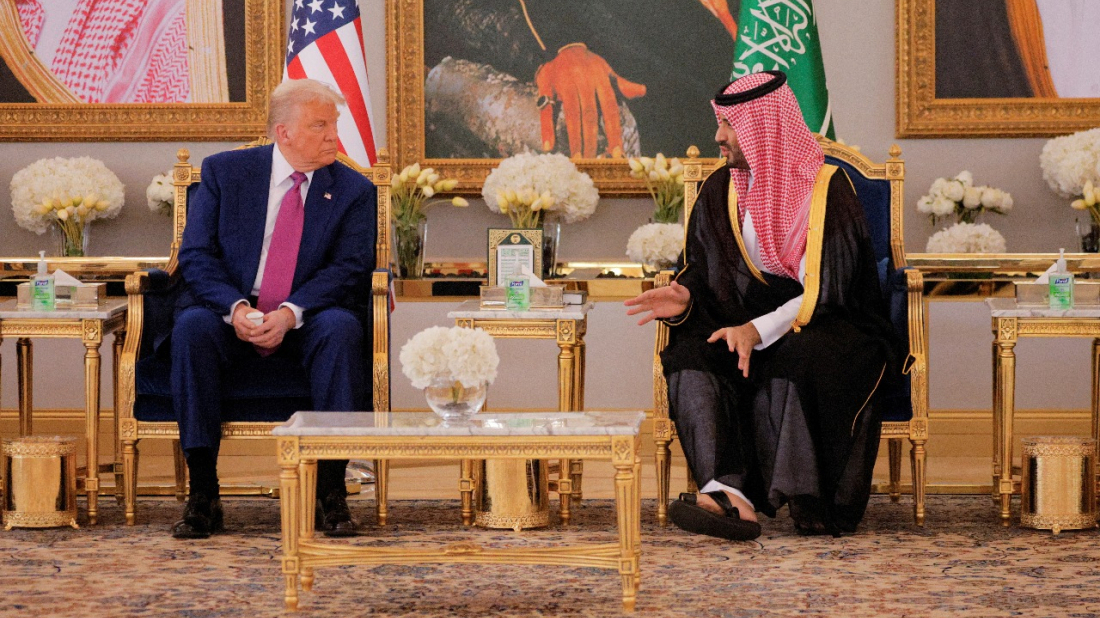
U.S. President Donald Trump began his Gulf tour on Tuesday with a ceremonial welcome in Saudi Arabia, where he signed a wide-ranging strategic economic agreement with Crown Prince Mohammed bin Salman. The deal, announced during the Riyadh Summit, covers energy, defence, mining, and other key sectors, and is intended to deepen bilateral cooperation as the kingdom pursues economic diversification under Vision 2030.
Saudi state media said the agreement was accompanied by a separate Strategic Economic Partnership Document. The White House confirmed that the kingdom had pledged to invest $600 billion in the United States, including what officials described as the largest-ever defence sales package between the two allies—worth nearly $142 billion.
"I really believe we like each other a lot," Trump remarked during talks with Prince Mohammed, whom he called a friend. The two leaders also participated in the Saudi-U.S. Investment Forum, where the crown prince hosted a lunch attended by high-level U.S. business figures such as Elon Musk, BlackRock CEO Larry Fink, Blackstone’s Stephen Schwarzman, and OpenAI’s Sam Altman.
Trump joked that the $600 billion pledge could grow to $1 trillion, echoing comments he made during his 2017 trip to Riyadh, and noted the investment would generate jobs in the United States.
Saudi Investment Minister Khalid al-Falih opened the forum by highlighting the shift from oil dependency to innovation, particularly in frontier technologies. NEOM’s Deputy CEO Rayan Fayez said most of the $1 billion in tech-focused Saudi investment has gone to U.S. firms.
Despite its scale, the event notably did not include a stop in Israel, prompting speculation about changing regional priorities. Israeli officials have expressed concern, especially as Prime Minister Benjamin Netanyahu faces pressure from Washington to accept a ceasefire and consider a two-state solution amid the ongoing Gaza war.
Meanwhile, Trump’s envoy Steve Witkoff said efforts to expand the Abraham Accords were ongoing, though sources say progress with Saudi Arabia is unlikely under the current Israeli stance. Trump is also expected to offer Riyadh an arms package exceeding $100 billion, further cementing defence ties with the kingdom.
Separately, U.S. and Iranian officials met in Oman to discuss Tehran’s nuclear programme, with Trump maintaining the possibility of military action if talks fail. Israeli operations against Hamas and Hezbollah, and the targeted killings of their leaders, have increased pressure on Iran, giving Trump added diplomatic leverage.











What is your opinion on this topic?
Leave the first comment