Kyiv hit by massive missile strike as Zelenskyy calls for U.S. pressure on Russia
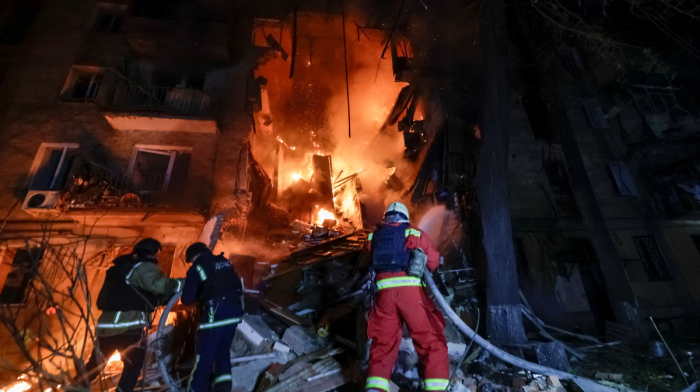
The Ukrainian capital came under a “massive” Russian missile attack early Thursday (12 February), with explosions heard across the capital accordi...
U.S. President Donald Trump is expected to announce a major trade deal with the UK on Thursday, marking Britain’s second deal in a week and potentially lowering tariffs on steel and autos, according to sources cited by the New York Times.
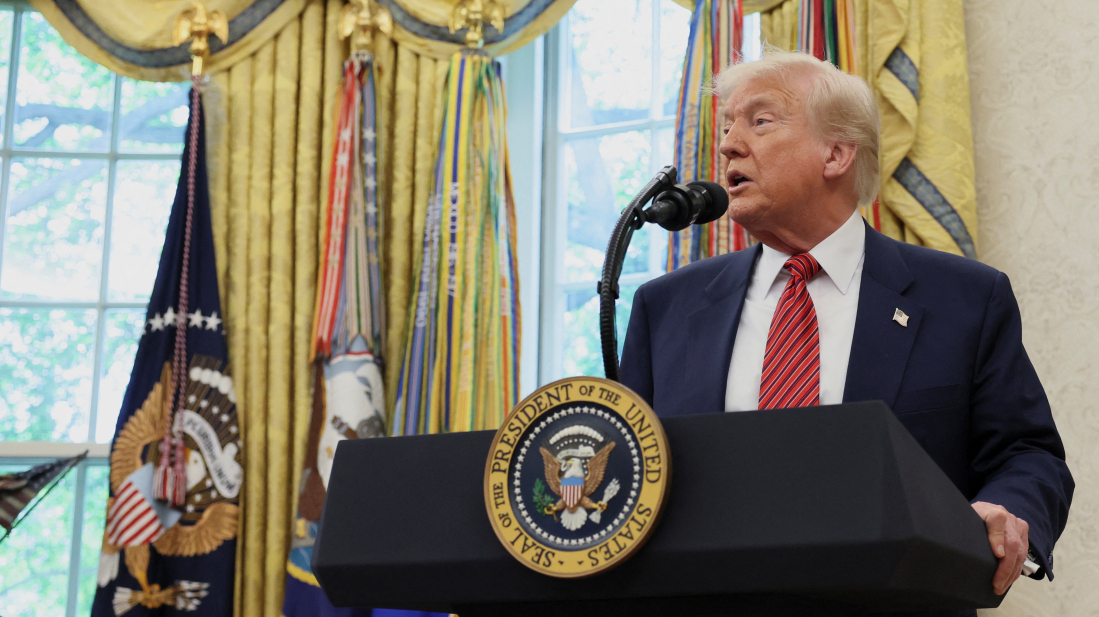
U.S. President Donald Trump is expected to announce a trade agreement between the United States and the United Kingdom on Thursday, according to a New York Times report citing sources familiar with the matter. Trump posted on Truth Social that he would host a press conference at 10 a.m. EDT in the Oval Office to reveal a "major trade deal with representatives of a big, and highly respected, country", though he did not provide specific details, only noting that it would be the "first of many".
While the White House has not commented on the report, the news led to a rise in the British pound. This would be Britain’s second major trade agreement in a week, following a recent deal with India. A UK official said progress had been made with the U.S., likely involving reduced tariffs on steel and automobiles. Meanwhile, Britain is in talks with U.S. officials regarding the recently announced 100% tariff on foreign-produced films.
The timing of this announcement is notable, as U.S. and Chinese officials are also set to meet in Switzerland on Saturday for trade talks aimed at easing tensions between the world’s two largest economies. Trump's tariffs and aggressive trade stance have caused volatility in global markets and supply chains, prompting warnings from economists and institutions like the International Monetary Fund, which recently lowered growth forecasts due to rising trade tensions.
Trade analysts caution that the U.S.-UK agreement could put the UK in a difficult position, given its ties with both the EU and China. British manufacturers, often integrated into broader European supply chains, could face unintended consequences if retaliatory tariffs are imposed.
Since imposing a 10% tariff on most countries in early April- with exceptions and suspensions- Trump’s administration has been actively negotiating with various nations. Notably, the UK was spared from the additional tariffs due to its trade surplus with the U.S. Trump has also placed steep tariffs on goods from Canada, Mexico, China, and several other nations. He mentioned that his team would review possible trade agreements over the coming two weeks, and hinted at ongoing negotiations with India, South Korea, and Japan.

The United States and Azerbaijan signed a strategic partnership in Baku on Tuesday (10 February) encompassing economic and security cooperation as Washington seeks to expand its influence in a region where Russia was once the main power broker.
Greek Prime Minister Kyriakos Mitsotakis arrived in Ankara on Wednesday, where Turkish President Recep Tayyip Erdoğan held an official welcoming ceremony at the Presidential Palace, marking the start of high-level talks between the two NATO allies.
Europe heads into the Munich Security Conference, 13 February, amid deepening unease over U.S. policy, as President Donald Trump’s hard-line stance on defence, trade and territory fuels doubts about Washington’s long-term commitment to transatlantic security.
The European Union is preparing a further expansion of its sanctions against Russia, with Central Asia emerging for the first time as a distinct point of focus.
A senior adviser to Iran’s Supreme Leader said on Tuesday that negotiations with the United States must remain focused on the nuclear issue and be grounded in realism, as Washington and Tehran prepare to resume talks mediated by Oman.
A Republican lawmaker accused on Wednesday (11 February) Attorney General Pam Bondi of concealing the names of Jeffrey Epstein’s powerful associates. The claim was made during a heated House hearing on the Justice Department’s handling of the files.
Start your day informed with AnewZ Morning Brief: here are the top news stories for the 12th of February, covering the latest developments you need to know.
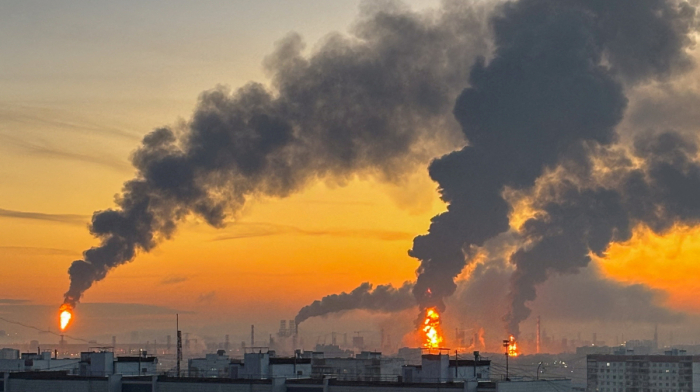
The Ukrainian capital came under a “massive” Russian missile attack early Thursday (12 February), with explosions heard across the capital according to authorities. The assault unfolded as uncertainty lingers over upcoming U.S.-brokered peace talks.
The U.S. House of Representatives narrowly backed a measure on Wednesday (11 February) disapproving President Donald Trump's tariffs on Canada, a rare rebuke of the president and leaders of his party in the Republican-majority House.
Russia has attempted to "fully block" Meta Platforms-owned WhatsApp in the country, a company spokesperson told Reuters on Wednesday, as Moscow promotes home-grown platforms and seeks greater control over its internet space.
You can download the AnewZ application from Play Store and the App Store.
What is your opinion on this topic?
Leave the first comment