U.S. and Iran exchange threats - Tuesday, 10 March
Tensions in the region remained high on Tuesday (10 March), as the United States and Iran exchanged increasingly sharp warnings, including thr...
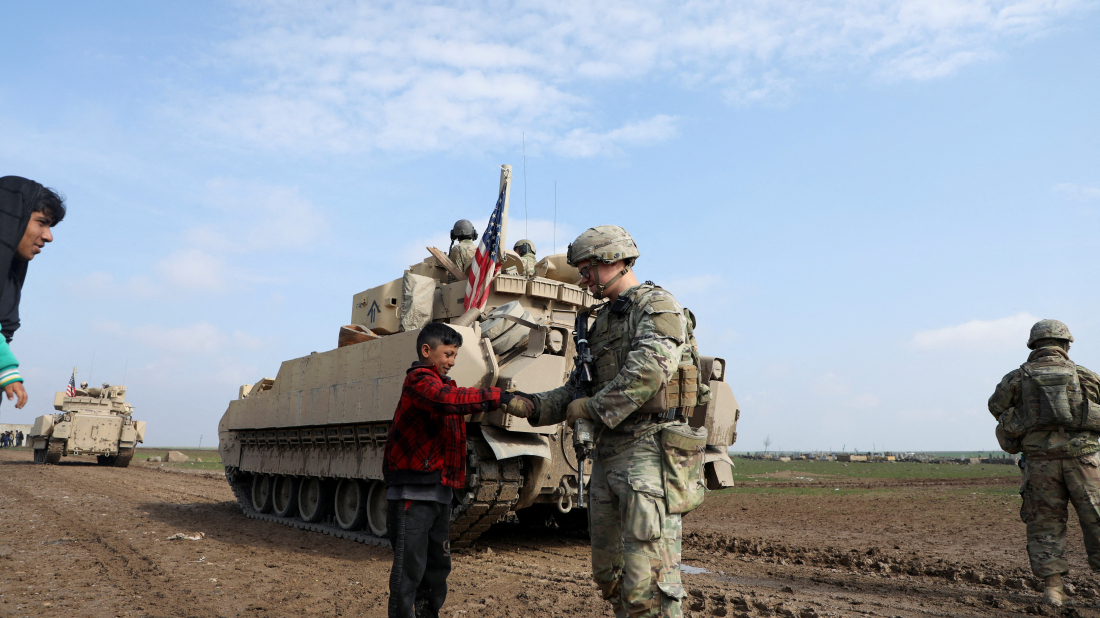
The United States is preparing to consolidate its military footprint in Syria, with officials signalling a potential drawdown of up to half its troops in the coming months.
Currently, around 2,000 American personnel are stationed across Syria, primarily in the northeast, where they work alongside Kurdish-led Syrian Democratic Forces (SDF) to prevent a resurgence of the Islamic State group. But two U.S. officials told Reuters that the number could drop to roughly 1,000 as part of an ongoing strategy review.
The expected shift comes at a delicate time. While the Trump administration continues negotiations with Iran and bolsters its military presence elsewhere in the Middle East, it appears to be reassessing the value and risk of its long-term deployments.
One official confirmed that consolidation is on the table but cautioned that no final decision had been made. Skepticism remains among some U.S. officials over such a significant reduction, particularly as Washington tries to manage multiple security challenges across the region.
Meanwhile, Syria itself is entering a new phase. The Islamist-led government that replaced Bashar al-Assad in December has moved to reassert authority across the country. Last month, the SDF struck a deal with Damascus to integrate Kurdish-led security and administrative structures into the central government — a sign of shifting alliances that could affect the U.S. presence.
Washington delivered a list of conditions to the new Syrian leadership in March, offering partial sanctions relief in exchange for specific reforms. But engagement has otherwise been minimal. Some officials inside the White House are wary of deeper cooperation, citing past ties between parts of the Syrian leadership and al-Qaeda.
At the same time, Defense Secretary Pete Hegseth is overseeing a global review of U.S. deployments, a process that could reshape American military posture far beyond Syria.
With diplomatic and security dynamics evolving quickly, the consolidation plan marks the latest signal that Washington’s Syria strategy — like the region itself — remains in flux.

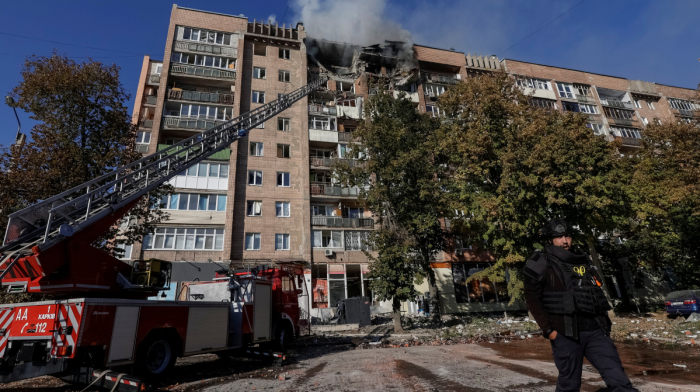
Tensions in the region remained high on Tuesday (10 March), as the United States and Iran exchanged increasingly sharp warnings, including threats over the strategic Strait of Hormuz, a critical artery for global oil supplies.
Global oil prices surpassed $119 a barrel on Monday (9 March, 2026), an almost four year high, as the Middle East conflict rumbled on.
China has urged Afghanistan and Pakistan to resolve their dispute through dialogue after Chinese envoy Yue Xiaoyong met Afghan Foreign Minister Amir Khan Muttaqi, as fighting between the two neighbours entered its eleventh day.
Entry and exit across the state border between Azerbaijan and Iran for all types of cargo vehicles, including those in transit, will resume on 9 March, according to a statement by the Cabinet of Ministers of Azerbaijan.
Iran named Mojtaba Khamenei to succeed his father Ali Khamenei as supreme leader on Monday (9 March), signaling that hardliners remain firmly in charge, as the week-old U.S.-Israeli war with Iran pushed oil above $100 a barrel.
U.S. Ambassador to the United Nations, Mike Waltz, has addressed the U.N. Security Council, saying the world must consider how effective its engagement with the Taliban-run country is as millions face hunger.
British MPs have rejected a proposal to introduce an Australia-style ban on social media for under-16s, opting instead to give ministers flexible powers to impose restrictions on platforms.
Australia has granted humanitarian visas to five Iranian women footballers who sought asylum, fearing persecution after refusing to sing their national anthem at an Asia Cup match.
Start your day informed with AnewZ Morning Brief. Here are the top news stories for the 10th of March, covering the latest developments you need to know.
U.S. President Donald Trump called his recent phone conversation with Russian President Vladimir Putin “very good.” The two leaders spoke on Monday about the situation in Iran and other international issues.
You can download the AnewZ application from Play Store and the App Store.
What is your opinion on this topic?
Leave the first comment