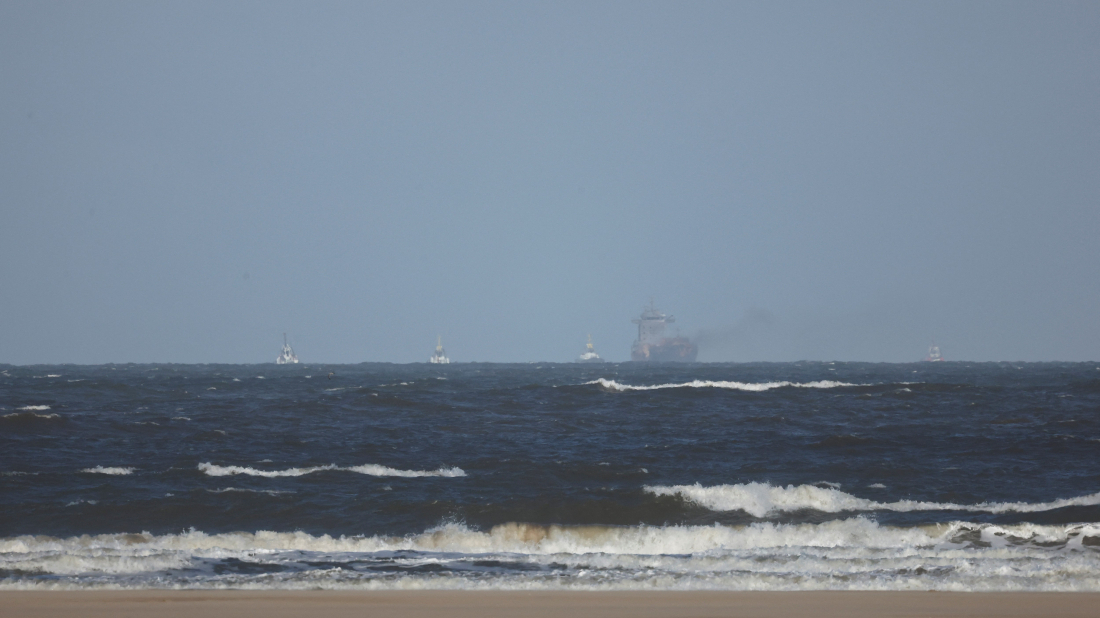
A mysterious collision between a U.S.-flagged chemical tanker carrying jet fuel for the U.S. military and a Portuguese-flagged container vessel unfolded off Britain’s coast on Tuesday morning, leaving both ships ablaze and prompting an urgent investigation into what went wrong
The incident involved the tanker Stena Immaculate, which sustained a large breach along its side, and the container ship Solong, with both vessels reportedly still burning a day after the collision. Shipping and insurance experts described the event as unique, noting in particular that the Solong did not slow down prior to impact—even though both ships are equipped with multiple navigational aids such as dual radar systems, automated radar plotting aids, AIS tracking, and VHF radios.
One maritime specialist, speaking on condition of anonymity, emphasized the unusual nature of the crash. “It’s strange that the Solong maintained a speed of around 16 knots—close to its maximum of about 18—despite navigating waters where it has sailed many times before,” the source said. Authorities expect that a detailed examination of the vessels’ voyage data recorders will soon shed light on the collision’s circumstances.
Both vessels are relatively modern in their own right. The Stena Immaculate was built in 2017 and underwent a safety certification survey in 2023, with its next renewal scheduled for 2027, while the Solong, constructed in 2005, is due for its next safety survey in October. Despite the significant damage, neither ship is expected to sink.
The collision has reignited memories of past maritime disasters off Britain’s coast, though such incidents remain rare. One of the largest was the 1996 Sea Empress disaster off Milford Haven, which resulted in a massive oil spill. In the current case, early indications suggest that the container vessel struck the anchored tanker, though the owner of the Solong has simply described the event as a collision.
In addition to the technical investigation, authorities are also addressing potential human impacts. British maritime minister Mike Kane informed parliament that while all crew members have been rescued, the government’s working assumption is that one sailor from the Solong lost his life. Search and rescue teams, described as “invaluable” by Stena Bulk, the tanker’s owner, have been central to the emergency response.
Adding to the unfolding drama, British police have arrested a man on suspicion of gross negligence manslaughter in connection with the collision, and a criminal investigation is now underway. Despite the chaos, one maritime expert noted that while such incidents occur globally, the simultaneous outbreak of fire on both vessels makes this event “spectacular” in its severity.
As investigators piece together navigational data and testimonies, the incident serves as a stark reminder of the unpredictable nature of sea transport—even in waters where rigorous safety protocols and advanced technologies are in place. Data from the non-profit advisory body ITOPF indicates that while global oil spill incidents have declined since the 1970s, the impact of such events remains significant when they do occur.
















What is your opinion on this topic?
Leave the first comment