Azerbaijan sends humanitarian supplies to neigbouring Iran
Up to 30 tonnes of food will be delivered to Iran amidst ongoing hostilities with U.S. and Israel, following a phone converstation between the ...
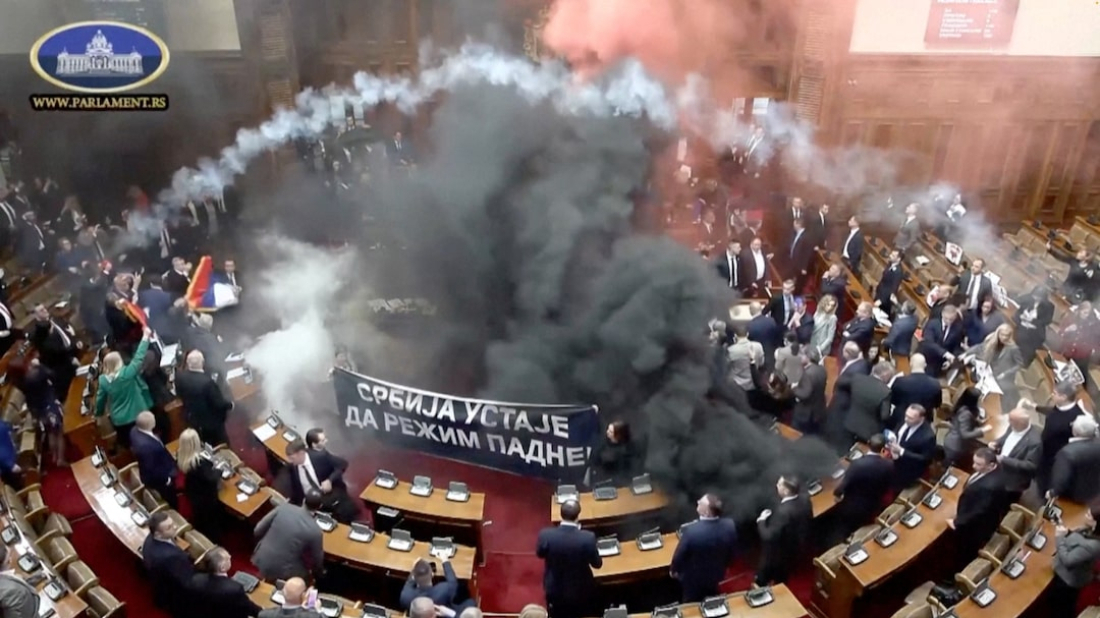
The European Union has voiced serious concern over recent disruptions and violence in Serbia’s parliament, calling on all stakeholders to engage in an inclusive dialogue.
In a statement on X, EU Enlargement Commissioner Marta Kos said, “We are very concerned by the disruptions of parliamentary work and the violence in the Serbian parliament. The parliament must be the place for democratic debate in the interest of all citizens, and must fully play its role.”
The commissioner stressed that developments targeting civil society organizations are particularly alarming. “We have been consistently calling for de-escalation of tensions, by establishing conditions for an inclusive dialogue involving all stakeholders, including political actors, institutions and members of civil society to address reforms necessary for Serbia’s EU future,” Kos added.
The disturbances erupted during a session that was set to discuss the resignation of Prime Minister Milos Vucevic and a proposed law on higher education. According to Radio Television of Serbia (RTS), three lawmakers were injured during the ensuing clash between opposition and ruling party members. Parliament President Ana Brnabic reported that an eight-month-pregnant lawmaker sustained injuries, while another suffered serious injuries after being pepper-sprayed and struck with a bottle. Additionally, one lawmaker, allegedly hit by a stun grenade, suffered a stroke and is in critical condition.
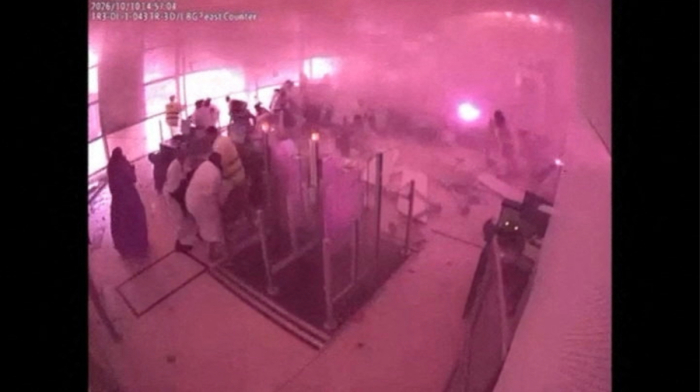
Tensions escalated when opposition lawmakers attempted to approach President Brnabic but were blocked by security, sparking further chaos. Video footage captured opposition members lighting torches and throwing smoke bombs—filling the assembly hall with red, black, and white smoke—while some MPs resorted to throwing water bottles, egg cartons, and using pepper spray. In the wake of the turmoil, two lawmakers reportedly submitted their resignations.
The incident has deepened the political crisis in Serbia, already marked by months-long anti-corruption protests and public discontent with the current government. EU officials and local observers alike have called for a de-escalation of tensions and the restoration of calm in the parliamentary process.

Mojtaba Khamenei, son of the late Ayatollah Ali Khamenei, is a hardline cleric with strong backing from the Islamic Revolutionary Guard Corps. His rise signals continuity in Tehran's anti-Western policies.
Global oil prices surpassed $119 a barrel on Monday (9 March, 2026), an almost four year high, as the Middle East conflict rumbled on.
China has urged Afghanistan and Pakistan to resolve their dispute through dialogue after Chinese envoy Yue Xiaoyong met Afghan Foreign Minister Amir Khan Muttaqi, as fighting between the two neighbours entered its eleventh day.
Iran named Mojtaba Khamenei to succeed his father Ali Khamenei as supreme leader on Monday (9 March), signaling that hardliners remain firmly in charge, as the week-old U.S.-Israeli war with Iran pushed oil above $100 a barrel.
Entry and exit across the state border between Azerbaijan and Iran for all types of cargo vehicles, including those in transit, will resume on 9 March, according to a statement by the Cabinet of Ministers of Azerbaijan.
Australia has granted humanitarian visas to five Iranian women footballers who sought asylum, fearing persecution after refusing to sing their national anthem at an Asia Cup match.
Start your day informed with AnewZ Morning Brief. Here are the top news stories for the 10th of March, covering the latest developments you need to know.
U.S. President Donald Trump called his recent phone conversation with Russian President Vladimir Putin “very good.” The two leaders spoke on Monday about the situation in Iran and other international issues.
Welcome to our live coverage as the conflict involving Iran enters its 11th day. Tensions in the region remain high as the United States and Iran exchange increasingly sharp warnings over the strategic Strait of Hormuz, a critical artery for global oil supplies.
U.S. President Donald Trump and UK Prime Minister Keir Starmer spoke by phone on Sunday as tensions between Washington and Westminster deepened over the conflict involving Iran. The call came less than a day after Trump criticised Britain’s response to U.S. strikes on Iranian targets.
You can download the AnewZ application from Play Store and the App Store.
What is your opinion on this topic?
Leave the first comment