Thai school shooting: At least 8 dead, several injured
Three students and three teachers are among the dead following a school shooting in Thailand, with at least 15 injured, according to Royal Thai Police...
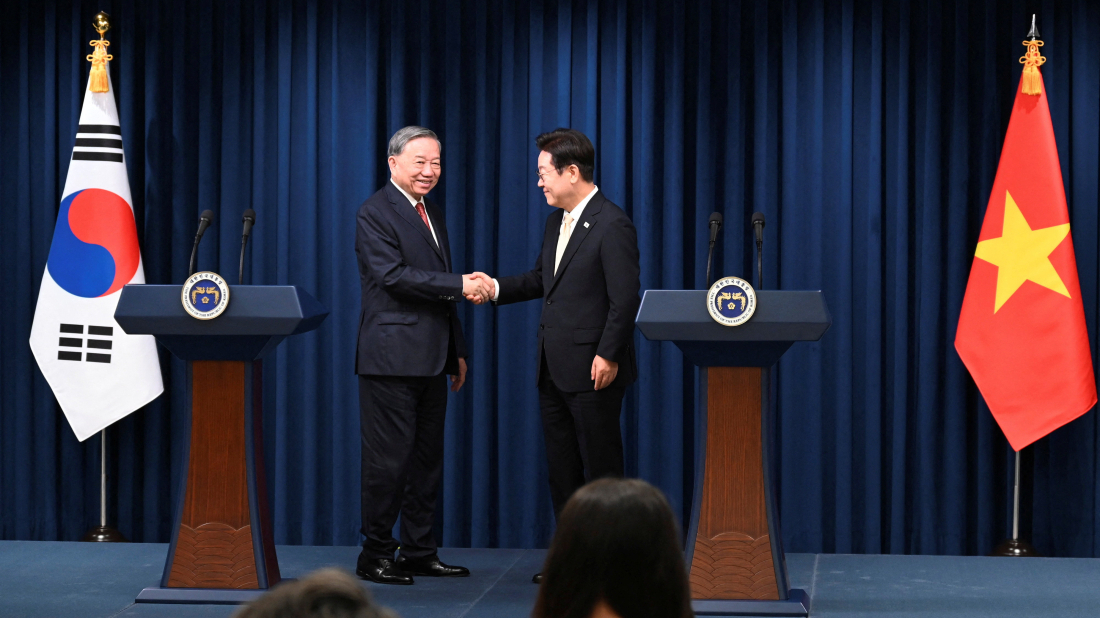
South Korea and Vietnam are set to deepen their economic and strategic partnership as their leaders meet to strengthen ties during growing global trade challenges and shifting tariffs.
South Korean President Lee Jae Myung will host Vietnamese leader To Lam for a landmark summit on Monday, marking the first state visit since Lee took office in June.
The two leaders are expected to focus on boosting trade and investment between the countries.
To Lam, the general secretary of the Vietnamese Communist Party, arrives with a high-level delegation including ministers of industry, trade, foreign affairs, technology, and senior parliament members for a four-day visit.
At the summit, the two nations plan to sign at least ten memoranda of understanding covering cooperation in areas such as nuclear and renewable energy, monetary and financial policies, and science and technology.
This visit is anticipated to pave the way for South Korean firms to invest heavily in Vietnam’s infrastructure and energy projects, including nuclear power.
Vietnam has long served as an export hub for major South Korean companies like Samsung Electronics, attracted by lower labor costs, tax incentives, and Vietnam's broad network of free trade agreements.
However, recent U.S. tariffs imposed by President Donald Trump—15% on South Korean goods and 20% on Vietnamese imports have cast uncertainty over future investments, coinciding with a slowdown in new investments reported by Vietnam.
South Korean businesses are eyeing Vietnam’s upcoming nuclear energy, LNG power plants, and high-speed rail projects as key investment opportunities.

U.S. President Donald Trump said there was an "all-day negotiation" on Tuesday with Iran, characterising the talks positively while also threatening to hit Iran "really hard" if a deal was not reached.
Shipping traffic through the Strait of Hormuz and the Bab el-Mandeb Strait, two key maritime chokepoints in the region, decreased significantly from the previous day, according to shipping data.
Start your day informed with AnewZ Morning Brief. Here are the top news stories for the 6th of August, covering the latest developments.
Kazakhstan’s main oil export corridor was disrupted by drone strikes near Russia’s Black Sea coast in July, forcing a temporary suspension of crude loadings and raising fresh concerns over the vulnerability of regional energy infrastructure to the war in Ukraine.
Ukrainian President Volodymyr Zelenskyy has dismissed the country's ambassadors to Tajikistan, Kyrgyzstan and several other countries. The removals came after a speech on Monday in which he said embassies would be judged on their effectiveness in securing weapons for Ukraine.
Uzbek exporters say repeated disruptions to Wildberries' logistics network in Russia have slowed deliveries and affected overseas sales, prompting the government to hold talks with the online marketplace's management.
Tajikistan tripled fuel imports from neighbouring Central Asian countries in July after deliveries from Russia declined sharply, underscoring how disruptions to Russian exports are prompting governments across the region to seek alternative suppliers.
Morocco has expressed its readiness to work with Spain and other European partners to identify and return unaccompanied minors following the mass arrival of tens of thousands of migrants Ceuta last week.
Three students and three teachers are among the dead following a school shooting in Thailand, with at least 15 injured, according to Royal Thai Police.
Start your day informed with AnewZ Morning Brief. Here are the top news stories for the 7th of August, covering the latest developments.
You can download the AnewZ application from Play Store and the App Store.
What is your opinion on this topic?
Leave the first comment