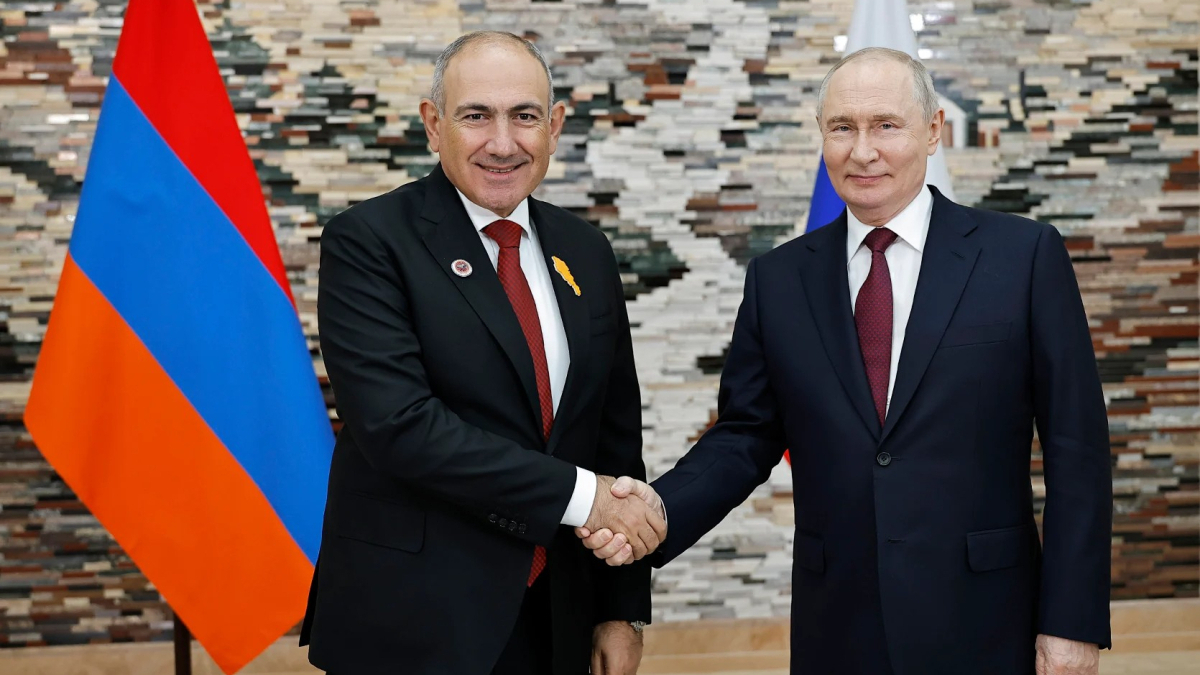
Armenia is seeking to resolve longstanding disagreements with Russia without triggering a diplomatic crisis, ahead of Prime Minister Nikol Pashinyan's planned meeting with Russian President Vladimir Putin in Moscow on 3 December.
Deputy Foreign Minister Vahan Kostanyan told Armenia's Public Television on Tuesday (24 November) that Yerevan wanted to address problems that had accumulated in recent years, stressing that Russia remained an important partner.
The planned meeting comes less than two weeks after Armenia approved its five-year government action plan, which prioritises regional integration, closer European ties and a broader network of international partnerships.
Armenia-Russia relations: Military agreements and economic ties
Since establishing diplomatic relations on 3 April 1992, Armenia and Russia have built a legal framework of 232 interstate, intergovernmental and interdepartmental agreements, according to Armenia's Foreign Ministry.
The cornerstone of the relationship is the 1997 Treaty on Friendship, Cooperation and Mutual Assistance, which established commitments covering military, political and economic cooperation.
Yet disagreements over regional security have exposed divisions within that partnership.
In May 2024, Pashinyan confirmed Armenia had frozen its participation in the Russia-led Collective Security Treaty Organization, citing what he described as the alliance's failure to respond adequately to Armenia's requests for assistance during border tensions with Azerbaijan.
Trade figures also reveal a shift in Armenia's economic ties.
According to Armenia's Statistical Committee, bilateral trade with Russia fell 19.4 per cent year-on-year to $4.02 billion between January and September 2026, reducing Russia's share of Armenia's foreign trade from 34.2 per cent to 26.8 per cent.
Over the same period, Armenia's trade with the European Union (EU) rose 49.1 per cent to $2.68 billion, while trade with China increased 36.2 per cent to $2.57 billion.
The decline in trade with Russia came despite a 2.7 per cent rise in Armenia's overall foreign trade.
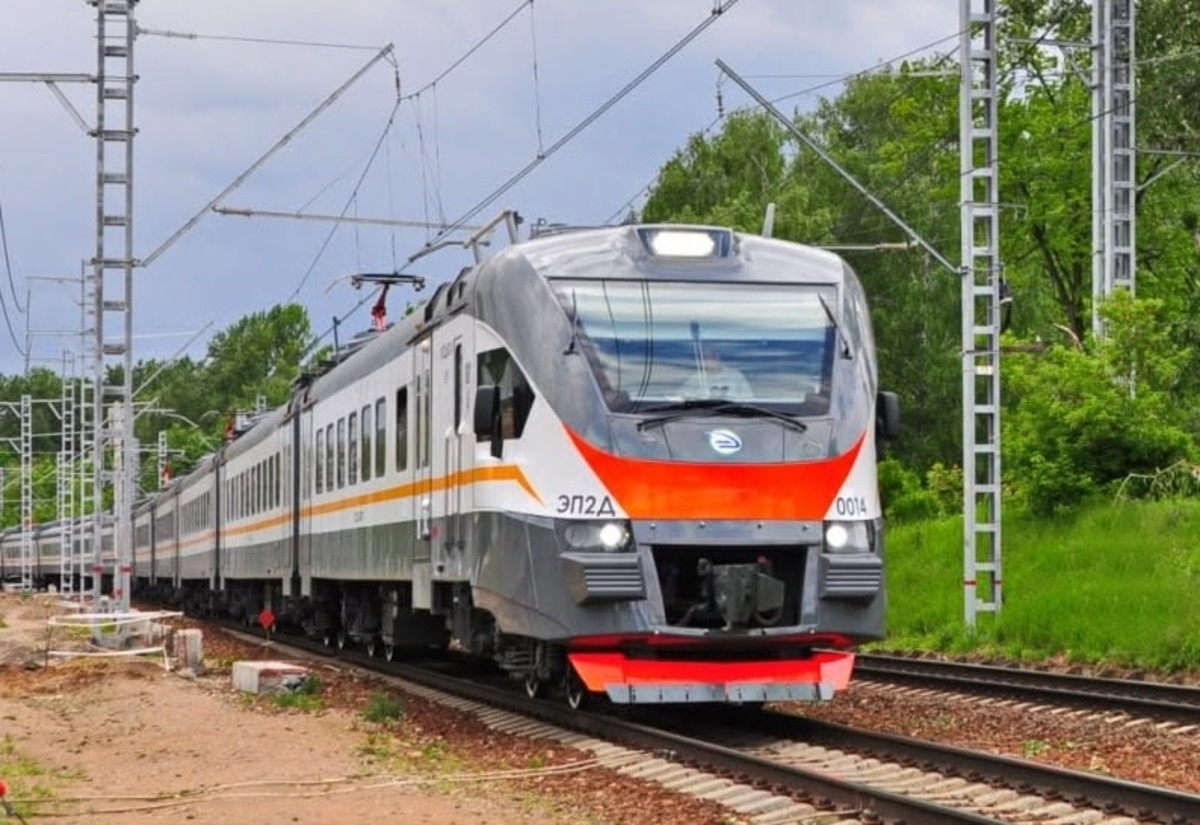
Russian involvement in Armenia also extends to strategic infrastructure, notably the country's railway network, which remains under Moscow's management.
Speaking in parliament on 24 August 2026, Pashinyan said sanctions against Russia were discouraging international investors and freight operators from using Russian-managed railway infrastructure in Armenia.
He called on Moscow to consider selling its railway concession rights to a third country acceptable to both governments, while stressing that Armenia had no objection to Russian management itself.
European integration fuels tensions
Armenia's pursuit of closer ties with Europe has become another source of friction with Moscow.
In March 2025, Armenia adopted legislation launching the process of EU accession, while retaining its membership of the Eurasian Economic Union (EAEU), alongside Russia, Belarus, Kazakhstan and Kyrgyzstan.
In May 2026, Armenia hosted its first bilateral summit with the EU, advancing cooperation in transport, energy, digital infrastructure and security.
Two months later, the EU launched a civilian partnership mission at Yerevan's request to help Armenia counter cyber threats, foreign interference and illicit financial flows.
These differences came into focus when Pashinyan and Putin met in Bishkek on 1 September.
Putin raised concerns over differences between European and Eurasian trade regulations, arguing that membership of both economic blocs would be incompatible.
Pashinyan maintained that Armenia's efforts to diversify its international partnerships were not directed against Russia, stressing that Yerevan had not formally announced its withdrawal from the EAEU.
Armenia remains a member of the Eurasian bloc and has yet to establish a timetable for EU membership.
Armenia's energy dependence on Russia
Despite efforts to diversify its international partnerships, Armenia remains heavily reliant on Russia for its energy supplies and infrastructure.
Russia accounted for approximately 83 per cent of Armenia's $468.4 million in natural gas imports in 2025, according to AnewZ calculations based on World Bank trade data. Iran accounted for the remaining 17 per cent.
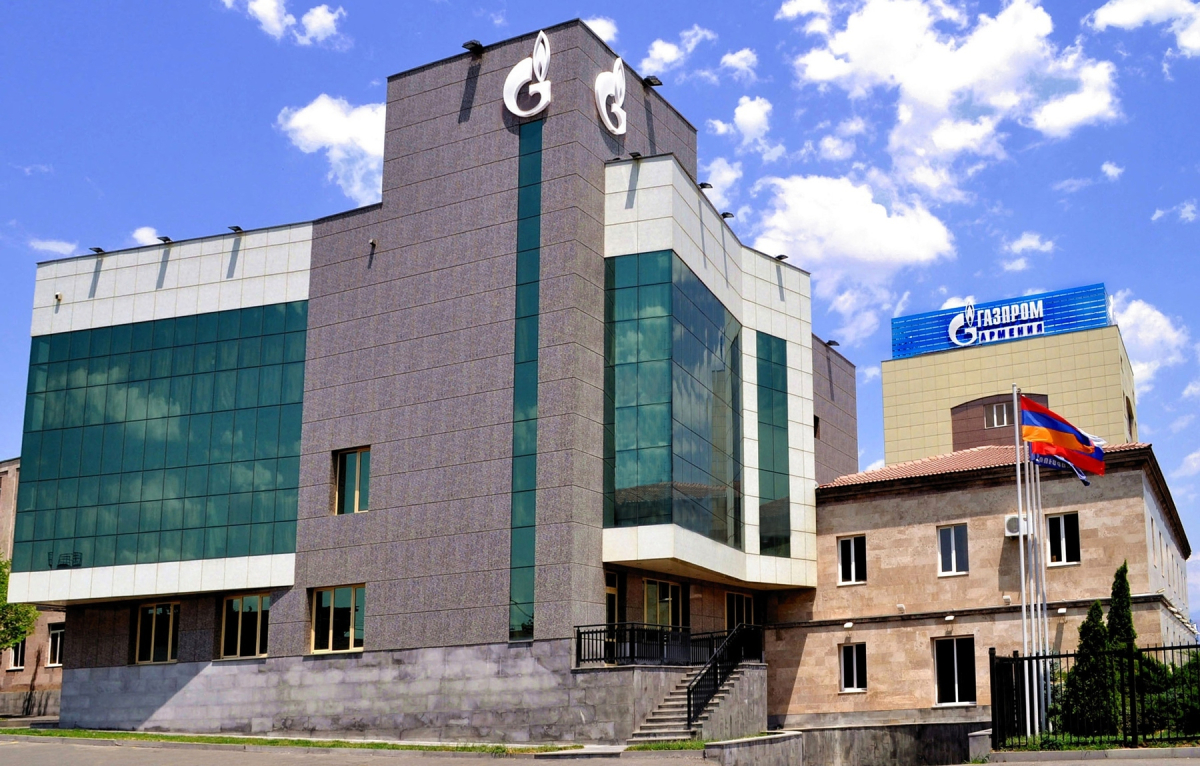
Russia's Gazprom has fully owned Armenia's gas transmission and distribution operator since 2014.
Nuclear power is another key area of cooperation. In December 2023, Armenia and Russia signed a framework agreement to extend the operating life of the country's only nuclear power plant, while Armenia continues to import its nuclear fuel from Russia.
Meanwhile, Yerevan is expanding its domestic electricity generation capacity. Addressing parliament in August 2026, Pashinyan said Armenia's installed solar power capacity had increased from 16 megawatts in 2018 to 1,213 megawatts in 2026, a nearly 76-fold increase.
The government aims to establish at least 800 megawatts of electricity storage capacity by 2031.
However, the growth in solar power does not directly reduce Armenia's reliance on natural gas for residential heating, transport and industrial production. Armenia's energy regulator recorded household gas consumption of 896.3 million cubic metres in 2024, an increase of 10.9 per cent from the previous year.
A changing South Caucasus
Shifting regional dynamics are also driving Armenia's reassessment of its relationship with Russia.
In an August address to parliament, Pashinyan identified changing regional conditions as a key factor behind the evolution of ties between the two countries.
Armenia's 2026–2031 action plan, approved on 19 November, prioritises putting peace with Azerbaijan on a firmer institutional footing, developing regional transport links and achieving visa liberalisation with the EU.
The government's stated objective is to avoid excessive dependence on individual external partners by developing a more balanced foreign policy.
Progress towards normalisation with Azerbaijan and Türkiye could also open new trade and transport routes, potentially reshaping Armenia's economic links with its neighbours.
Putin-Pashinyan meeting on 3 December
The 3 December talks will take place against a backdrop of falling bilateral trade, disagreements over European integration and enduring military and energy ties.
For Yerevan, the challenge is to resolve its differences with Moscow while pursuing a more diversified foreign policy without provoking a diplomatic crisis.
A detailed agenda for the meeting has yet to be confirmed.











What is your opinion on this topic?
Leave the first comment