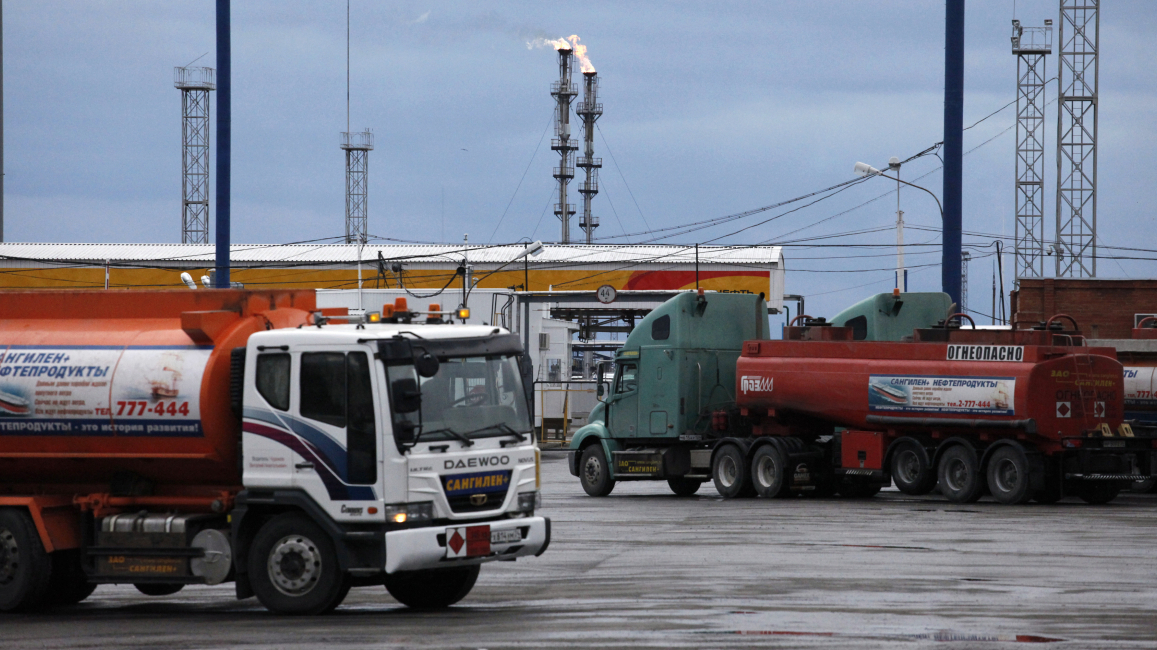
Tajikistan has secured additional diesel supplies from Russia after consuming its previously allocated quota under a bilateral fuel agreement, highlighting the Central Asian country's continued reliance on imported petroleum products.
Under the revised arrangement, diesel deliveries from Russia are expected to increase by 100,000 tonnes, bringing total diesel imports for the year to 550,000 tonnes, according to industry sources familiar with the agreement.
The decision comes as Tajikistan seeks to maintain stable fuel supplies for its economy, which depends heavily on imported petroleum products due to limited domestic refining capacity.
The expanded allocation reflects the special energy relationship between Moscow and Dushanbe.
Russia currently maintains restrictions on exports of gasoline and diesel to many international markets. However, exemptions are available for countries covered by bilateral duty-free fuel agreements and for members of the Eurasian Economic Union (EAEU).
Although Tajikistan is not part of the EAEU, it negotiates annual fuel supply arrangements directly with Russia, allowing it to continue receiving petroleum products under preferential conditions.
The revised agreement increases the overall volume of duty-free Russian fuel products available to Tajikistan this year to more than 1.2 million tonnes.
In addition to diesel, the package includes gasoline, jet fuel, liquefied petroleum gas, bitumen, petroleum coke and fuel oil.
Russia remains key supplier
Energy traders estimate that Russian diesel shipments to Tajikistan exceeded 370,000 tonnes during the first ten months of the year, underscoring Moscow's importance as the country's principal fuel supplier.
The additional allocation is expected to help meet winter demand and support transport, industry and agriculture.
However, Tajikistan has also sought to diversify its energy imports in recent months.
Amid fluctuations in supplies from Russia, authorities have explored sourcing additional oil products from Iran, Kazakhstan, Turkmenistan and Belarus to strengthen energy security and reduce the risk of shortages.
The agreement illustrates the broader energy dynamics in Central Asia, where countries continue balancing long-standing ties with Russian suppliers while exploring alternative sources.
For Tajikistan, securing additional diesel supplies from Russia provides short-term stability, particularly as fuel demand rises and regional governments remain focused on maintaining adequate reserves.
At the same time, efforts to broaden supply options suggest Dushanbe remains keen to avoid excessive dependence on any single source as regional energy markets continue to face uncertainty.
Read more:














What is your opinion on this topic?
Leave the first comment