The Trump administration has unveiled a sweeping new tariff proposal targeting 14 major trading partners, marking one of the most significant trade actions of President Donald Trump's second term and reopening debates over global trade, manufacturing competitiveness and inflation.
The new tariffs, proposed under Section 301 of the Trade Act of 1974, are aimed at what Washington describes as “structural excess industrial capacity” in countries whose industrial policies allegedly distort global markets and undermine U.S. manufacturers.
At the centre of the initiative is China, which faces the highest proposed tariff rates. However, the measures also target a broad group of U.S. trading partners, including the European Union, Japan, South Korea, India, Vietnam, Taiwan, Malaysia, Thailand, Indonesia, Singapore, Bangladesh, Cambodia and Switzerland.
The proposal follows an eight-month investigation by the Office of the United States Trade Representative (USTR), which concluded that the targeted economies support production levels beyond market demand through subsidies, industrial planning, state support and imports from non-market economies.
Why Washington is acting now
The move represents the administration's latest attempt to rebuild tariff leverage after the U.S. Supreme Court struck down Trump's earlier global tariffs in February, ruling that they exceeded executive authority under emergency powers legislation.
By relying on Section 301, a long-established trade law previously used against China during Trump's first term, the White House hopes to place its tariff framework on firmer legal ground.
U.S. Trade Representative Jamieson Greer said the action was designed to counter industrial strategies that suppress wages, support manufacturing through government intervention and distort competition.
The administration argues that excess production is particularly evident in sectors such as:
- Steel
- Aluminium
- Electric vehicles
- Solar panels
- Consumer appliances
- Pharmaceuticals
- Medical devices
- Information technology products
Washington contends that state-supported manufacturing in several economies, particularly China, has resulted in exports exceeding global demand, placing downward pressure on prices and challenging producers elsewhere.
China remains the primary target
Although the tariffs affect multiple countries, China remains the principal focus.
USTR has proposed a new “excess-capacity” tariff of 20 per cent on Chinese goods. That would be added to roughly 25 per cent worth of tariffs imposed during Trump's first presidency, creating one of the highest effective tariff burdens among America's trading partners.
If current U.S.-China trade arrangements expire without replacement, tariffs on Chinese products could rise as high as 40 per cent, according to USTR.
The Trump administration accuses China of subsidising production and flooding global markets with low-cost goods, an allegation Beijing rejects.
A spokesperson for China's embassy in Washington said claims of industrial overcapacity were being used as a political pretext and argued that Chinese exports reflected competitive advantages rather than unfair practices.
Despite the tough rhetoric, U.S. officials emphasised that they continue to seek stability in relations with Beijing.
A senior administration official said Washington did not expect Chinese retaliation and pointed to progress in discussions on rare earth minerals following the recent meeting between President Trump and Chinese President Xi Jinping.
Different countries face different rates
The administration is attempting to combine tariff pressure with incentives to conclude trade agreements.
Countries that reach deals with Washington would generally face lower tariff ceilings than those that do not.
Current proposed tariff caps include:
|
Country/Region Proposed Rate
|
| China |
20% (up to 40% if trade truce expires) |
| Vietnam |
20% with deal, 35% without |
| India |
17% with deal, 25% without |
| Japan |
15% |
| South Korea |
15% |
| Taiwan |
15% |
| European Union |
15% |
| Switzerland |
15% |
| Malaysia |
19% |
| Singapore |
10% |
| Bangladesh |
18% |
| Cambodia |
18% |
| Thailand |
18% |
| Indonesia |
18% |
The administration believes the framework could accelerate negotiations before the Group of Twenty summit in Miami later this year.
Europe pushes back
The proposal immediately prompted a response from Brussels.
A spokesperson for the European Commission said the EU expected any measures adopted by Washington to comply with the 15 per cent tariff ceiling already agreed between the two sides under last year's tariff framework.
The Commission also rejected the notion that Europe contributes to structural industrial overcapacity and criticised the absence of joint efforts to address global supply imbalances.
For European policymakers, the concern is not only trade flows but also the precedent such actions establish at a time when many advanced economies are pursuing industrial strategies of their own.
India seeks a deal
India faces a particularly important decision.
According to USTR, Indian goods would face a 17 per cent tariff if ongoing trade negotiations produce a bilateral agreement. Without a deal, tariffs would rise to 25 per cent.
New Delhi responded cautiously, saying it was reviewing the proposal and reiterating that India does not possess structural excess capacity in any sector.
The Indian government said trade concerns should be resolved through ongoing negotiations rather than punitive measures.
The two countries have been discussing a broader trade framework since earlier this year, although a final agreement remains elusive.
Brazil hit in separate action
Alongside the broader measures, Washington separately proposed new tariffs on Brazilian products.
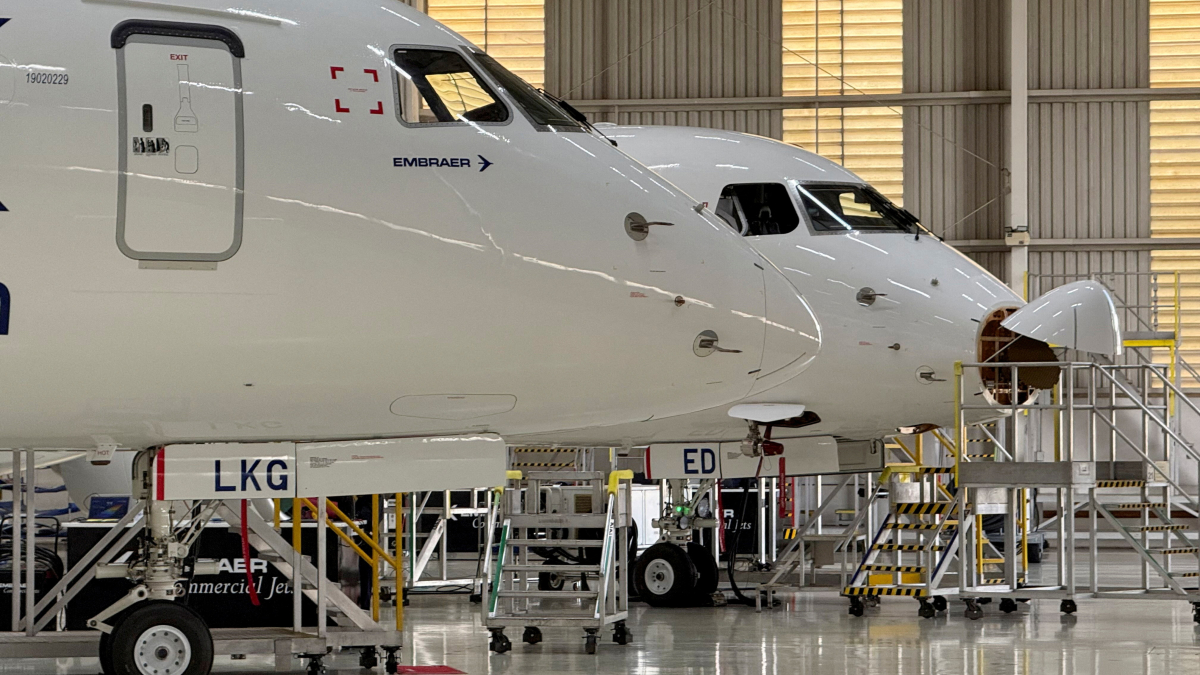
Among the most significant is a 10 per cent tariff on finished aircraft manufactured by Embraer, one of the world's largest regional jet producers.
The proposal also includes tighter restrictions on sugar imports exceeding established quotas.
Brazilian officials condemned the decision, describing it as political pressure aimed at forcing changes to domestic regulations. President Luiz Inácio Lula da Silva's government said Brazil would not yield to what it characterised as trade threats.
Political and economic implications
The tariff initiative arrives at a difficult political moment for the White House.
Tariffs were a major issue in recent U.S. midterm elections, where Republicans suffered significant losses. A Reuters/Ipsos poll conducted afterwards found that 62 per cent of respondents supported efforts to repeal Trump's tariffs.
Critics argue that tariffs raise prices for consumers and contribute to inflation by increasing the cost of imported goods.
Markets reacted negatively to the announcement, with major U.S. stock indices declining and technology shares leading losses. Investors remain concerned that escalating trade barriers could slow global economic growth and disrupt supply chains.
Supporters, however, argue that tackling excess industrial capacity enjoys bipartisan backing, particularly when directed at China's manufacturing model.
What happens next?
The proposals are not yet final.
Under U.S. procedures, the tariffs must undergo a public comment process and a formal hearing before implementation. USTR has scheduled hearings for January, meaning the duties are unlikely to take effect before early 2027.
Investigations into Mexico and Norway remain ongoing and could result in additional measures later.
The outcome will shape global trade relations for years to come. For the Trump administration, the tariffs are intended to revive U.S. manufacturing and counter what it sees as unfair industrial competition.
Read more:

















What is your opinion on this topic?
Leave the first comment