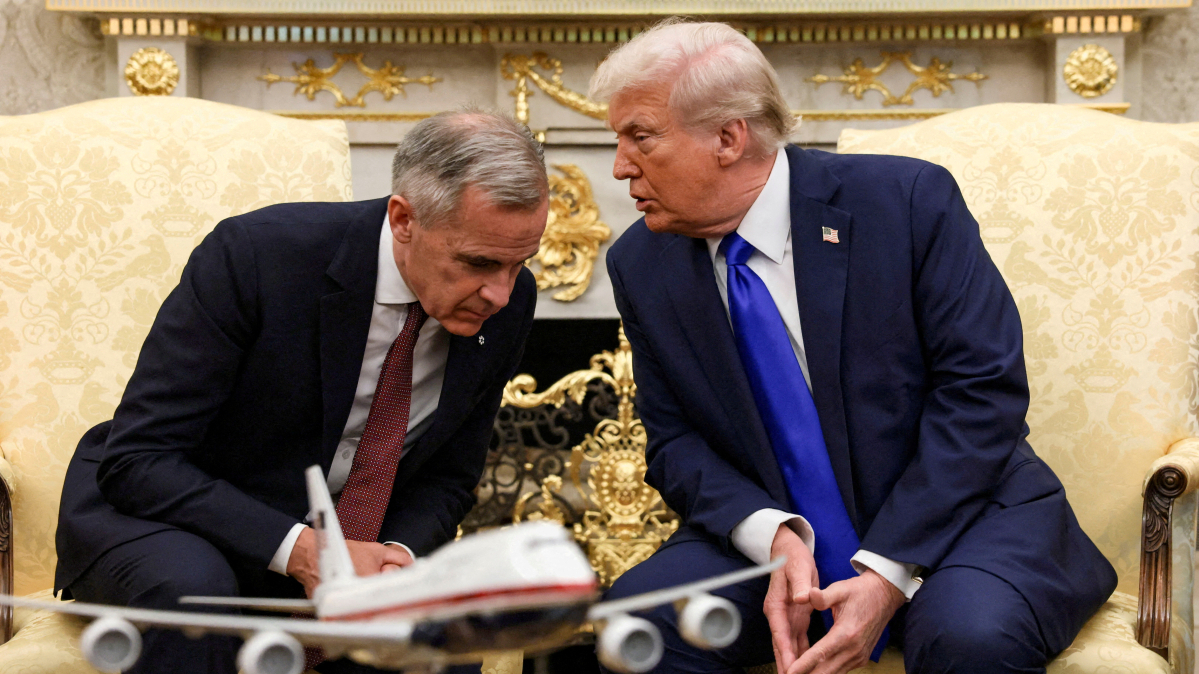
Washington and Ottawa are negotiating an agreement that would ease U.S. tariffs on Canadian steel and autos, according to two U.S. and four Canadian sources, as the neighbours try to mend ties damaged when trade talks collapsed in August.
The discussions centre on duties imposed under Section 232 of U.S. trade law, which include tariffs of up to 50 per cent on Canadian steel and 25 per cent on autos. Negotiators are weighing possible relief from both.
The push comes at a politically sensitive moment. President Donald Trump's approval ratings are at record lows, and his Republican Party could lose control of Congress in the 3 November midterm elections. Tariffs on Canadian goods have become a liability, with Republican candidates in border states urging an end to the trade war.
One Canadian source briefed on the talks said an agreement on steel and autos could be reached before election day. U.S. sources, however, said the administration still wants further concessions from Canada. All sources asked not to be named because the negotiations are private.
Commerce takes the lead
Because the Commerce Department administers Section 232 tariffs, Commerce Secretary Howard Lutnick, rather than the U.S. Trade Representative's office, is at the heart of the talks, sources on both sides said. One source said Lutnick has recently been in frequent contact with Dominic LeBlanc, Canada's minister responsible for Canada-U.S. trade.
A spokesperson for LeBlanc said Canada was continuing a constructive dialogue with U.S. counterparts on several priorities and was ready to work in good faith toward a trading relationship that benefits both sides while protecting Canadian interests.
A USTR official said the office and Canada have also spoken in recent days about the broader structure of any agreement and other outstanding trade issues. The White House and the Commerce Department did not immediately comment.
Ottawa sees movement
Prime Minister Mark Carney said talks with Washington had picked up slightly in recent days, but that Canada's position was unchanged. Any progress, he told reporters, came because “the U.S. is coming closer to our position.” He gave no details.
A Canadian industry source said that if a deal materialises it will likely come quickly but be limited in scope, and cautioned that it may not happen at all.
Another Canadian source said they had long expected an agreement on Section 232 tariffs before the midterms. That source said any deal would ultimately be driven by Trump and Carney, both of whom have said a mutually beneficial outcome is achievable. Carney has repeatedly said he will only accept a good deal for Canada.
From collapse to restart
The previous round of U.S.-Canada negotiations broke down in August over issues including whether to lower duties on medium- and heavy-duty vehicles, which are vital to Canadian factories. U.S. carmakers had hoped those talks would bring relief from the original 25 per cent tariffs, which have driven up the cost of moving vehicles and parts across the border.
Trump has said he will raise tariffs on Canadian steel and auto imports to 50 per cent from 1 January 2027. At a rally on Sunday, he predicted the dispute would be settled soon, without offering specifics.
On Friday, Trump signed an order lifting 50 per cent tariffs on some Canadian agricultural and forestry products, a step that could benefit businesses in Maine.
Read more:















What is your opinion on this topic?
Leave the first comment