Airports around the world are increasingly turning to private capital to fund expansion, with debates in Europe and North America often focused on pension funds, concession models and passenger charges. In Central Asia, however, a different group of investors is emerging.
Gulf sovereign-backed firms and state-linked airport operators from East Asia are securing long-term management rights in some of the region's most strategically important aviation hubs.
The trend is part of a broader global shift. According to the Airports Council International (ACI), more than $4 trillion is expected to be invested in airport infrastructure worldwide over the next three decades. Roughly half of all air passengers now travel through airports involving private-sector participation, up from 41 per cent a decade ago, according to ACI.
But unlike many Western airport privatisations, the investments reshaping Central Asia are increasingly tied to larger geopolitical and trade considerations.
Modernising Soviet-era infrastructure
Much of Central Asia's airport infrastructure dates back to the Soviet era. While many facilities have undergone upgrades since independence, governments across the region are seeking external capital to fund new terminals, cargo facilities and commercial developments without placing the full burden on state budgets.
The strategy coincides with growing interest in the region as a transport corridor linking Europe and Asia.
Tashkent: a 35-year investment
The largest aviation project currently underway in Central Asia is the planned New Tashkent International Airport in Uzbekistan.
Uzbekistan Airports signed a public-private partnership agreement in June with a consortium led by Saudi Arabia's Vision Invest, followed by a concession agreement in August.
According to Uzbek outlet Kun.uz, ownership is structured as:
- Vision Invest: 45%
- Sojitz Corporation of Japan: 30%
- South Korean partners: 15%
- Uzbekistan Airports: 10%
The consortium will manage the passenger terminal and surrounding commercial areas for 35 years, while the government retains responsibility for the airfield and runway infrastructure.
The first phase alone is expected to cost approximately $2.5 billion. South Korean sources estimate the entire development's value at roughly $4.8 billion.
The new airport is designed to accommodate up to 20 million passengers annually and handle 129,000 tonnes of cargo. Uzbek officials expect operations to begin around 2030, while South Korea's Incheon International Airport Corporation projects an opening in 2031.
The investment reflects growing demand. Uzbekistan recorded 13.5 million passengers in 2024 and approximately 15.5 million passengers in 2025, according to regional aviation data. Passenger traffic has been expanding at one of the fastest rates in the region.
Governments remain heavily involved
Despite the reliance on private investment, governments remain central to the projects.
South Korea's participation involves not only Incheon International Airport Corporation but also the state-backed Korea Overseas Infrastructure & Urban Development Corporation.
Incheon described the Tashkent contract as the largest overseas project in its history. South Korea's Ministry of Land, Infrastructure and Transport helped facilitate cooperation with Uzbekistan, while the Export-Import Bank of Korea assisted with financing arrangements.
Meanwhile, Japan's state-backed Japan Bank for International Cooperation (JBIC) has indicated interest in financing parts of the project.
The arrangement shows how state institutions still play a major role, even when projects are structured as public-private partnerships.
Astana attracts Gulf and Singaporean interest
Neighbouring Kazakhstan is following a similar path.
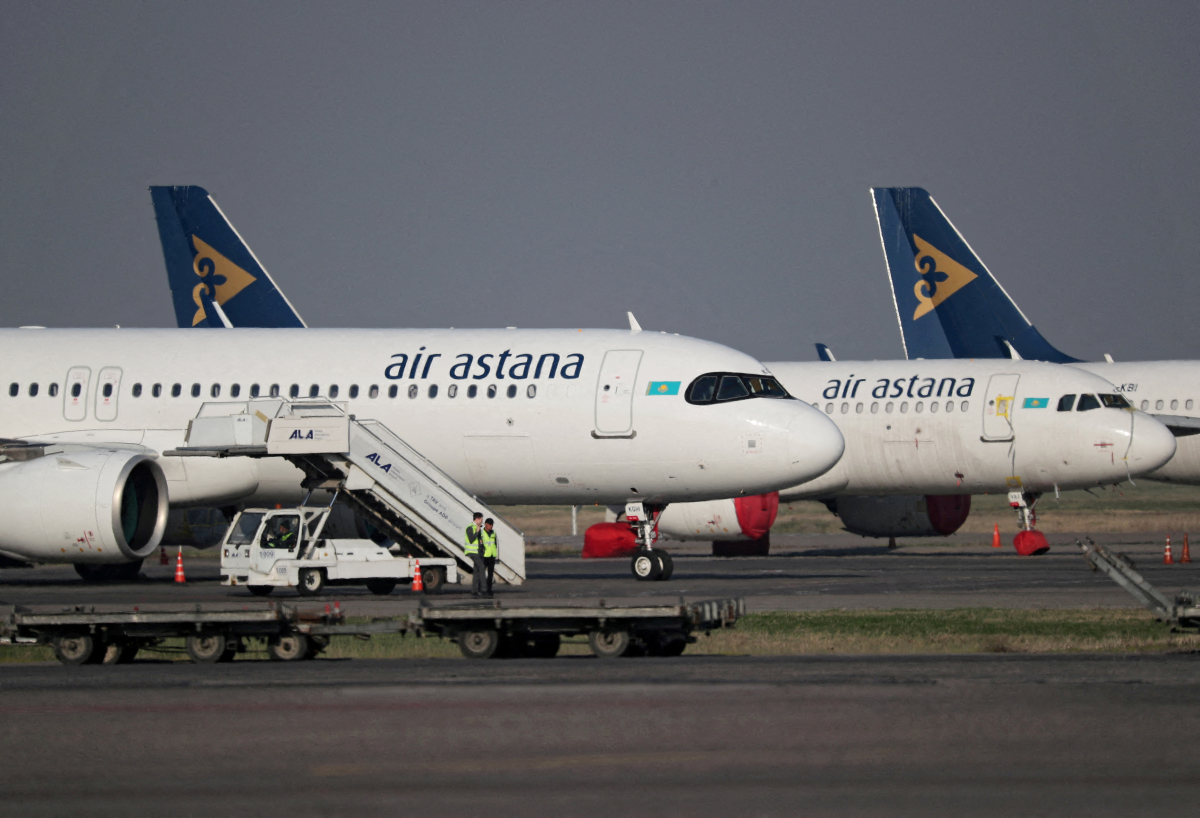
In 2023, the UAE's Terminals Holding, linked to the Abu Dhabi Ports Group, assumed operational management of Astana International Airport.
A subsequent investment agreement signed in 2025 envisages more than $1.1 billion in spending on:
- A second runway
- A third passenger terminal
- A new cargo complex
- A broader “aerotropolis” development involving logistics, hotels and business districts
This year, Singapore's Changi Airports International signed a framework agreement covering both the proposed construction of a new airport for Astana and potential participation in operating the existing airport.
Construction of the proposed new facility is expected to begin in 2027.
Kazakh officials have coupled investment incentives with regulatory oversight. Foreign investors receive tax benefits and state guarantees, while airport charges remain subject to controls intended to balance commercial viability with airline affordability.
Competing hubs or specialised airports?
Kazakhstan remains the region's largest aviation market.
The country handled approximately 31.8 million passengers and 173,300 tonnes of cargo in 2025. Uzbekistan, by comparison, recorded 15.5 million passengers and more than 98,000 tonnes of air cargo.
Yet Uzbekistan's cargo growth has outpaced Kazakhstan's. Cargo volumes increased by 182 per cent between 2019 and 2024, compared with 149 per cent growth in Kazakhstan during the same period.
Not all analysts expect a single dominant hub to emerge.
Regional aviation analyst Kekelbayev told Asia-Plus that Central Asia is more likely to develop multiple specialised centres rather than one dominant gateway.
Competition, he argued, would centre on attracting airlines, passengers and cargo flows rather than establishing a single regional champion.
Some aviation specialists also caution that infrastructure alone does not guarantee hub status. Airline connectivity, visa policies, cargo networks and sustained passenger demand can be just as important as new terminals or runways.
Airports and the Middle Corridor
The airport boom is unfolding alongside the growth of the so-called Middle Corridor, formerly known as the Trans-Caspian International Transport Route.
The route connects China to Europe via Central Asia, the Caspian Sea, the South Caucasus and Türkiye, offering an alternative to routes that pass through Russia.
Although often discussed in terms of railways and ports, airports are increasingly viewed as complementary infrastructure. They support high-value cargo, business travel and logistics services linked to growing trade flows.
According to Poland's Centre for Eastern Studies (OSW), cargo volumes moving through Kazakhstan have increased more than fivefold over the past seven years, exceeding 4.5 million tonnes annually.
Disruptions affecting traditional shipping routes have further raised the corridor's profile.
Turkish Vice President Cevdet Yılmaz argued earlier this year that changing geopolitical conditions had transformed the Middle Corridor from an alternative option into a strategic necessity.
Why outside powers are investing
The airport projects reflect more than commercial calculations.
For Gulf countries, East Asian investors, Europe and China, transport infrastructure across Central Asia offers influence over a rapidly emerging trade route.
According to OSW:
- China views the corridor as part of the Belt and Road Initiative.
- The EU has backed related transport investments.
- Japan pledged support for corridor infrastructure during a summit with Central Asian leaders in 2025.
- The United States announced plans for railway investment projects in Kazakhstan in 2026.
As governments look for alternatives to transport routes affected by geopolitical tensions, logistics infrastructure in Central Asia is increasingly being viewed as both an economic and strategic asset.
Azerbaijan creates a path for private airport operators
Further west, Azerbaijan has so far taken a different approach.
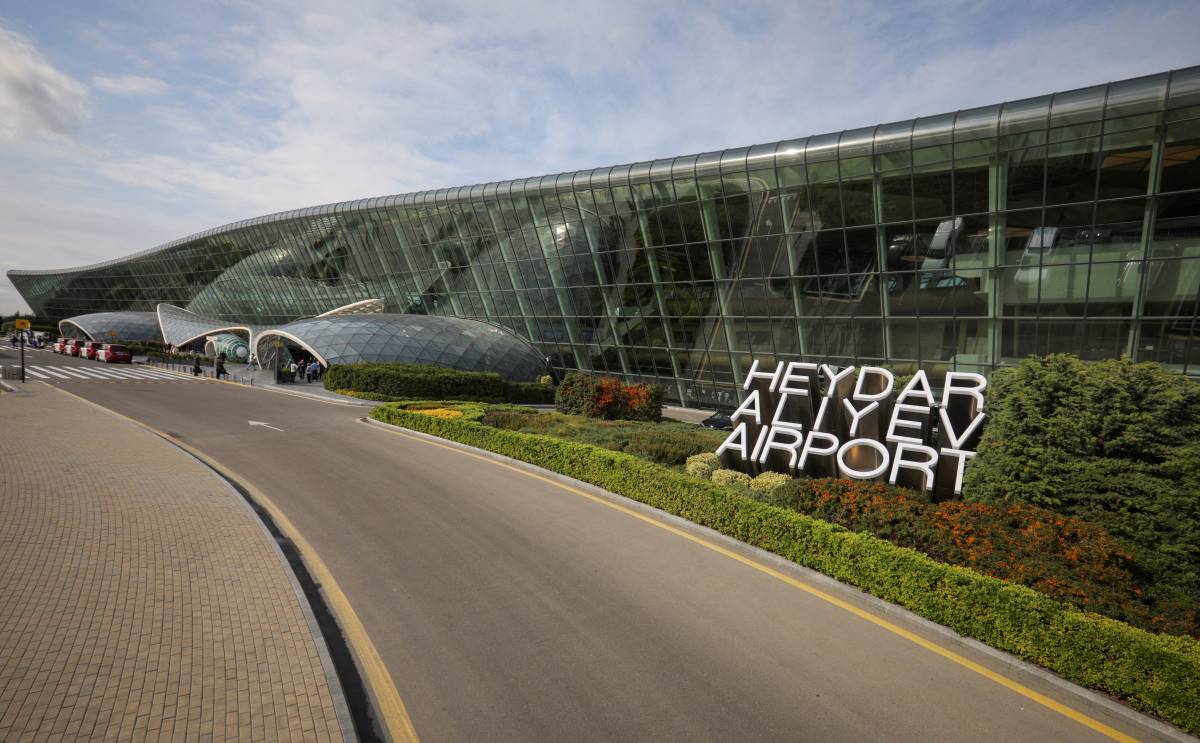
Heydar Aliyev International Airport remains wholly state-owned and operated by national carrier AZAL. Industry analysts have previously reported exploratory discussions with potential foreign airport operators, but no partnership has been announced.
However, a presidential decree signed by President Ilham Aliyev on 12 June created a new legal framework that could allow greater private participation in airport management.
Under the new Airport Management Rules, state-owned airports may be transferred to private operators through concession-style agreements or public-private partnerships. The rules explicitly identify private-sector involvement as a guiding principle.
Ownership of airport infrastructure would remain with the state, while expansion and modernisation could be financed through government funding, loans, grants, donations or private investment.
The framework does not guarantee privatisation, but it creates a mechanism similar to arrangements already emerging in Uzbekistan and Kazakhstan.
Should Azerbaijan eventually pursue a concession arrangement for its primary international gateway, it would become one of the most significant airport partnership opportunities in the South Caucasus.
Who ultimately pays?
The growing role of private capital in airports has drawn debate elsewhere.
International Air Transport Association (IATA) executive Thomas Reynaert told Reuters that airlines are not opposed to private-sector participation but expect transparency and consultation, noting that airlines and passengers ultimately bear many of the costs.
In Central Asia, however, the discussion extends beyond airport charges.
The region's governments view aviation infrastructure as part of a wider effort to transform Central Asia into a vital link between Europe and Asia. The long-term concessions being granted today will give foreign operators significant influence over airports that are expected to support trade, cargo and passenger flows for decades.
Whether these investments create world-class transit hubs will depend not just on terminals and runways, but on sustaining airlines, cargo networks, logistics systems and international connectivity. For investors, the opportunity is commercial. For governments, it is increasingly strategic.
Read more:




















What is your opinion on this topic?
Leave the first comment