Energy companies at ADIPEC 2026 are seeking to boost oil and gas supplies, attract investment and harness artificial intelligence as conflict in the Middle East disrupts global energy markets and keeps oil prices above $100 a barrel.
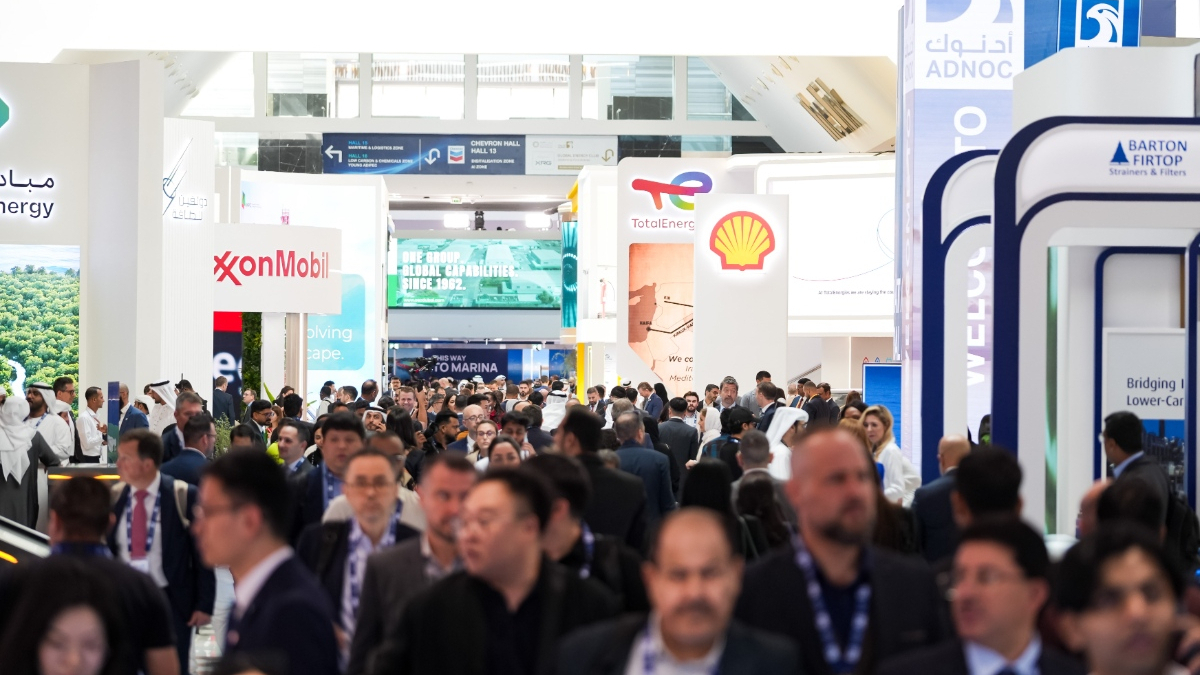
The second day of the four-day International Petroleum Exhibition and Conference (ADIPEC), which runs until 5 November, featured panel discussions, roundtables and exhibitions. Organisers expect more than 239,000 visitors from over 170 countries, with a record 2,260 companies exhibiting this year.
AI moves from digitalisation to deployment
Artificial intelligence took centre stage, with the AI Investment Priorities Panel examining how companies are putting the technology to work across the energy industry. A Boardroom Roundtable on Competitiveness also explored the sector's changing priorities.
Industry executives say the sector has largely completed its digitalisation phase and is now moving towards practical AI applications, with growing emphasis on reliable connectivity and resilient local supply chains.
“AI should not replace industrial knowledge; it should amplify it,” said Omar Al Busaidy, head of a pipe manufacturer's operations in the UAE and Oman, during the panel discussion.
He added that AI’s greatest promise lies in helping people make better decisions while making the industry more efficient, resilient and sustainable.
His remarks reflected a broader message from the UAE's Dr Sultan Al Jaber, who noted that since the arrival of ChatGPT, the world has asked what energy can do for AI. The question now, he said, is what AI can do for energy.
A satellite communications representative said AI-driven operations increasingly rely on real-time monitoring of offshore facilities, including oil fields, platforms and accommodation barges.
As the UAE expands its use of AI, digital services and digital oil fields, demand for reliable communications is expected to rise. Connectivity, he said, is becoming essential both for day-to-day operations and as a backup to ensure business continuity.
Operators are increasingly combining satellite, 4G and 5G networks into hybrid systems, he explained. Centralised software automatically redirects critical data traffic when the primary connection weakens, helping operations continue without interruption.
Carbon capture in focus
Reducing emissions was another priority, with a presentation titled “Advancing lower-carbon emissions reduction through scalable carbon capture and utilisation technologies” examining the practical deployment of carbon capture systems to collect CO₂ emissions after combustion.
Azerbaijan's SOCAR seeks new partnerships
Azerbaijan is taking part with a prominent national stand and a full delegation.
State energy company SOCAR is meeting potential partners and sharing its expertise with international firms, with new agreements expected during the exhibition.
Iraqi refinery operator reports capacity above 102 per cent
Iraqi company RQC (Rowwad al-Qemmah) is also showcasing its operations, describing itself as the country's first private company specialising in the integrated management, operation and maintenance of oil refineries.
Its marketing director told the Emirates News Agency (WAM) that ADIPEC offers an opportunity to connect with Arab and international businesses, identify investment prospects and establish strategic partnerships to support expansion into new markets.
The company operates the Karbala Refinery, one of the largest in Iraq and the Middle East.
According to its marketing director, the facility has achieved an operating rate exceeding 102 per cent of its capacity and has run continuously for two years, relying entirely on Iraqi expertise and personnel.
RQC said it is using ADIPEC 2026 to highlight Iraq's energy capabilities and strengthen international confidence in its technical expertise.
Pointing to Iraq's oil industry history, which dates back to 1921, the marketing director said Iraqi companies and professionals have the skills to operate energy facilities efficiently and contribute to projects across the region and beyond.
The exhibition also provides a platform for attracting investment to the Arab energy sector and strengthening ties between regional and international companies, institutions and policymakers.
Oil holds above $100 as conflict fuels market uncertainty
Beyond the exhibition halls, geopolitical tensions continue to shape the energy outlook.
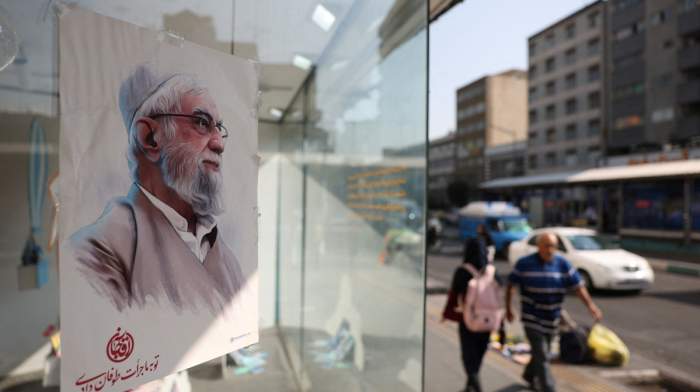
Brent crude was trading at about $106 a barrel on Tuesday, following a drop of more than 6 per cent on Monday amid signs of diplomatic engagement between Washington and Tehran.
Prices had settled at $113.43 on Friday after climbing above $116 in late October, when Brent gained roughly 13 per cent over the month, according to Reuters.
Analysts attribute much of the increase to a geopolitical risk premium linked to the conflict.
One estimate put that premium at $27 a barrel late last week, with around $20 still reflected in prices following Monday's decline.
Goldman Sachs has increased its December Brent forecast from $85 to $90 a barrel, citing geopolitical risks that it estimates are adding just over $20 to prices.
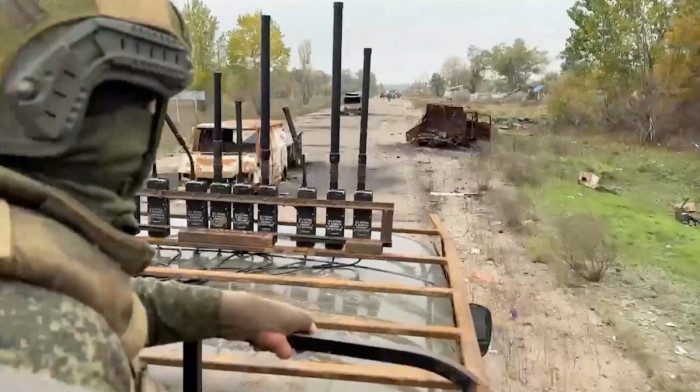
The conflict, which began with U.S. and Israeli military action against Iran on 28 February, has kept the Strait of Hormuz at the centre of global energy concerns.
The waterway normally handles around one-fifth of daily global energy shipments.
Iran has proposed a Qatari-brokered arrangement that could allow the strait to reopen, but Washington has not accepted its conditions. Reports of further strikes have added to market volatility.
Meanwhile, OPEC+ has kept its December oil output unchanged, with its next meeting scheduled for 29 November.
Saudi-Houthi escalation threatens key oil routes
A separate escalation between Saudi Arabia and Yemen's Houthi movement has added to concerns over regional energy supplies.
The two sides had largely maintained an informal truce since 2022, but tensions erupted again in July when the Houthis launched missiles towards Saudi Arabia and announced a naval blockade targeting Saudi shipping.
Their leader warned that Saudi oil facilities would become targets if Riyadh increased its involvement in the conflict.
Since then, the Houthis have claimed responsibility for attacks on Aramco facilities in Jizan and Yanbu, along Saudi Arabia's Red Sea coast, as well as tankers linked to the kingdom.
Yanbu is particularly important because it marks the end of the East-West pipeline, which allows Saudi crude to reach the Red Sea without passing through the Strait of Hormuz.
With shipping through the Gulf disrupted, Saudi Arabia has become increasingly dependent on the alternative route.
Saudi-backed forces have retaliated with air strikes against Houthi positions.
In one of the deadliest incidents, at least 60 soldiers from Saudi-backed Yemeni forces were killed in attacks in Marib and Hadramout on 6 August.
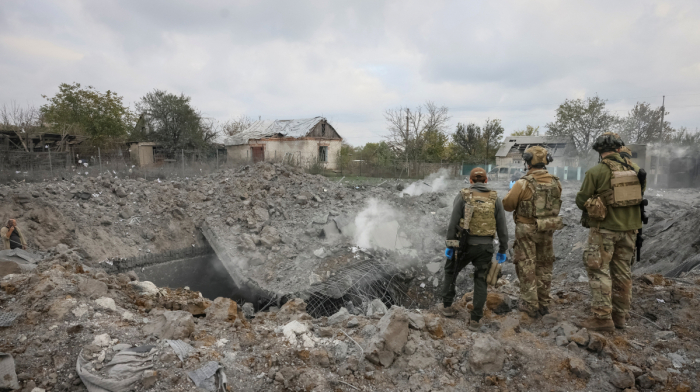
The violence intensified in October, with strikes reaching airports and oil facilities inside Saudi Arabia.
At least four people were killed during one evening of attacks, while Saudi authorities said debris from an intercepted drone killed two people and injured two others at an Aramco-operated oil field in the country's southeast.
The U.S. ordered non-essential diplomatic staff and their families to leave Saudi Arabia, while reports indicated that Aramco was relocating employees. Lufthansa and Air France also cancelled flights to Riyadh until mid-November.
Shipping disruption puts global supply chains at risk
The disruption around the Strait of Hormuz and the Red Sea blockade is placing growing pressure on global energy security, threatening not only oil and gas supplies but also the shipping networks needed to transport them.
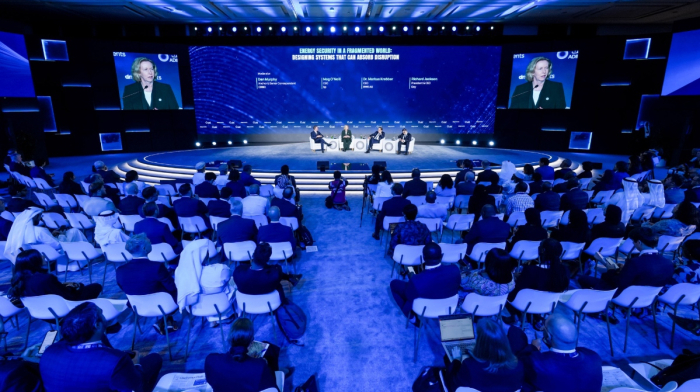
Against that backdrop, ADIPEC's Strategic Conference examined ways to strengthen global logistics and supply chains, with industry leaders discussing how to keep trade moving amid geopolitical instability.









What is your opinion on this topic?
Leave the first comment