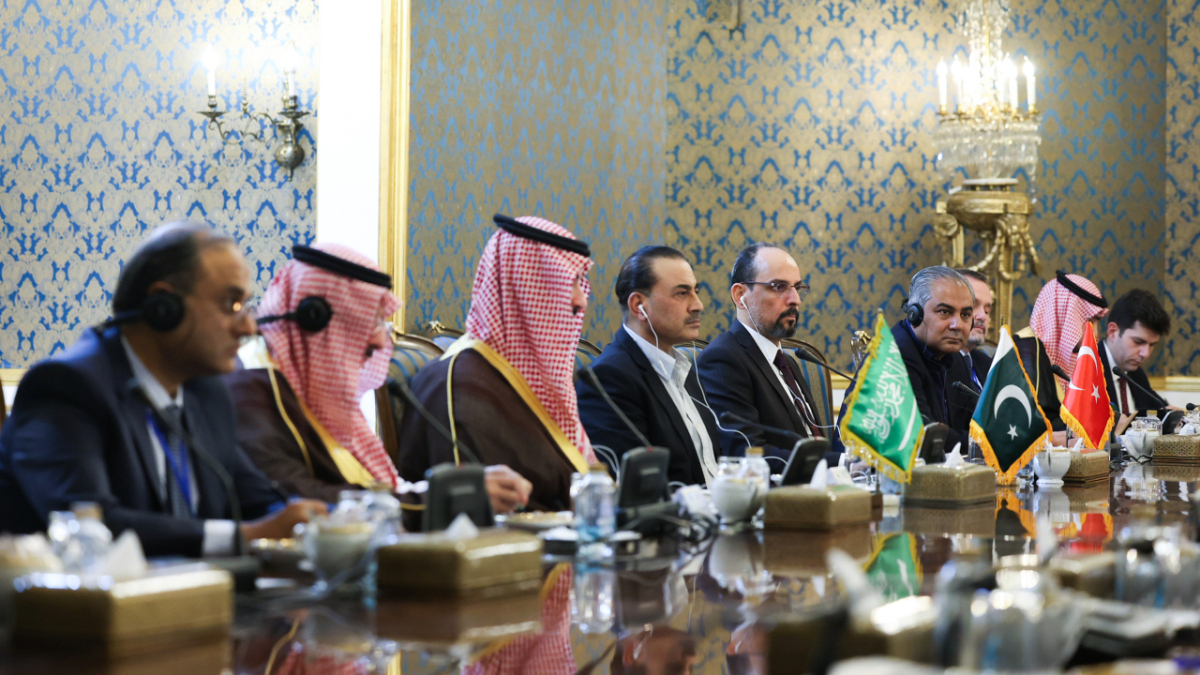
Iran says a “new and positive atmosphere” has emerged following rare security talks in Tehran with senior officials from Pakistan, Saudi Arabia and Türkiye, as regional tensions continue to escalate.
The diplomatic push coincided with visits by senior Iranian and U.S. military commanders to the strategically important Strait of Hormuz, a key flashpoint in tensions between Tehran and Washington.
“A new and positive atmosphere has emerged, said Mohsen Rezaei, secretary of Iran’s Supreme National Security Council, following talks with senior officials from the three founding countries of the Mecca Defence Pact.
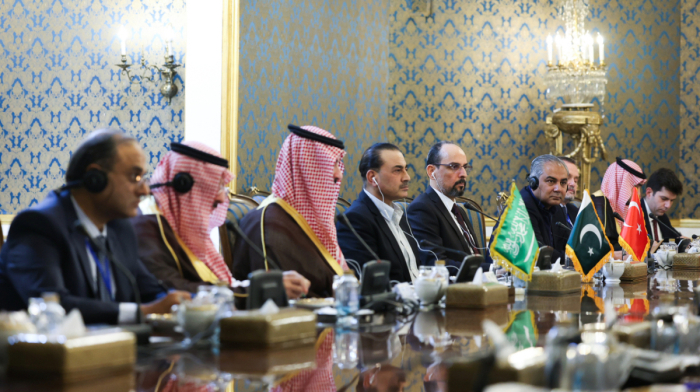
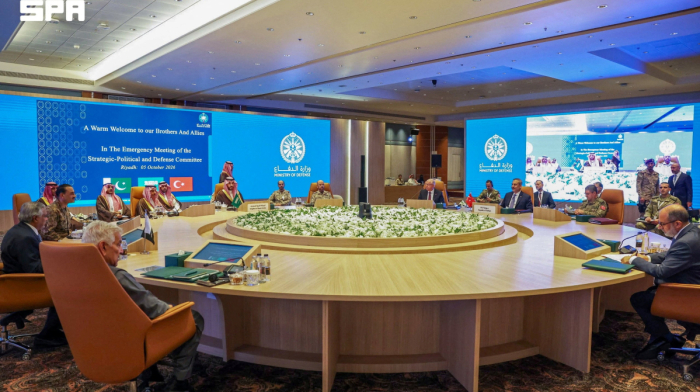
The four-way meeting brought together Rezaei, Saudi Defence Minister Khalid bin Salman, Pakistan’s army chief,Field Marshal Asim Munir, and İbrahim Kalın, head of Türkiye’s National Intelligence Organisation.
A joint statement issued following the meeting said the four countries had agreed “to continue discussions on strengthening cooperation, particularly in regional peace and security”.
“The participants agreed that security in West Asia must be must come from within the region and any foreign intervention must be prevented,” Rezaei told Iran’s state-run IRNA news agency.
The talks follow efforts by Ankara, Islamabad and Riyadh to deepen defence cooperation through a trilateral agreement known as the Mecca Pact, signed in August amid growing regional insecurity.
Tehran has signalled its interest in joining the pact and offered to help facilitate dialogue between Saudi Arabia and Yemen’s Houthis.
Tehran meeting draws criticism
Despite the diplomatic optimism, the meeting drew sharp criticism from within Iran.
Hossein Shariatmadari, the influential managing editor of Tehran-based newspaper Kayhan, questioned the participating countries’ intentions and whether the talks would serve Iran’s interests.
“The Saudi Arabian government was one of America's partners in the 12-day war (in 2025) and Ramadan war (in 2026) against Islamic Iran. Turkey is a member of NATO, and NATO has not been neutral in the recent military attacks by the United States and the Zionist regime against our country. Pakistan, on the orders of the United States, had closed its land borders to Iran and...” he wrote in an editorial on Tuesday.
Shariatmadari challenged the three countries’ commitment to regional security, questioning whether they had fundamentally changed their positions towards Tehran.
“Have the three aforementioned countries turned their backs on US and the Zionist regime and joined Iran in order to ensure regional security, the definitive requirement of which is the expulsion of America from the region?!”
“If the answer to this question is negative, and there is no sign of it being positive, what is their real purpose in attending the Tehran meeting?!”
Shariatmadari, who was appointed to his position by Iran’s Supreme Leader, argued that the delegations’ presence reflected Tehran’s growing regional influence.
“The presence of the three countries of Saudi Arabia, Turkiye, and Pakistan in Tehran stems from the exemplary authority of the Islamic Republic of Iran and the severe defeat it has inflicted on America and the Zionist regime.”
Iranian and U.S. commanders visit Strait of Hormuz
The diplomatic talks came against a backdrop of heightened military activity around the Strait of Hormuz.
Major General Abdullahi, chief of staff of Iran’s armed forces, said Tehran maintained “overall control” of the strategic waterway during a visit to military bases along the Persian Gulf and Gulf of Oman on Monday.
Accompanied by senior commanders from the Islamic Revolutionary Guard Corps and the regular army, Abdullahi inspected the bases just a day after U.S. Central Command chief Brad Cooper visited the strait.
The Strait of Hormuz, which connects the Persian Gulf to the Gulf of Oman, remains a major point of contention between Iran and the U.S., complicating efforts to ease tensions between the two countries.










What is your opinion on this topic?
Leave the first comment