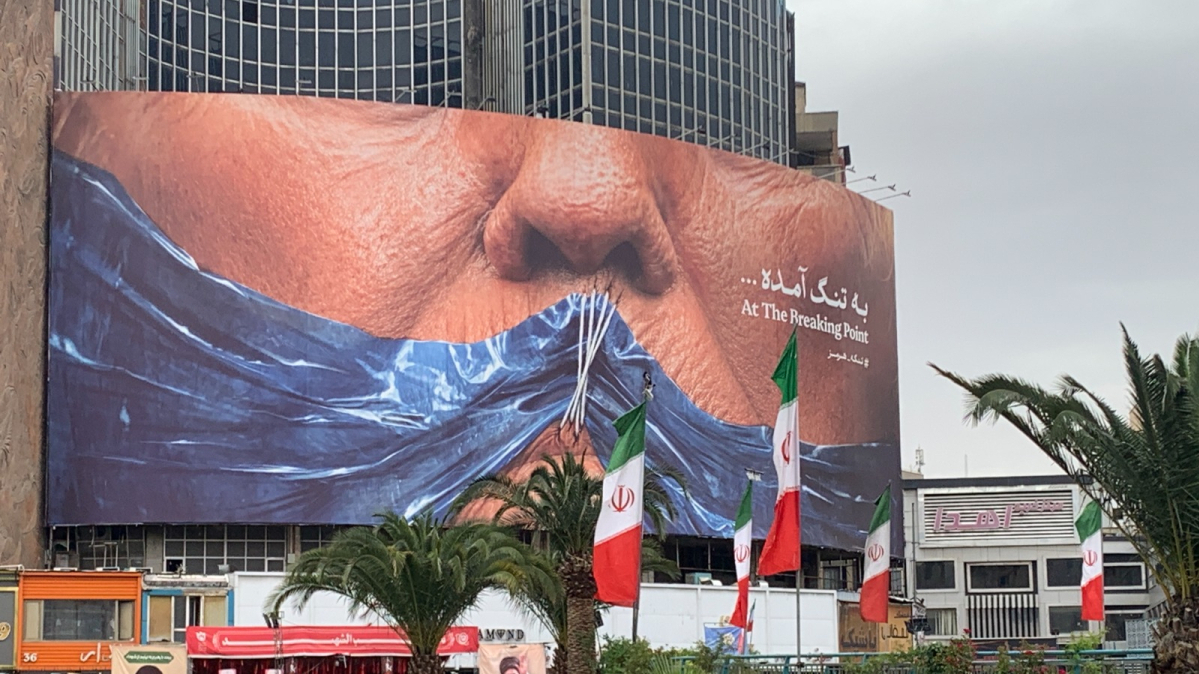
Iranian officials have stepped up warnings of retaliation amid the threat of renewed U.S.-Israeli strikes, while signalling that a diplomatic solution remains possible if Washington demonstrates a sincere commitment to rebuilding trust.
Supreme Leader Ayatollah Seyed Mojtaba Khamenei met parliamentary speaker Mohammad Baqer Qalibaf on Wednesday to “review the latest developments surrounding the U.S.-Israeli war against Iran and discuss ways to bolster national resilience”.
According to a statement published on the supreme leader’s website, “The meeting highlighted the necessity to strengthen the country's components of power and the Iranian lawmakers' effective role in maintaining and fostering social solidarity.”
Meanwhile, Iran’s newly appointed Defence Minister, Mehrdad Akhlaghi-Ketabchi, said he had spent the first hour of his working day addressing the needs of the Islamic Revolutionary Guard Corps (IRGC) Aerospace Force and the army’s air defence units.
In a post on X on Wednesday, he said Iran was “focused on using new technologies, emphasising efforts to strengthen its defensive capabilities in response to repeated threats”.
Diplomacy remains on the table
Despite the heightened tensions, Foreign Minister Abbas Araghchi signalled that Tehran remained open to negotiations, saying “Iran is prepared to give diplomacy another chance” if it sees “strong evidence of a sincere desire by US to build trust and reach a just solution”.
However, he also warned in his post on X that “if US chooses war over diplomacy, it'll certainly result in an even greater strategic failure.”
“Iran is facing both war and military threats as well as widespread economic sanction,” Iran’s state-run IRNA news agency quoted Araghchi as saying during a conference marking National Export Day on Wednesday.
“The reality at present is that the country's situation is truly a war and the war is still ongoing; we have not reached a state of peace and are far from it. Therefore, all decisions must be made within the framework of the country's war conditions.”
Analysts warn of renewed conflict
Analysts have drawn parallels between the latest escalation in Tehran-Washington tensions and the period leading up to the U.S.-Israeli war that began on 28 February. Some suggest U.S. President Donald Trump has already decided to launch another attack but is delaying action until after the congressional midterm elections.
Trita Parsi, an Iranian-Swedish political analyst and co-founder and executive vice-president of the Quincy Institute for Responsible Statecraft, argued that Trump's motivations may have changed.
“But there is one significant difference as well. Back then, Israel had convinced him that he could bring down the regime in a few days,” Parsi wrote on X.
“Today, he appears to be driven by another emotion: Revenge,” added Parsi, who is also a co-founder and former president of the National Iranian American Council.
“So the push toward a new war is no longer necessarily driven by a (flawed) geopolitical calculation, but rather by one man's need for revenge against a country Trump himself CHOSE to attack,” he wrote, warning of the risk of another confrontation between Iran and the U.S.
Read more:









What is your opinion on this topic?
Leave the first comment