Iran has warned it will retaliate against any future U.S. attacks, saying American energy interests and infrastructure across the Gulf could become targets in a further escalation of the conflict.
This live blog has ended. Please visit our main page for more up-to-date reports.
⦿ 22:37 GMT | UPDATE
Arab foreign ministers condemn Iranian attacks, Israeli military operations
Anadolu
Arab foreign ministers on Monday condemned Iranian attacks targeting several Arab countries and denounced continued Israeli military operations in Palestine, Lebanon and Syria during a meeting of the Arab League in Cairo.
At the 166th session of the Arab League Council, ministers discussed regional security challenges amid ongoing tensions involving Iran and Israel.
Egyptian Foreign Minister Badr Abdelatty said Cairo “categorically condemns” attacks against Arab states and rejects any violation of their sovereignty, calling for diplomacy and de-escalation to prevent a wider conflict.
⦿ 16:42 GMT | UPDATE
Iran warns of retaliation against future U.S. strikes
Reuters
Iran has warned it will retaliate against any future U.S. attacks, with Parliament Speaker Mohammad Baqer Qalibaf saying American energy interests across the Gulf would be vulnerable if Iranian assets are targeted again.
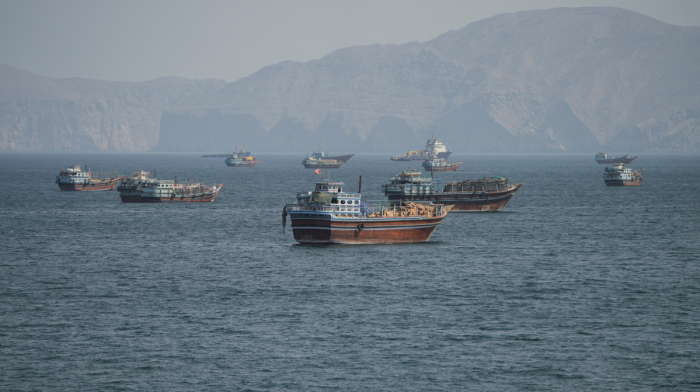
The warning comes after a fresh exchange of U.S. and Iranian strikes over the weekend and amid heightened tensions in the Strait of Hormuz, where Tehran has tightened restrictions on shipping.
Iranian officials have also signalled plans for a new restricted maritime zone, saying the strategic waterway will only fully reopen when what they describe as U.S. attacks and threats against Iran cease.
The latest escalation has fuelled concerns about energy security and regional stability, with oil prices rising and vessel traffic through the Strait of Hormuz falling to some of its lowest levels in months.
⦿ 11:09 GMT | BREAKING
Jazan oil refinery attacked, damage assessment underway
Reuters
Saudi Aramco’s Jazan oil refinery was attacked on Monday and the extent of the damage is being assessed, the Financial Times reported, citing two people familiar with the matter.
Reuters was not immediately able to independently verify the report.
⦿ 11:08 GMT | UPDATE
Oman evacuates 16 crew from Saudi tanker after attack
Reuters
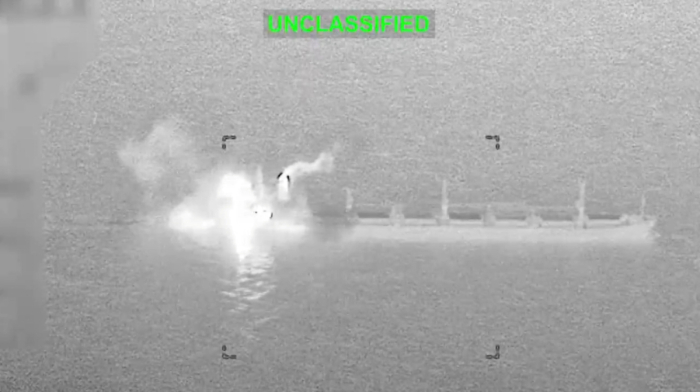
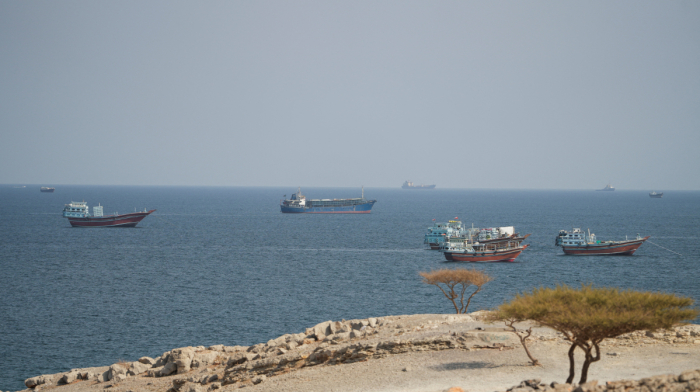
Oman has evacuated 16 crew members from the Saudi-owned tanker Sidr after it was attacked in the Strait of Hormuz, according to the country’s Maritime Security Centre.
The Sidr was one of two supertankers carrying Saudi crude that were struck by projectiles while transiting the strategic waterway last Monday. Saudi Arabia said two Filipino seafarers were killed in the attack.
The incidents come amid a sharp escalation in threats to commercial shipping in the Strait of Hormuz, a vital route for global oil supplies.
Tanker traffic through the strait has fallen significantly in recent days as attacks and military confrontations involving Iran and the United States have intensified.
⦿ 08:58 GMT | UPDATE
UAE seeks alternative trade routes amid Iran war
Reuters
The United Arab Emirates is developing alternative routes for energy exports and trade to avoid being “held hostage” by the war with Iran, presidential adviser Anwar Gargash said on Monday.
He said the UAE was expanding eastern ports, pipelines, railways and other trade corridors, while warning that rebuilding trust with Iran’s neighbours could take decades.
Gargash also criticised Gulf states for failing to mount a sufficiently united response to Iranian attacks.
⦿ 08:31 GMT | UPDATE
UN rights chief calls for immediate return to U.S.-Iran talks
Reuters
UN High Commissioner for Human Rights Volker Türk said he was alarmed by the resumption of attacks between the U.S. and Iran and called for an immediate return to negotiations.
His appeal comes after tit-for-tat strikes resumed following a pause in military action during much of August, raising renewed fears of a broader escalation. Reuters confirms that U.S.-Iran strikes have resumed and diplomatic efforts to revive the peace process have made little progress.
⦿ 08:28 GMT | UPDATE
Iran says military delegation sent to Qatar over missing pilots
Reuters
Iranian Foreign Ministry spokesperson Esmaeil Baghaei said a technical delegation from the Armed Forces General Staff travelled to Qatar in recent days to investigate the case of missing Iranian pilots.
The case has been disputed between Tehran and Doha. Iranian military officials previously claimed three Iranian pilots whose Su-24 aircraft went down during operations against Qatar were being held there, while Qatar denied detaining them and said its search-and-rescue teams had recovered the remains of one pilot.
⦿ 07:57 GMT | UPDATE
Iran says Qatari delegation visited Tehran to help ease tensions
Reuters
Iranian Foreign Ministry spokesperson Esmaeil Baghaei said a Qatari delegation was in Tehran on Sunday as part of regional efforts to de-escalate tensions.
Iranian media reported the delegation was led by a senior adviser to Qatar’s prime minister and foreign minister and held talks with Iranian Foreign Minister Abbas Araghchi.
The visit comes amid renewed military escalation between Iran and the U.S. and continued regional efforts to revive diplomacy.
⦿ 07:39 GMT | UPDATE
Iran says Europe 'irrational' over UN resolution bid
Reuters
Iranian Foreign Ministry spokesperson Esmail Baghaei called European states “irrational” for seeking a UN resolution against Iran, saying Tehran would reciprocate if the UN nuclear watchdog adopted a resolution against it.
⦿ 07:17 GMT | UPDATE
Iran warns South Korea against Gulf, Hormuz operations
Reuters
Iran has warned South Korea that its participation in operations in the Gulf or Strait of Hormuz would have “serious consequences”, according to the Iranian Foreign Ministry spokesperson on X.
⦿ 07:08 GMT | UPDATE
Qatar urges Gulf states to strengthen their own security
Reuters
Qatar has urged Gulf Arab states to strengthen their own security capabilities, saying reliance on the U.S. alone is not enough.
Foreign ministry spokesperson Majed al-Ansari said regional “self-sufficiency” was the way forward after the Iran war.
⦿ 03:38 GMT | UPDATE
Oil prices rise as U.S.-Iran strikes fuel Hormuz supply fears
Reuters
Oil prices extended gains on Monday as renewed U.S.-Iran attacks on vessels in and around the Strait of Hormuz heightened concerns over prolonged disruptions to global crude supplies. Brent crude rose 0.54 per cent to $96.80 a barrel, while U.S. West Texas Intermediate (WTI) gained 0.72 per cent to $92.14.
The latest rise followed Iranian claims that it attacked three U.S.-affiliated vessels and three oil tankers using an “unauthorised” route through the strait. Washington said its strikes on three Iranian oil tankers were carried out in response to Iranian attacks on U.S. warships.
The Strait of Hormuz is a critical global oil chokepoint, and shipping activity has fallen sharply amid the escalating confrontation. Brent has gained more than 30 per cent since the U.S.-Israel war on Iran began on 28 February.
⦿ 02:48 GMT | UPDATE
Saudi, UK foreign ministers discuss Middle East tensions
Saudi Foreign Minister Prince Faisal bin Farhan and UK Foreign Secretary Ed Miliband have discussed Middle East tensions and called for intensified diplomatic efforts to de-escalate, secure international waterways and ensure freedom of navigation, the Saudi Foreign Ministry said.
⦿ 02:41 GMT | UPDATE
Hormuz shipping hits May low
Reuters
Shipping through the Strait of Hormuz has fallen to its lowest level since May, with an average of 10 commodity vessels transiting daily over the past 10 days, Kpler data showed.
Only two vessels crossed on Saturday and six on Sunday, as recent U.S. and Iranian strikes on tankers sharply escalated maritime risks.
⦿ 02:33 GMT | UPDATE
Welcome to our live coverage
Hello and welcome.
Follow our live blog for the latest developments in the Middle East.








What is your opinion on this topic?
Leave the first comment