Israel's election appeared headed for a prolonged political standoff on Tuesday after exit polls suggested neither Prime Minister Benjamin Netanyahu nor his main challenger, former military chief Gadi Eisenkot, had secured a clear path to a parliamentary majority.
⦿ 20:21 GMT | UPDATE
Eisenkot says exit polls reflect voters' rejection of Netanyahu
Reuters
Israeli opposition leader Gadi Eisenkot said exit poll projections showed a clear loss of confidence in Prime Minister Benjamin Netanyahu, arguing that voters had signalled a desire for political change.
Eisenkot's comments came after exit polls suggested his political bloc could finish ahead of Netanyahu's camp, although neither side appeared on track to secure a parliamentary majority. Coalition negotiations are expected to determine who forms the next government.
⦿ 20:14 GMT | UPDATE
Exit Poll: Eisenkot-led bloc ahead of Netanyahu camp - Channel 11
Reuters
An exit poll published by Channel 11 projected that the political bloc led by Gadi Eisenkot would emerge larger than the coalition backing Prime Minister Benjamin Netanyahu in Israel's election.
The survey suggested Eisenkot's camp could hold an advantage in the 120-seat Knesset, although neither bloc appeared on course to secure an outright majority. Coalition negotiations are expected to determine who forms the next government.
⦿ 20:06 GMT | UPDATE
Exit Polls point to Knesset deadlock
Israel's election appeared headed for a political stalemate on Tuesday, with exit polls from major television networks indicating that neither Prime Minister Benjamin Netanyahu nor his main challenger, Gadi Eisenkot, is on course to secure a parliamentary majority.
The result could leave Netanyahu in office in a caretaker capacity while parties negotiate a coalition.
Israel's fragmented political system means no party has ever won an outright majority in the 120-seat Knesset, making coalition-building essential.
With final results still days away, smaller parties could emerge as kingmakers in efforts to form the next government.
⦿ 20:02 GMT | UPDATE
Exit Poll: Netanyahu's Likud Projected to win 25 Seats - Channel 11
Reuters
Israeli Prime Minister Benjamin Netanyahu's Likud party is projected to secure 25 seats in the 120-member Knesset, according to an exit poll published by Channel 11.
⦿ 19:55 GMT | UPDATE
Prison voting turnout reaches 88.7% in Israeli election
Voting in prison facilities across Israel concluded at 8:00 p.m. local time (1800 GMT), with authorities reporting an 88.7 per cent turnout among prisoners and detainees eligible to vote.
According to the prison service's Operations Division, all eligible voters held in correctional facilities were given the opportunity to participate in the election.
Polling stations inside prisons closed after voting ended, making inmates one of the highest-turnout voting groups in Israel's 26th Knesset election.
⦿ 19:42 GMT | UPDATE
Israeli voter turnout reaches 74.3%, far above 2022 pace
Voter turnout in Israel rose to 74.3 per cent by 8:00 p.m. local time (1800 GMT), according to figures released by the Central Elections Committee, with 5,449,277 ballots cast nationwide.
The participation rate was significantly higher than during the previous election in 2022, when turnout stood at 66.3 per cent at the same stage of voting.
The figures underscore the unusually high public engagement seen throughout Israel's first national election since the 7 October 2023 attacks.
⦿ 19:21 GMT | UPDATE
Israeli turnout hits highest election-day pace since 1973
Voter participation in Israel reached 66.7 per cent by 6:00 p.m. local time (1600 GMT), according to the country's Central Elections Committee, as Israelis cast ballots in a closely watched election.
Israeli broadcaster N12 reported that the figure represents the highest turnout ever recorded at this stage of election day since hourly turnout tracking began in 1973.
Polling stations are scheduled to close at 10:00 p.m. local time (2000 GMT), although voters already waiting in line by that time will still be allowed to vote.
⦿ 19:16 GMT | UPDATE
Israel Election Committee rejects Netanyahu party’s call to extend voting hours
Israel’s Central Elections Committee has turned down a request from Prime Minister Benjamin Netanyahu’s Likud party and other right-wing parties to keep polling stations open beyond 10pm.
The committee said high turnout across all sectors of society meant an extension was not justified. Voters already in line at 10pm will still be able to vote.
Netanyahu’s opponents said the request was an attempt to lay the ground for challenging the result.
⦿ 18:32 GMT | UPDATE
Netanyahu, allies cite high Arab turnout as Israelis vote in record numbers
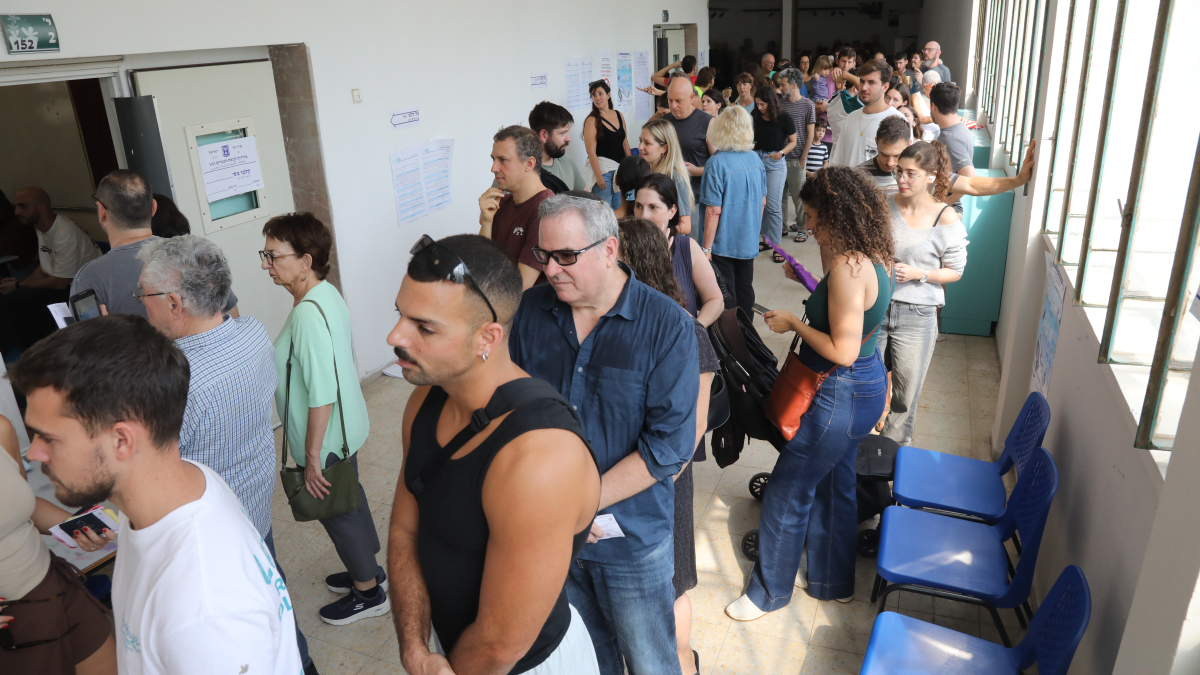
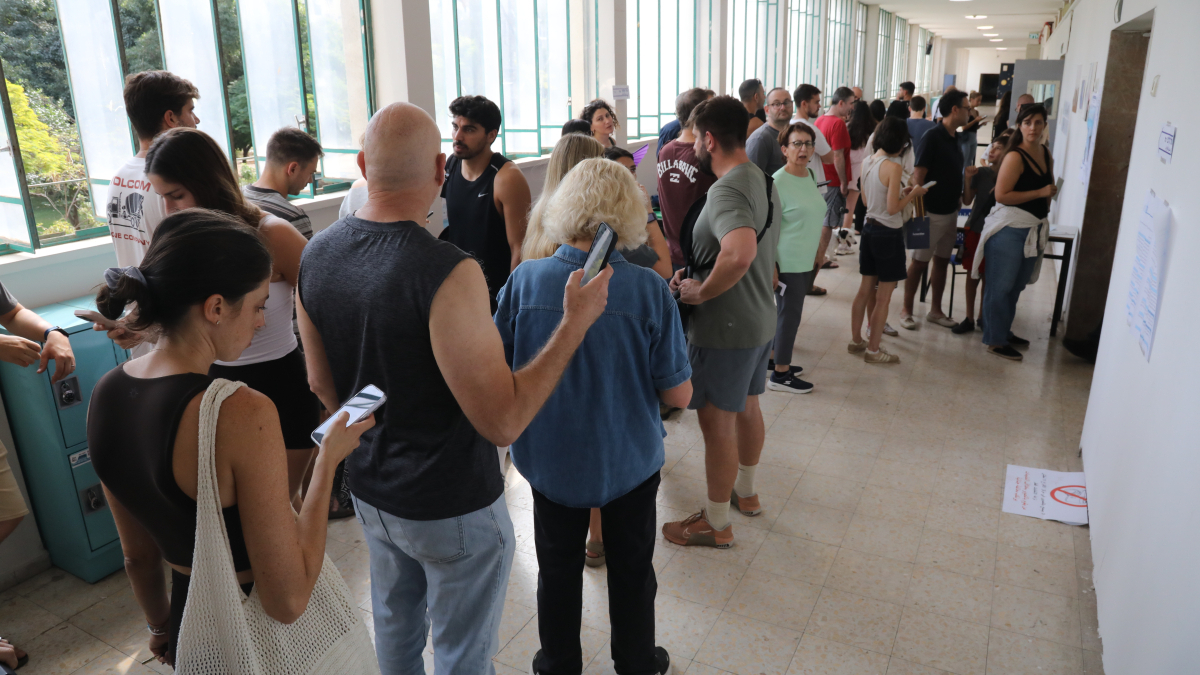
Israeli Prime Minister Benjamin Netanyahu and his far-right coalition partners intensified their election-day appeals to supporters on Tuesday, pointing to high turnout in Arab communities as voting reached a record pace across the country.
Election officials said turnout reached 55.7 per cent during the first nine hours of voting, the fastest rate recorded in Israeli elections.
Netanyahu highlighted long queues at polling stations in Arab towns and warned that strong participation could help opposition forces unseat his coalition.
Arab political leaders rejected those remarks, accusing Netanyahu and his allies of attempting to stigmatise Arab voters.
Ahmad Tibi said high participation among Arab citizens could help bring political change, while Sami Abu Shehadeh, leader of the Balad party, described the turnout as a positive sign for democracy.
The election comes as polls suggest Netanyahu's bloc could lose its parliamentary majority, although opposition parties may also struggle to secure enough seats to form a government.
⦿ 18:31 GMT | UPDATE
Israelis vote at record pace in first election since 7 October attacks
Turnout in Israel’s general election reached 55.7 per cent in the first nine hours of voting, a record for that point in the day, according to the Central Elections Committee.
Six hours of voting remained, in a vote many Israelis describe as the most consequential in the country’s history. Polls show a close race between Prime Minister Benjamin Netanyahu and former army chief Gadi Eisenkot.
Forecasters were cautious about the impact of the high turnout, though a surge in Arab votes could limit gains for Netanyahu’s right-wing bloc.
⦿ 18:26 GMT | UPDATE
When will Israel’s Election results be known?
Israel’s main television channels will publish exit poll projections soon after voting ends. These will give the first sign of how the rival blocs have performed.
The projections are estimates rather than official results, and they can differ from the final count.
Through the night, the Central Elections Committee will release partial results as ballots are counted at polling stations.
Some votes are counted later. Soldiers, diplomats, prisoners and hospital patients vote using “double envelope” ballots, which are tallied separately.
The committee expects to finish counting all votes, including these, by 30 October. Certified official results are due on 4 November.
⦿ 18:24 GMT | UPDATE
What time do polls close in Israel?
Israel's Central Elections Committee said voters who are still waiting in line by the official 10:00 p.m. closing time will be allowed to cast their ballots, as election officials deal with exceptionally high turnout across the country.
The decision means some polling stations are expected to remain open beyond the scheduled deadline until all voters already in queues have voted.
A separate request by political parties to formally extend voting hours nationwide was rejected, leaving the existing rules in place despite the record turnout.
⦿ 18:23 GMT | UPDATE
Welcome to live updates on the Israeli election
Follow for the latest as Israelis go to the polls.















What is your opinion on this topic?
Leave the first comment