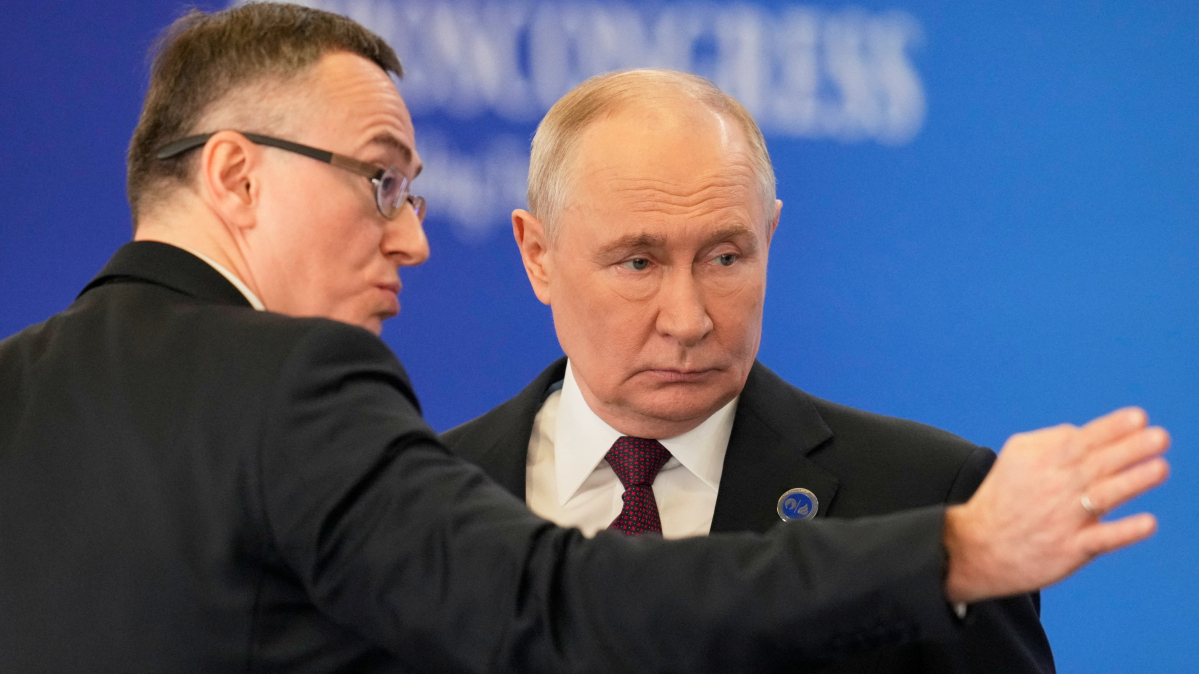
Russian President Vladimir Putin has urged gas producers to boost global supplies and invest in infrastructure, while signalling potential energy cooperation with U.S. partners during a major gas summit in Moscow on Tuesday.
Speaking at the eighth summit of the Gas Exporting Countries Forum (GECF) on 27 October, Putin warned of rising global demand and called for greater investment in new fields, processing facilities and transport infrastructure.
“We need to increase supply of gas,” Putin said, adding that Russia was “exploring the possibility of joint work with American partners”.
Putin warns over restrictions on Russian gas
Putin said natural gas accounted for around a quarter of the global energy mix, with worldwide consumption rising by 1.2 per cent last year to 4.2 trillion cubic metres.
He predicted annual demand could climb to 5.5 trillion cubic metres by the middle of the century, while international gas supplies could reach 1.7 trillion cubic metres.
Highlighting mounting pressures on the industry, Putin cited geopolitical tensions, disrupted supply routes and restrictions on equipment and technology. He also pointed to the explosions that damaged Russia’s Nord Stream gas pipelines to Europe.
Putin warned that efforts to push Russia out of global gas markets could have severe repercussions for consumers, businesses and households abroad.
He accused European countries of damaging their own industrial and social sectors by cutting their dependence on Russian energy.
“Do not dig a pit for someone else, or you may fall into it yourself,” Putin said, using a Russian proverb to underline his criticism of European energy policies.
Instead of imposing barriers, he urged gas exporters to strengthen cooperation, honour existing contracts and strike a balance between the interests of producers and consumers.
Investment and technology take centre stage
Putin outlined three priorities for the gas industry: strengthening supply routes, boosting long-term investment and deepening technological cooperation among exporters.
He proposed closer consultations within the GECF to assess threats to gas markets, including attacks on energy infrastructure, and to coordinate efforts to ensure stable supplies.
He also urged producers to develop new gas fields, upgrade processing facilities and expand shipping capacity and liquefied natural gas (LNG) infrastructure.
Long-term contracts, he argued, would help secure reliable supplies for buyers while giving producers the confidence to finance new projects.
Putin pointed to cooperation among oil producers through the OPEC+ framework as a model for improving market stability and predictability, while stressing that the gas sector required mechanisms tailored to its own needs.
Turning to technology, he said Russia was advancing its domestic expertise in LNG production, deep gas extraction, seismic exploration and digital modelling of gas fields.
Moscow remained open to sharing these developments with international partners, he added.
The Russian president also highlighted nuclear and hydropower projects as further opportunities for international energy cooperation.
World leaders meet in Moscow for gas summit
Among the leaders attending the summit are Iranian President Masoud Pezeshkian, Qatar’s Emir Sheikh Tamim bin Hamad Al Thani, Mozambican President Daniel Chapo, Equatorial Guinean President Teodoro Obiang Nguema Mbasogo and Mohamed al-Menfi, chairman of Libya’s Presidential Council.
Putin is expected to hold bilateral talks with several visiting leaders, including Pezeshkian and representatives of Qatar, Mozambique, Equatorial Guinea and Libya.
The GECF represents some of the world’s largest natural gas producers, with its members accounting for approximately 70 per cent of global proven reserves, according to the organisation.
This year’s gathering marks the forum’s first summit in Moscow since 2013 and 25 years of cooperation among its members.
The summit is set to conclude with the adoption of the Moscow Declaration, aimed at strengthening energy security through reliable gas supplies, diversified trade routes and closer cooperation between exporting countries.
Read more:









What is your opinion on this topic?
Leave the first comment